
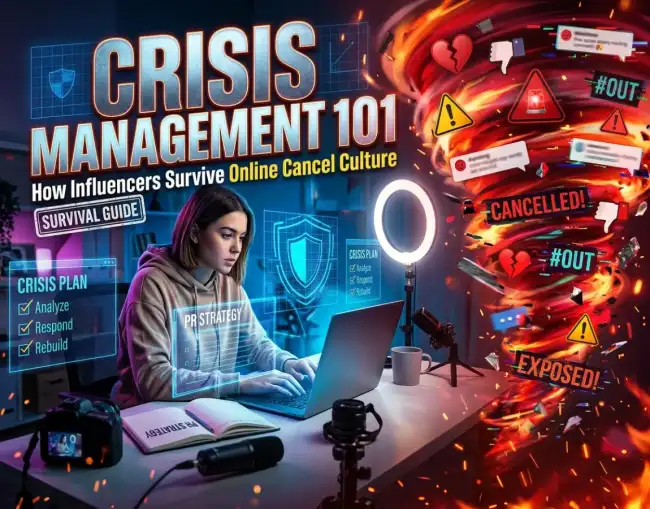
In the contemporary creator economy, influence is simultaneously hyper-lucrative and extraordinarily fragile. A single contextual misstep, a unearthed historical tweet, an ill-conceived brand partnership, or an orchestrated digital activism campaign can instantly mobilize millions of users against a creator. Within hours, the very algorithms that previously amplified a creator's content turn into vector pathways for mass outrage, resulting in severe subscriber churn, terminated brand sponsorships, and widespread reputational degradation. This phenomenon—colloquially known as "cancel culture"—is no longer a rare edge case; it is an omnipresent operational risk in modern digital publishing.
Historically, traditional celebrity PR relied on slow-moving media cycles, controlled press releases, and passive broadcast audiences. Today, digital outrage operates at unprecedented velocity. Social algorithms reward hyper-engagement, and negative emotional stimuli generate the highest click-through rates, comments, and shares. When a crisis erupts, the creator is thrust into an asymmetric war against automated recommendation engines, outraged digital mobs, commentary channels, and risk-averse corporate sponsors. Without a pre-engineered, highly disciplined influencer PR strategy, emotional knee-jerk reactions often exacerbate the situation, turning a manageable PR fire into a career-ending inferno.
This comprehensive guide establishes an authoritative framework for digital crisis management. Designed specifically for digital creators, talent managers, agency executives, and media strategists, this publication dissects the socio-algorithmic mechanics of online backlash and provides a step-by-step blueprint to survive, mitigate, and ultimately recover from sudden digital cancellations.
Foundational Principles & Mechanics of Digital Outrage
To navigate a digital crisis effectively, one must first understand that online "cancellation" is rarely an isolated moral evaluation; it is a complex socio-algorithmic process driven by platform architecture, audience dynamics, and economic incentive structures. When a public figure breaches perceived social, ethical, or political norms, several compounding mechanics are triggered simultaneously across the digital ecosystem.
The primary acceleration engine of online backlash is algorithmic feedback loops. Platforms like TikTok, X (formerly Twitter), YouTube, and Instagram are engineered to maximize user retention by prioritizing high-arousal content. Indignation and righteous indignation generate immediate, intense engagement metrics. As users comment, quote-tweet, and share news of a creator's scandal, the platform's algorithm interprets this surge in activity as highly valuable content, further pushing the controversial narrative onto mainstream discovery feeds (such as the TikTok 'For You' Page or X's 'Trending' tab).
Key PR Principle: In digital crisis management, the algorithm does not evaluate truth or intent; it evaluates emotional velocity. Your primary goal during the initial hours of a crisis is not to debate the mob, but to starve the algorithm of fresh friction.
Furthermore, digital outrage relies heavily on the breakdown of parasocial relationships. Audiences develop deep, perceived intimacy with creators over time. When a creator is accused of misconduct or hypocrisy, fan communities experience a sense of personal betrayal. This transforms former advocates into the most aggressive critics, seeking to publicly dissociate themselves from the creator to protect their own digital identity and social capital. Recognizing these underlying mechanics shifts a creator's stance from personal defensiveness to structured, objective risk mitigation.
Blueprint Phase 1: The Immediate Triage Protocol (Hours 0–4)
Executing the Absolute Media Freeze
The initial four hours following the outbreak of a public crisis represent the most dangerous window for any digital creator. The immediate human impulse when faced with intense public accusation is to defend oneself, clarify context, or vent frustration directly on social media. In almost every instance, unscripted early responses severely escalate the crisis by providing critics with additional quotes, defensive posture, or fresh algorithmic fuel.
The immediate mandate upon identifying a crisis is a complete, organization-wide media freeze. All scheduled posts across all managed channels—including Instagram Stories, TikTok videos, YouTube uploads, scheduled tweets, and podcast drops—must be immediately paused. Continuous posting of routine, non-related lifestyle or promotional content while a crisis unfolds conveys tone-deaf arrogance and further infuriates an aggrieved audience.
Simultaneously, all direct messaging, comment replies, and passive-aggressive interactions with critics or commentary channels must cease. Every digital footprint left during these critical early hours will be screenshotted, archived, and dissected by commentary creators seeking to monetize the narrative. Establishing total radio silence creates a operational buffer, allowing the core team to transition from reactive panic to strategic assessment.
Establishing the Emergency War Room
Once content distribution is locked down, the creator must immediately convene an Emergency War Room. This operational unit should strictly consist of essential decision-makers: the creator, their primary talent manager, a specialized digital PR strategist, and legal counsel if the allegations involve contractual breaches, defamation, or potential civil/criminal liability. Friends, family members, or non-essential staff should be excluded from strategy meetings to eliminate emotional noise and maintain operational confidentiality.
The War Room's immediate objective is to centralize communication protocols. External inbound inquiries from journalists, brand partners, or fellow collaborators should be routed through a single dedicated point of contact—ideally an experienced publicist or management team member. Internal communication must be shifted off public or easily leaked channels onto secure, streamlined platforms. To optimize operational coordination between managers and creators during high-pressure events, utilizing standardized protocols like Streamlining Communication: Best Apps and Workflows for Agency-Creator Sync ensures that critical strategy directives are executed swiftly without crucial messages slipping through the cracks.
Blueprint Phase 2: Fact-Checking, Sentiment Analysis & Risk Grading
Distinguishing Viral Flak from Material Structural Risk
Not every online complaint constitutes a true crisis. A common failure in influencer PR strategy is treating minor outrage—often referred to as "viral flak"—with the same heavy-handed protocols required for a structural, enterprise-threatening catastrophe. Responding aggressively to minor, fringe internet drama often elevates a non-issue into the mainstream consciousness, creating a self-inflicted PR disaster.
To determine the appropriate response level, the War Room must conduct a formal Risk Grading Assessment based on three quantifiable vectors: Mass-Market Penetration, Commercial Vulnerability, and Moral/Legal Severity. The evaluation matrix below outlines how crises are categorized:
- Tier 1 Crisis (Existential Risk): Allegations involving illegal conduct, severe ethical breaches, unassailable documentation of harmful behavior, or widespread mainstream media pickup (e.g., NYT, BBC, major news outlets). Immediate commercial contract terminations. Response required.
- Tier 2 Crisis (Operational Risk): Moderate community outrage, trending status on niche platforms (X/Reddit), loss of secondary brand deals, or significant creator commentary coverage. Targeted response required.
- Tier 3 Crisis (Viral Flak): Minor community disagreement, localized trolling, bad aesthetic take, or isolated backlash without coverage from major industry outlets or brand concern. Response rarely required; monitor quietly.
Conducting the Internal Audit and Evidence Archiving
Before formulating any public response, the War Room must establish an indisputable timeline of events based on hard facts, unedited screenshots, raw video footage, and legal records. Creators must be absolute, uncompromisingly honest with their PR team and legal counsel during this internal audit. Concealing relevant facts or misrepresenting context to one's own crisis team is disastrous; if unexpected evidence surfaces publicly after a statement is issued, credibility is permanently destroyed.
Simultaneously, dedicated digital monitoring tools (such as Brand24, Meltwater, or Talkwalker) should be deployed to track sentiment trajectory, keyword volume, and media pickup. Monitoring key metrics—such as net negative sentiment ratio, engagement velocity, and key platform reach—provides the data needed to determine whether the firestorm is peaking or expanding into new digital demographics.
Blueprint Phase 3: Crafting the Strategic Response Framework
Anatomy of an Effective Public Statement or Video
When an assessment dictates that a public response is mandatory, the structure, tone, and delivery mechanism of that statement will determine whether the outrage cycle decelerates or accelerates. A successful public statement must strictly adhere to the battle-tested "5-C Framework":
- Contrition: Express genuine, unreserved empathy for those harmed. Avoid conditional language such as "I am sorry *if* anyone was offended."
- Clarity: State precisely what occurred without evasive corporate jargon, shifting blame, or hiding behind obscure technicalities.
- Context (Without Excuse): Provide background factual details necessary to correct misinformation, but ensure this context never reads as a justification for wrongdoing.
- Correction: Outline explicit, measurable actions being taken immediately to rectify the situation, support affected parties, or institute internal safeguards.
- Commitment: Detail long-term operational changes, education, or operational restructurings to ensure the error can never be repeated.
Choice of platform for the response is equally critical. Video responses (e.g., on YouTube) allow for vocal inflection and emotional authenticity, but carry high risk if the creator appears insincere or overly rehearsed. Text statements (e.g., posted to X or Instagram carousels) offer precise legal and messaging control, but can be perceived as cold and corporate. As a rule, high-severity interpersonal crises demand video responses, whereas complex contractual or legal disputes are best addressed via precise written documentation.
Managing Sponsor Communications and Commercial Stakeholders
Brand sponsors and commercial partners operate under strict corporate risk protocols. During a public outrage surge, sponsors receive flooded customer support channels, tagged social media calls for boycotts, and negative press coverage. Expecting sponsors to remain silent or defend a creator during an active Tier 1 or Tier 2 crisis is unrealistic and unprofessional.
Proactive stakeholder management is essential. The creator's management team must reach out to active brand partners *before* those brands reach out with formal cancellation notices. The communication should be professional, transparent, and objective, providing the brand with: (1) an honest executive summary of the situation, (2) the calculated risk assessment, (3) the exact timeline for the upcoming public statement, and (4) an explicit release granting the brand permission to temporarily pause active campaigns without contractual penalty while the issue is resolved.
Blueprint Phase 4: Navigating Joint Ventures and Co-Branded Assets
Protecting Collaborative Partnerships and Joint Business Assets
Modern digital creators rarely operate in isolation; their commercial portfolios often include co-branded product lines, joint podcasts, shared agency ventures, and multi-creator media networks. When one creator in a collaborative ecosystem experiences a severe public crisis, collateral damage spreads rapidly to business partners, co-hosts, and secondary brand equity.
Navigating shared ventures requires clear operational decoupling protocols. If a creator co-owns a physical product brand or joint media enterprise, the crisis team must immediately establish a public and operational firewall between the individual's personal controversy and the joint commercial entity. Partners must evaluate whether temporary suspension of joint marketing, re-branding, or formal step-downs from corporate leadership roles are necessary to protect underlying employees and business infrastructure.
When launching complex joint initiatives, establishing contingency protocols beforehand is critical. Understanding the broader mechanics detailed in The Power of Co-Branding: When Two Influencers Launch a Product Together highlights why pre-negotiated crisis management clauses, moral clauses, and emergency buyout provisions are vital components of any co-branded contractual framework.
Blueprint Phase 5: Audience Rehabilitation and Long-Term Recovery
Rebuilding Trust with Core Communities
Surviving the initial crisis response is only half the battle; the true challenge lies in long-term audience rehabilitation. Following a public crisis, a creator’s broad, casual audience will inevitably shrink. However, long-term career viability depends heavily on the retention and gradual rehabilitation of the core loyalist community.
Re-engaging an audience requires a phased, deliberate content return strategy. Attempting to return to normal, high-energy entertainment content immediately after issuing an apology creates jarring cognitive dissonance. Instead, creators should implement a multi-month transitional content cadence:
- Phase 1: Silent Operational Restructuring (1-4 Weeks): Complete silence following the apology statement. Focus entirely on internal operational changes, direct restitution, or required educational initiatives.
- Phase 2: Low-Key Dedicated Updates (Weeks 4-8): Resume limited, highly focused content strictly on primary core platforms (e.g., Patreon, dedicated Discord, or long-form YouTube). Address core community questions directly and transparently.
- Phase 3: Standard Content Resumption (Months 2-6): Gradually return to core content formats while avoiding defensive references to the past crisis. Let consistent, non-controversial execution speak for itself over extended timeframes.
During this recovery phase, maintaining deep connection with core community members who stood by the creator is vital. Many top-tier creators who have successfully navigated major career resets originated from hyper-loyal fan hubs. Nurturing these organic relationships—a journey often seen in trajectories such as From Fan Account to Official Collaborator: The Ultimate Career Fairy Tale—provides the foundational social support required to rebuild broader public authority over time.
Real-World Case Studies & Operational Scenarios
To demonstrate these PR principles in action, let us analyze two contrasting, realistic crisis scenarios, illustrating the operational divergence between strategic execution and catastrophic failure.
Scenario A: The Historic Misstep (Successful Recovery)
The Trigger: A prominent tech and gaming creator (3M subscribers) has historic, highly offensive forum posts from ten years prior resurface on X. The posts trend rapidly, leading to public calls for brand sponsors to drop the creator.
The Execution:
1. *Hours 0–2:* Creator executes an immediate media freeze, pausing scheduled video uploads and sponsored social posts.
2. *Hours 2–6:* War Room assesses the material. The posts are genuine. The creator acknowledges full ownership to their PR team without offering excuses.
3. *Hours 12:* Creator issues a concise, unvarnished video statement acknowledging the posts, accepting full accountability without blaming youth or internet culture, and outlining a direct financial donation to an advocacy group aligned with the impacted demographic.
4. *Months 1–3:* Creator takes a mandatory 30-day digital sabbatical. Upon return, content focuses strictly on tech tutorials without self-pitying references. Sponsors are kept informed with monthly sentiment reports.
The Outcome: Initial subscriber drop of 4%. Rebounded completely within 8 months. Retained 70% of core long-term brand sponsors due to transparent, professional crisis management.
Scenario B: The Accusation Spiral (Catastrophic Failure)
The Trigger: A lifestyle influencer (1.5M followers) faces allegations from former business associates regarding unfulfilled contest prizes and unpaid contractor invoices.
The Execution:
1. *Hours 0–4:* Influencer panics, actively deleting negative comments on Instagram and blocking critical accounts.
2. *Hours 8:* Influencer posts an emotional, 15-minute Instagram Story rant accusing the contractors of lying, threatening defamation lawsuits, and framing themselves as the true victim.
3. *Day 2:* Commentary channels analyze the rant, surfacing receipts and invoices that contradict the creator’s claims. The story moves into mainstream digital news.
4. *Day 4:* Mainstream brand partners issue public statements terminating contracts due to toxic public sentiment and aggressive creator behavior.
The Outcome: Subscriber loss exceeding 35%. Complete loss of agency representation and primary revenue streams. Brand irrecoverably damaged.
Top 5 Fatal Crisis Management Mistakes
Across hundreds of documented digital PR crises, the same strategic errors consistently transform manageable missteps into permanent career collapses. Eliminating these five critical mistakes is non-negotiable for any creator or PR team:
- The Defensive Non-Apology: Using conditional framing ("I'm sorry if your feelings were hurt") or attempting to reframe bad behavior as a "joke taken out of context." Audiences and media organizations recognize defensive deflection instantly, prolonging the outrage cycle.
- Silencing Communities via Mass Deletions: Mass-deleting comments, locking subreddits, or blocking users during an active firestorm validates the audience's perception of guilt and authority abuse. It drives critics to organize off-platform outrage campaigns on untracked spaces.
- Premature Monetization and Sponsored Content: Dropping a sponsored post, merchandise plug, or product launch within days of a crisis statement signals pure financial greed and complete detachment from accountability.
- Weaponizing Legalese without Action: Threatening broad "defamation lawsuits" against online critics or commentary channels rarely deters public commentary. In most cases, it triggers the "Streisand Effect," drawing exponentially more attention to the underlying allegations.
- Internal Team Disconnect: Failing to align talent, managers, publicists, and legal counsel on a single unified narrative. Public statements issued by managers that contradict personal statements made by creators destroy all public credibility.
Crisis Response Tooling & Framework Comparison Matrix
Managing an enterprise-level digital crisis requires specialized software tools and strategic response models tailored to the severity of the threat. The matrix below outlines the tactical deployment of PR infrastructure during critical operational phases:
| Response Tier | Trigger Level | Primary Strategic Objective | Recommended Tooling Suite | Key Performance Indicator (KPI) |
|---|---|---|---|---|
| Tier 1: High Severity | Mainstream news pickup, legal exposure, mass brand drops. | Legal containment, brand safety firewalls, structural statement delivery. | Meltwater, Executive PR Counsel, Specialized Legal Team, Direct Sponsor Outreach. | Stabilization of negative sentiment velocity (< 15% growth/day). |
| Tier 2: Medium Severity | Trending on X/TikTok, commentary channel pick-up, sponsor inquiries. | Narrative correction, direct community engagement, stakeholder stabilization. | Brand24, Sprout Social, Internal War Room, Direct Email Communications. | Retention of tier-1 brand partnerships (> 60% retention rate). |
| Tier 3: Low Severity | Localized comment backlash, minor drama channels, isolated criticism. | Passive monitoring, noise suppression, avoiding escalation. | Google Alerts, Platform Native Analytics, Automated Keyword Filters. | Natural decay of organic mention volume within 72 hours. |
Frequently Asked Questions (FAQ)
How long should an influencer wait before returning to posting content after a major public crisis?
There is no universal calendar rule, as recovery timelines depend entirely on the severity of the crisis, the authenticity of the apology, and the nature of the industry. However, as a strategic baseline for Tier 1 and major Tier 2 crises, a mandatory digital sabbatical of at least 14 to 30 days is strongly advised.
Returning too quickly (e.g., within 48 to 72 hours) communicates to the public that the creator views the crisis merely as an inconvenience to be cleared rather than a moment for genuine reflection. The sabbatical period allows the initial emotional outrage cycle to dissipate organically while giving the creator's operational team time to complete internal audits, coordinate with sponsors, and structure a disciplined content return strategy.
Should an influencer delete controversial past posts or leave them up during a crisis?
As a rule of thumb during an active crisis, deleting old posts while outrage is actively unfolding is highly counterproductive. Modern digital communities actively archive social media feeds. Deleting posts during a live firestorm is immediately caught by archival bots and commentary channels, who frame the deletion as an admission of guilt, panic, or an attempt to hide evidence.
If historical posts contain outright harmful, illegal, or slurred language, they should only be removed *after* addressing them directly in an official public statement. In that statement, explicitly state that the historical content is being taken down because it does not align with current values, rather than attempting to quietly scrub the record in secret.
What is the best way to handle long-term brand sponsors who reach out during a public cancellation?
Honesty, speed, and corporate empathy are vital when managing commercial relationships. Do not wait for sponsors to send contractual default notices. Reach out to brand account managers immediately upon recognizing a Tier 1 or Tier 2 crisis.
Provide them with an objective, hype-free summary of the situation, share the planned timeline for your public statement, and proactively offer to pause active deliverables or social media tags. Over-communicating with corporate partners positions the creator as a professional business entity who respects the brand’s liability, greatly increasing the likelihood of resuming sponsorships once the crisis subsides.
When is a video apology better than a written statement?
Video apologies are ideal for interpersonal disputes, community misunderstandings, or instances where personal empathy, vulnerability, and non-verbal body language are critical to demonstrating genuine remorse. Video creates a direct human connection that text cannot replicate.
Conversely, written statements are vastly superior when navigating complex legal disputes, financial/contractual allegations, or cases where exact phrasing is legally binding. If a creator is prone to unscripted emotional outbursts or struggles under high stress, a meticulously drafted, legally vetted written statement is far safer than an unscripted, rambling video.
Can an influencer completely erase a digital crisis from search engine results over time?
Complete deletion of public record from the internet is virtually impossible due to third-party media coverage, web archives, and commentary channels. However, effective Search Engine Optimization (SEO) and Digital Reputation Management (DRM) strategies can significantly suppress negative search results over a 12-to-24-month horizon.
By consistently producing high-authority, optimized long-form content, expanding presence onto new high-domain platforms, conducting authorized interviews, and securing positive editorial coverage, creators can push negative crisis coverage off the first page of major search engine results, fundamentally restoring their digital identity for casual viewers.
Strategic Roadmap & Final Takeaway (2025–2030 Horizon)
As digital activism continues to mature alongside artificial intelligence, automated sentiment analysis, and deepfake verification challenges, the landscape of online crisis management will become increasingly complex. Over the next two to five years, outrage cycles will operate at even higher velocities, powered by automated recommendation bots and instant cross-platform content syndication. Creators who rely on ad-hoc, emotionally driven responses will find themselves increasingly vulnerable to rapid commercial liquidation.
Long-term survival in the creator economy requires treating crisis management not as an emergency reaction, but as a permanent core competency of professional digital publishing. By implementing robust operational communication systems, maintaining strict risk assessment protocols, building legal and brand safety firewalls into collaborative ventures, and treating audiences with genuine accountability, creators can weather even the most severe online storms.
Cancel culture thrives on friction, panic, and defensive arrogance. Defeating it requires the exact opposite: absolute discipline, operational transparency, structural patience, and an unwavering commitment to professional execution.
Be the first creator to share your take on this story.