
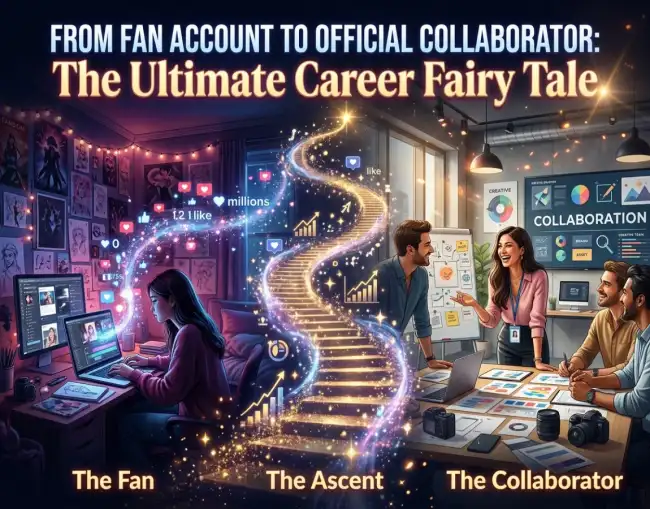
The digital creator economy is saturated with overnight success myths, yet very few origin stories capture the sheer dedication, organic alignment, and transformative power of the modern "fan-to-collaborator" journey. Long before an individual signs a multi-year talent representation contract, launches an independent product line, or steps onto a global stage as an official ambassador, they are often sitting behind a glowing laptop screen at two in the morning, meticulously editing fan-cam tributes, curating aesthetic highlight reels, and running dedicated update accounts for their idols. This grassroots phenomenon represents a profound shift in how modern media entities discover, evaluate, and integrate top-tier talent. The barrier to entry has shifted from traditional executive networking to demonstrable, data-backed devotion.
For aspiring digital professionals, understanding this paradigm is no longer a matter of passive curiosity; it is a masterclass in modern digital publishing, community management, and personal branding. When a dedicated fan transitions into an official collaborator, it signals to the broader market that the individual possesses an innate understanding of audience psychology, brand voice, and content mechanics. They have essentially completed an unpaid, hyper-focused master's degree in audience retention and digital storytelling. However, crossing the chasm from an anonymous fan account operating in the shadows of a major creator to an official, monetized partner requires a delicate balance of boundary-setting, professional escalation, and unyielding creative consistency.
This comprehensive investigation explores the anatomy of that exact career trajectory. We will deconstruct the underlying mechanics of how a The Power of Co-Branding: When Two Influencers Launch a Product Together dynamic eventually takes root, examining how raw fandom is systematically channeled into undeniable professional equity. By analyzing the algorithmic triggers, legal considerations, communication protocols, and strategic milestones that define this unique career growth story, we provide a definitive roadmap for turning unbridled passion into a lasting, high-impact digital career.
Foundational Principles and Mechanics of the Fan-to-Collaborator Transition
To master the art of the fan-to-collaborator pipeline, one must first deconstruct the underlying socio-technical mechanics that govern digital attention. A fan account is fundamentally an act of decentralized curation and amplification. Unlike traditional marketing agencies that rely on paid media spend and calculated demographic targets, fan accounts operate on emotional resonance and tribal loyalty. They act as amplifiers, translators, and cheerleaders, packaging raw footage into digestible, highly shareable micro-content that feeds the algorithms of platforms like TikTok, Instagram Reels, and YouTube Shorts.
The primary mechanism driving this transition is "proof of competence." In the early stages of digital content creation, creators and brands are perpetually overwhelmed by noise. Thousands of hopefuls pitch partnership ideas daily without understanding the core ethos of the brand. Conversely, a dedicated fan account has already spent hundreds of hours studying the primary creator's cadence, humor, visual aesthetics, and community inside-jokes. When that fan begins producing derivative content that outperforms the original creator's official posts—or fills a strategic gap in their content ecosystem—they cease to be just another viewer and become an invaluable asset.
Furthermore, digital publishing platforms have evolved to reward this specific type of symbiotic relationship. Algorithms actively favor accounts that spark deep, conversational engagement within comment sections. Fan accounts frequently master this art by fostering tight-knit sub-communities where superfans congregate to dissect every frame of content. When an official creator notices that a specific fan-run page is driving significant cultural momentum, inbound traffic, and positive sentiment, the economic incentive to bring that account into the fold becomes undeniable. This structural shift transforms a one-sided parasocial relationship into a bidirectional, highly lucrative professional partnership.
Step 1: Establishing Digital Authority and Curatorial Excellence
Decoding the Creator’s Aesthetic and Editorial Voice
The foundation of any successful fan-to-collaborator trajectory begins with absolute immersion in the target creator's brand identity. You cannot successfully collaborate with someone whose voice you do not thoroughly understand. Aspiring collaborators must study the target's catalog not merely as consumers, but as forensic auditors. Pay granular attention to color grading, font choices, pacing, hook structures, and verbal tics. Every piece of content published under the fan banner should feel like an authorized, seamless extension of the primary brand.
Achieving this level of curatorial excellence requires ruthless consistency and a commitment to quality over sheer volume. Instead of spamming low-effort screenshots, focus on creating high-value compilations, translated transcripts for international audiences, or deep-dive analytical video essays that contextualize the primary creator's work. When the primary creator or their management team stumbles upon your page and realizes you are elevating their intellectual property with professional-grade execution, you immediately separate yourself from 99% of casual followers.
Mastering Algorithmic Distribution and Platform Nuance
Understanding platform mechanics is critical for driving organic visibility. Different platforms reward different types of fan engagement. For instance, TikTok thrives on rapid, trend-jacking derivative edits, whereas YouTube rewards long-form compilation essays and community tab discussions. Creators rarely have the bandwidth to manage presence across every single emerging platform simultaneously. By mastering an underserved platform and establishing dominance there on behalf of the creator, you create an undeniable value proposition.
Moreover, utilizing advanced scheduling tools, analytics dashboards, and hashtag optimization strategies allows you to systematically track what resonates with the broader audience. When you approach the creator or their team later, you are not coming empty-handed; you are bringing proprietary data proving your ability to capture attention, drive traffic, and convert casual viewers into dedicated community members. This quantitative foundation transforms your pitch from an emotional plea into a sound business proposition.
Step 2: Cultivating Strategic Visibility Without Crossing Boundaries
The Fine Line Between Dedication and Overstepping
One of the most delicate phases of the fan-to-collaborator journey is managing visibility without alienating the creator. The digital landscape is littered with cautionary tales of overly zealous fans whose parasocial intensity morphs into harassment or stalking. To become an official collaborator, you must project absolute professionalism, unwavering respect for personal boundaries, and emotional intelligence. Never demand recognition, gatekeep the creator's personal life, or position yourself as an official spokesperson unless explicitly invited to do so.
Instead, focus on creating value that speaks for itself. Tag the creator thoughtfully, participate in official community challenges, and contribute constructively to comment sections. When you do capture the creator's attention, keep your interactions polite, concise, and focused on how your content benefits *their* audience. This disciplined restraint builds profound trust, assuring the creator and their legal representation that you are a stable, reliable partner who understands the complexities of public-facing media.
Leveraging Community Validation to Catch the Algorithm’s Eye
Creators do not live in a vacuum; they rely heavily on their community moderators, Discord admins, and superfan groups to keep a pulse on the fandom. Becoming a trusted figure within these sub-communities is often the stepping stone to official recognition. When community members repeatedly tag the primary creator under your edits—saying things like, "You need to hire this person"—the social proof becomes deafeningly loud.
This grassroots validation acts as a powerful filtering mechanism. It signals to the creator that you already possess the implicit stamp of approval from their core constituency. By the time the creator's team reaches out to offer an official role—whether as a social media manager, content editor, or co-creator—the risk profile of the hire has been dramatically reduced. You are no longer an unproven gamble; you are a proven community leader.
Step 3: Transitioning from Unofficial Fan to Official Collaborator
Navigating the Initial Outreach and Proposal Phase
The moment of first contact between a fan account and a creator's professional team is a defining crossroads. Whether you are pitching yourself via direct message or responding to an inbound inquiry, your posture must immediately shift from "starstruck fan" to "strategic business partner." Prepare a comprehensive portfolio highlighting your best-performing posts, audience analytics, engagement rates, and specific ideas for how you can alleviate the creator's operational bottlenecks.
When executing this transition, Streamlining Communication: Best Apps and Workflows for Agency-Creator Sync becomes paramount. Professional teams operate on tight schedules, utilizing project management software, Slack channels, and shared cloud drives. Demonstrating early on that you understand how to integrate into these structured workflows—rather than expecting casual, disorganized communication—positions you as an elite professional capable of handling enterprise-level digital assets.
Formalizing Agreements, Intellectual Property, and Compensation
Moving from unofficial enthusiasm to official collaboration requires navigating the often-complex waters of digital business law. Many rising creators are hesitant or inexperienced when it comes to formal contracts, revenue sharing, and intellectual property rights. As an emerging professional, you must advocate for your own interests while respecting the creator's brand equity. Establish clear terms regarding ownership of derivative assets, compensation structures (whether flat-rate, commission-based, or equity-sharing), and clearly defined scope-of-work boundaries.
It is crucial to treat your fan page as a legitimate enterprise from day one. Registering your creative business, consulting with digital entertainment legal counsel, and utilizing standard service-level agreements (SLAs) protects both parties against misunderstandings. This professional rigor ensures that the transition from fan to collaborator remains harmonious, legally compliant, and primed for long-term financial scalability.
Step 4: Executing Collaborative Campaigns and Scaling Growth
Co-Creating Content That Bridges Fandom and Mass Appeal
Once the ink is dry on your collaboration agreement, the real work begins. The greatest trap new collaborators fall into is producing content that is overly insular, appealing only to the most hardcore existing superfans while alienating prospective new viewers. To achieve true scale, your collaborative content must bridge the gap between niche inside jokes and broad, universally engaging storytelling. You must act as a translator, taking the complex lore of the creator's universe and packaging it in a way that hooks casual scrollers within the first three seconds.
Experiment with new formats such as behind-the-scenes vlogs, co-hosted live streams, curated interview segments, and interactive community challenges. Use advanced analytics to monitor retention drops and audience sentiment shifts in real time. By treating the content pipeline as an iterative science rather than an emotional art form, you can consistently engineer viral moments that expand the creator's total addressable audience.
Maintaining Brand Integrity While Expanding Revenue Streams
Official collaboration inevitably opens doors to commercial monetization, including brand sponsorships, merchandise lines, and digital product launches. As a former fan, you possess a sacred trust with the community: they believe you understand and protect the creator's authentic voice. Guard that trust fiercely. Never push a commercial partnership or sponsored integration that feels misaligned with the creator's core values, no matter how lucrative the short-term payout.
Collaborate closely with the creator to design merchandise and digital products that the community genuinely desires. By leveraging your intimate knowledge of what the fans complain about, what they praise, and what items they obsess over, you can design bespoke offerings that routinely sell out within minutes. This commercial success cements your status not just as a helpful assistant, but as an indispensable business strategist and revenue driver.
Step 5: Sustaining Long-Term Career Equity and Independence
Leveraging Your Portfolio for Broader Industry Recognition
The ultimate triumph of the fan-to-collaborator career growth story is that your success is fully portable. The skills you master during this journey—community architecture, viral content engineering, crisis management, and brand positioning—are among the most highly sought-after competencies in the modern digital economy. Whether you choose to remain the long-term executive producer for your original idol or leverage your proven track record to build a top-tier digital management agency, your professional value has skyrocketed.
Document every milestone, case study, and data point along the way. Build a world-class digital portfolio that showcases not just the vanity metrics of follower counts, but the qualitative business impact you delivered: increased retention rates, monetized communities, and successfully executed campaigns. This portfolio becomes your golden ticket, ensuring that your career trajectory extends far beyond a single fan account.
Avoiding Burnout and Managing the Parasocial Paradox
Transitioning from a relaxed, passion-driven hobbyist to a high-stakes professional collaborator introduces profound psychological hazards. The blurring lines between personal identity, fandom, and corporate labor can easily lead to severe digital burnout. Furthermore, transitioning from a peer within the fandom to an official authority figure can sometimes alienate former online friends who feel you have "sold out" or changed.
To combat this, establish rigid psychological and operational boundaries. Set fixed working hours, decouple your self-worth from algorithmic fluctuations, and maintain offline hobbies that ground you in reality. Remember that your long-term creative longevity depends entirely on your mental well-being. By treating yourself with the same care and strategic planning you apply to the creator's brand, you ensure a sustainable, fulfilling career in the creator economy.
Real-World Case Studies & Scenarios
To fully grasp the mechanics of the fan-to-collaborator pipeline, examining concrete real-world scenarios highlights the stark contrast between strategic execution and common operational failure.
Scenario A: The Strategic Rise of "Editor X" (Successful Execution)
Consider the trajectory of a nineteen-year-old college student who launched a dedicated fan page for an emerging gaming creator on TikTok. Instead of simply reposting clips, Editor X began analyzing the creator's live streams to extract hyper-relatable, humorous one-liners, pairing them with custom-designed animated captions and dynamic sound design. Within six months, several of these edits went viral, accumulating over 20 million organic views.
Rather than remaining anonymous, Editor X watermark-branded their work professionally, engaged politely with commenters, and maintained a pristine reputation. When the gaming creator needed a full-time video editor to handle their expanding multi-platform output, they reached out directly to Editor X. Backed by a clean portfolio, verified view counts, and an existing baseline of trust, Editor X was hired at a competitive market rate with revenue-sharing incentives on high-performing clips. Today, Editor X is a co-owner of the creator's production company.
Scenario B: The Pitfall of Parasocial Overreach (Common Failure)
Conversely, consider "Fan Account Y," who ran a massively popular update page for an international lifestyle vlogger. Fan Account Y possessed undeniable aesthetic talent and quickly amassed 100,000 dedicated followers. However, intoxicated by their proximity to fame, Fan Account Y began posting speculative gossip about the creator's personal relationships, attempting to act as an unofficial press secretary.
When the creator explicitly asked them to retract sensitive posts, Fan Account Y reacted defensively, claiming ownership over the fandom and accusing the creator of ingratitude. The creator's legal team issued a formal cease-and-desist, resulting in the immediate deplatforming of the account and a permanent blacklisting from the creator's ecosystem. The lesson is unequivocal: technical brilliance can never compensate for a lack of boundaries, discretion, and professional maturity.
Critical Mistakes and How to Avoid Them
Navigating the transition from fan to official collaborator is fraught with hidden traps. Avoiding these five critical mistakes is essential for safeguarding your emerging career:
- Mistake 1: Violating Copyright and Intellectual Property Laws. Re-uploading raw full-length content without transformative value or explicit permission can lead to copyright strikes and platform bans. Countermeasure: Always apply transformative editing, commentary, or curation, and promptly comply with takedown requests if creators express discomfort.
- Mistake 2: Succumbing to Entitlement. Believing that your free labor entitles you to personal access, private information, or unearned executive power over the creator's life. Countermeasure: Maintain strict professional distance and remember that fandom is a choice, not a contract.
- Mistake 3: Operating Without Formal Agreements. Entering into informal "handshake deals" with rising creators without clearly defining compensation, ownership, or deliverables. Countermeasure: Always formalize partnerships with written agreements covering scope, revenue splits, and intellectual property rights.
- Mistake 4: Sacrificing Brand Alignment for Quick Monetization. Accepting low-quality sponsorships or pushing inappropriate products just to capitalize on early fan account momentum. Countermeasure: Prioritize long-term community trust over short-term financial gains by fiercely protecting the creator's authentic brand voice.
- Mistake 5: Neglecting Personal Boundaries and Mental Health. Allowing the relentless demands of the 24/7 digital publishing cycle to consume your entire life, leading to severe burnout. Countermeasure: Implement strict working hours, delegate operational tasks, and cultivate robust offline support systems.
Comprehensive Comparison Table
To help you evaluate your approach to the fan-to-collaborator journey, examine the strategic differences between amateur fan behavior and professional collaborator execution across key operational metrics:
| Strategic Metric | Amateur Fan Account Approach | Professional Collaborator Approach |
|---|---|---|
| Content Philosophy | Raw reposts, low-effort clipping, chasing immediate viral trends without context. | Transformative curation, high-value storytelling, proprietary data-driven insights. |
| Communication Style | Demanding, emotionally volatile, crossing personal boundaries for attention. | Polite, concise, structured, and strictly respectful of professional workflows. |
| Monetization Strategy | Relying on ad-hoc donations, unregulated merch, or exploitative brand deals. | Formal revenue-sharing, negotiated contracts, and carefully vetted brand sponsorships. |
| Community Management | Encouraging toxic gatekeeping, drama, and parasocial entitlement within fandom. | Fostering inclusive, positive community engagement and constructive dialogue. |
| Career Longevity | Ephemeral; vulnerable to platform bans, creator fallout, and burnout. | Portable; building a transferable portfolio of high-level digital publishing skills. |
Frequently Asked Questions (FAQ)
Can I monetize my fan account before the official creator notices me?
Monetizing a fan account before establishing an official relationship with the primary creator is legally and ethically hazardous. Accepting donations, running unauthorized merchandise, or placing affiliate links on content featuring someone else's likeness and intellectual property can result in copyright strikes, cease-and-desist letters, or permanent account termination. It is always best to focus on organic value creation and community building first. Once you establish a constructive dialogue or formal collaboration agreement, you can explore legitimate, revenue-sharing monetization models that protect both your interests and the creator's brand equity.
How do I approach a creator without sounding obsessive or creepy?
The key to professional outreach is focusing entirely on the value you provide to *their* business, rather than expressing how much you love them personally. When sending an introductory direct message or email, keep it concise, polite, and data-driven. Highlight specific metrics, such as how your compilation videos increased engagement or how you successfully managed an uncoordinated fan community. Avoid emotional appeals or demands for attention. Present yourself as a capable, low-friction professional who is eager to help lighten their operational workload, and let your portfolio speak for itself.
What legal steps should I take when transitioning into an official role?
When moving from an informal fan page to an official collaborator, you must treat the arrangement as a legitimate business partnership. Draft a comprehensive independent contractor agreement or employment contract that clearly defines your scope of work, compensation structure, payment schedules, and ownership rights regarding intellectual property. It is highly advisable to consult with a digital entertainment lawyer to review these documents before signing. Additionally, registering your own business entity provides an essential layer of liability protection as you scale your digital publishing career.
What if the creator rejects my initial pitch or ignores my messages?
Rejection or radio silence is an entirely normal part of the digital media industry. Major creators and their management teams receive thousands of pitches daily and operate under intense time constraints. If your initial outreach goes unanswered, do not bombard them with follow-up messages or take it personally. Instead, double down on your craft. Continue producing exceptional, high-visibility content that undeniably proves your worth. Often, creators or their talent managers will notice your persistent excellence over time and initiate contact themselves when the timing is right.
Can this career path lead to opportunities outside of just one creator?
Absolutely. The competencies required to successfully execute the fan-to-collaborator transition—such as advanced short-form video editing, community architecture, cross-platform algorithmic optimization, and crisis management—are among the most valuable skills in the modern digital economy. Many professionals who start as fan account operators eventually leverage their verified portfolios to build independent talent management agencies, consult for major media brands, or lead social media strategy for enterprise corporations. Your career equity is fully portable and extends far beyond a single idol.
Strategic Roadmap and Final Takeaway
The journey from an anonymous fan account operating in the digital shadows to an official, recognized collaborator is the quintessential career fairy tale of the modern creator economy. However, as this investigation has demonstrated, this transformation is never the result of mere luck or blind devotion. It is the product of disciplined curation, unyielding consistency, emotional intelligence, and rigorous adherence to professional standards.
As we look toward the next two to five years, the creator economy will only become more sophisticated. Brands and top-tier creators are actively seeking out hyper-competent digital natives who understand the nuanced psychological currents of online communities. By treating your passion with professional rigor, respecting vital boundaries, and continually elevating your creative output, you can turn your deepest digital interests into an extraordinary, sustainable career. The tools are in your hands; the blueprint is laid out. Your transition starts now.
Be the first creator to share your take on this story.