
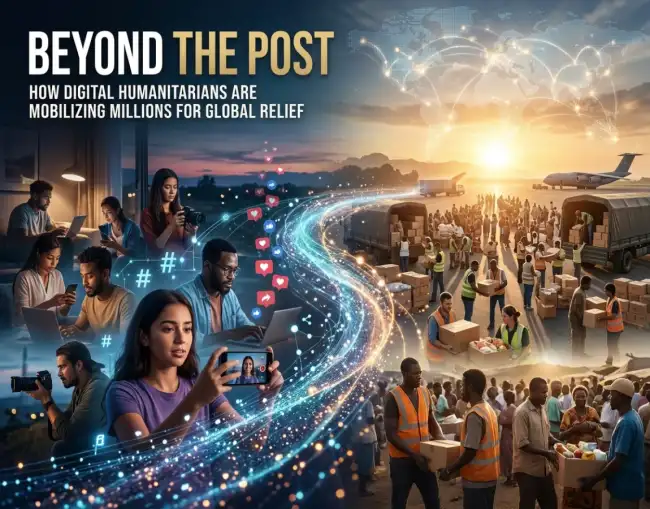
When a magnitude 7.8 earthquake shattered infrastructure across southern Turkey and northern Syria, traditional international relief organizations faced a daunting challenge: legacy bureaucracy, delayed procurement pipelines, and severe communication bottlenecks. Yet, within hours of the disaster, a decentralized network of digital creators, open-source intelligence analysts, and viral fundraisers mobilized millions of dollars in aid, mapped structural damage in real time, and routed critical supplies directly to isolated frontline responders. This rapid response was not orchestrated from a Geneva boardroom, but through real-time streams, coordinated social threads, and algorithmic engines powered by a new class of leaders: digital humanitarians.
The global aid landscape has undergone a seismic shift. For decades, traditional philanthropy relied on static legacy institutions, annual gala pledges, and slow-moving television broadcasts. Today, the convergence of high-velocity social platforms, creator-led communities, and fintech infrastructure has created a frictionless ecosystem where public awareness translates into millions of dollars in operational capital within minutes. Influencer philanthropy is no longer merely a PR supplement to non-governmental organization (NGO) campaigns; it has evolved into a primary engine of crisis response, emergency logistics, and civic engagement worldwide.
This structural transformation raises profound questions for non-profit executives, brand strategists, and digital publishers alike. How do decentralized networks outpace multi-billion-dollar global charities during acute crises? What psychological and algorithmic mechanics allow social good campaigns to achieve viral velocity while maintaining audit-grade financial integrity? And how can creators build sustainable, long-term advocacy models that move beyond reactionary crisis relief to fuel structural global change? This definitive publication examines the mechanics, strategies, and ethical boundaries defining the era of digital humanitarianism.
Deconstructing Digital Humanitarianism: Core Principles & Infrastructure
To understand the mechanics of modern digital humanitarianism, one must look beyond individual viral posts and analyze the technical and psychological infrastructure enabling rapid-response mobilization. At its foundation, digital humanitarianism represents the convergence of open-source intelligence (OSINT), creator network effects, real-time fintech routing, and community-driven advocacy. Unlike legacy aid models that operate top-down, digital humanitarian networks function as peer-to-peer mobilization grids.
The effectiveness of creator-led philanthropy rests upon three non-negotiable structural pillars:
- Trust Transference: Traditional NGOs often struggle with declining institutional trust due to high administrative overhead and opaque reporting. Digital creators bridge this gap by transferring the hyper-localized trust built with their audiences directly to verified relief causes. The audience does not donate to an unfamiliar institution; they invest in a mission vetted and championed by a trusted voice.
- Frictionless Financial Velocity: Modern digital humanitarians utilize embedded finance solutions—including direct API integrations with platforms like GoFundMe, Tiltify, and cross-border payment processors—eliminating multi-day clearance windows and enabling instant capital deployment to grassroots field workers.
- Algorithmic Amplification Loops: Social media algorithms favor content that generates high immediate engagement, deep watch time, and emotional resonance. By packaging humanitarian urgency into natively engaging narrative formats, digital humanitarians force algorithms to prioritize crisis awareness over consumer entertainment.
Furthermore, digital humanitarianism expands beyond financial fundraising to encompass open-source crisis mapping, digital volunteer management, and real-time verification of emergency needs. During severe climate events or geopolitical crises, digital volunteers aggregate geotagged social posts to direct physical rescue operations, proving that the digital humanitarian ecosystem operates as both a capital generator and an operational intelligence grid.
1. Designing Viral Social Good Campaigns for High-Impact Mobilization
Architecting the Emotional and Algorithmic Trigger Framework
Viral fundraising is rarely an accident of luck; it is a meticulously engineered balance of human psychology and platform distribution algorithms. To build social good campaigns capable of mobilizing millions, creators and relief organizations must design content around immediate narrative urgency, direct efficacy, and communal agency. Audiences are naturally desensitized to abstract statistics; they respond to clear stories featuring explicit, actionable solutions. Campaign messaging must frame every single donor as an essential actor in an unfolding, real-time rescue story.
From an algorithmic perspective, campaigns must capture viewer attention within the first three seconds by clearly stating the crisis parameter, the direct solution, and the precise goal. Creators should establish structural visual hooks—such as live-updating donation counters, direct video feeds from field operations, or tangible reward milestones—that encourage high comment velocity and repeated re-shares. When users comment to suggest local resources or tag prospective donors, platform recommendation engines index the content as high-value, launching it out to broader algorithmic feeds.
Crucially, successful campaigns convert initial emotional shock into immediate action. Avoid open-ended appeals such as "Help support disaster victims." Instead, deploy precise micro-goals: "Every $25 raised buys one cold-weather sleeping bag, shipped directly to displaced families in the zone within 48 hours." This structural clarity eliminates cognitive friction, giving donors full visibility into the immediate impact of their contribution.
Repurposing Long-Form Evidence into Micro-Content Engines
Sustained digital campaigns cannot rely solely on brief text updates or static imagery; they require rich, multi-layered visual evidence distributed across modern digital channels. High-impact humanitarians produce immersive long-form documentary coverage, investigative field reports, or live-streamed interviews to capture the reality of humanitarian crises. However, the true reach of these efforts relies on strategic content distribution.
To maximize organic reach, publishers and creators must systematically fragment long-form investigative media into high-performing short-form assets. By executing a strategy focused on Cross-Platform Scaling: Transforming a YouTube Docuseries Into TikTok Micro-Content, relief operations can repurpose deep-dive YouTube field investigations into urgent, bite-sized vertical videos optimized for TikTok, Instagram Reels, and YouTube Shorts. This approach ensures that complex systemic humanitarian issues reach dynamic digital audiences without sacrificing narrative depth or journalistic integrity.
Each micro-asset must serve as an entry point into the broader humanitarian narrative. A 30-second clip highlighting a clean-water filtration site should link directly to interactive donation tools, while driving viewers to the comprehensive long-form documentary for verified financial audits and deep context. This multi-tiered content engine keeps the campaign active across algorithmic channels over days and weeks, preventing early narrative fatigue.
2. Building and Leveraging Decentralized Creator Networks
Activating Niche Creators Over Ultra-Famous Megastars
While celebrity endorsements traditionally formed the backbone of charity broadcasts, modern digital humanitarianism leans heavily on decentralized coalitions of micro- and mid-tier creators. Broad celebrity appeals often yield low engagement rates and public skepticism. Conversely, specialized creators focused on gaming, tech, beauty, education, or local lifestyle cultivate deeply engaged, highly responsive communities that act on recommendations with exceptional speed.
Rather than burning budget and time attempting to secure a single mega-influencer, relief campaigns achieve higher ROI by onboarding scores of dedicated niche creators. This strategy closely mirror modern growth models; taking inspiration from Startup Growth Hacking: Leveraging Niche Creators Instead of Traditional Ads allows NGOs to treat philanthropic mobilization as a performance-driven community growth network. Niche creators communicate with authentic, personal authority, leading to significantly higher audience conversion rates for donation links.
To operationalize this approach, campaign managers should assemble modular creator kits containing pre-verified facts, approved media assets, dynamic tracking links, and clear ethical guidelines. Allowing creators to adapt the message to their channel's organic style yields higher engagement than issuing rigid corporate press releases, while preserving campaign safety and operational precision.
Establishing Rapid-Response Mobilization Squads
When natural disasters strike, the first 72 hours determine the efficacy of field operations. Digital humanitarians prepare for these events by forming pre-vetted, rapid-response creator coalitions that can be activated instantly. These groups operate using direct communication channels like Discord servers, WhatsApp networks, or specialized Signal groups, linking digital strategists directly with frontline NGO coordinators.
When a crisis occurs, a single signal from the operations coordinator activates hundreds of creators simultaneously. The network floods social feeds with verified information, direct relief donation gateways, and local emergency alerts within hours. This coordinated push creates an omni-channel presence, driving immediate trending status across major social platforms.
To ensure long-term stability, these creator squads must participate in routine briefings, crisis drills, and ethical training during non-crisis periods. Building structural infrastructure prior to emergencies ensures that when sudden events strike, creator networks operate with precision rather than scrambling for basic coordination.
3. Cultivating Radical Trust and High-LTV Fan Communities
The Psychological Mechanics of Shared Social Purpose
The long-term survival of any philanthropic initiative depends on converting one-off crisis donors into committed, long-term advocates. Creator-led social good campaigns excel at this by integrating social action into community identity. Donating ceases to be a isolated financial event; it becomes a shared cultural ritual that defines community membership.
By studying The Psychology of Fan Communities: Building Cult-Like Loyalty Around Your Brand, digital humanitarians can understand how collective goals, shared values, and public milestones build deep loyalty within online groups. When a digital community rallies around a shared relief target—such as building a school, drilling clean water wells, or funding an emergency medical unit—donors gain a sense of belonging and shared achievement that traditional direct-mail charity letters cannot match.
Creators reinforce this connection by hosting live fundraising marathons, highlighting donor usernames directly on screen, and celebrating community progress in real time. This active engagement creates positive feedback loops that encourage ongoing participation, establishing a dedicated base of donors who regularly support future campaigns.
Transparent Impact Tracking and Real-Time Feedback Loops
The single greatest cause of donor attrition in digital philanthropy is narrative abandonment—the practice of collecting funds without providing clear follow-up reports detailing how capital was deployed. Digital humanitarians address this by establishing transparent impact tracking systems and real-time updates.
Effective campaigns deploy post-donation content loops that show capital in motion:
- Phase 1: Capital Collection (Hours 0-72): Dynamic campaign updates and clear target goals.
- Phase 2: Operational Deployment (Days 4-14): Direct photo and video verification of goods purchased, transit tracking, and logistics updates.
- Phase 3: Frontline Execution (Weeks 2-6): Video footage showing local partners distributing supplies directly to affected communities.
- Phase 4: Independent Financial Audit (Month 2+): Public access to financial ledgers showing complete fund routing, bank transaction fees, and administrative costs.
By maintaining absolute transparency throughout the deployment cycle, organizers eliminate skepticism, insulate campaigns against bad-faith critique, and establish high long-term trust that powers future efforts.
4. Cross-Platform Infrastructure and Tech Stack Optimization
Frictionless Payment Gateways and Multi-Currency Processing
Conversion drop-off affects non-profit fundraising just as severely as commercial e-commerce checkout flows. Every extra click, required form field, or missing local payment method significantly reduces total capital raised. Modern social good campaigns require technical stacks optimized for frictionless, multi-currency micro-transactions.
Campaign infrastructure must natively support Apple Pay, Google Pay, Venmo, PayPal, localized European payment rails (such as iDEAL or Sofort), and credit card payments within embedded in-app browsers. Requiring a mobile user to leave TikTok or Instagram to register an account on an external, non-responsive web page can eliminate up to 70% of potential conversions. Utilizing native social donation stickers alongside mobile-optimized web portals ensures maximum user conversion.
Furthermore, international campaigns must support dynamic currency conversion, automatically presenting target donation amounts in the donor’s local currency. Removing mental math and conversion uncertainty makes global audiences substantially more likely to complete transactions.
Interactive Live Streams and Gamified Donation Engines
Live-streamed fundraising marathons on platforms like Twitch, YouTube, and Kick have redefined interactive digital philanthropy. By introducing gamification mechanics into live broadcasts, creators can raise hundreds of thousands of dollars within single 12-to-24-hour events.
Gamification tactics that yield high participation include:
- Dynamic Community Goals: Unlocking specific creator challenges, extended stream hours, or exclusive content releases as donation thresholds are hit.
- Donor-Driven Interactive Incentives: Allowing donors to influence live stream events, vote on challenges, or request specific stream activities through direct contributions.
- Real-Time Leaderboards: Fostering friendly competition among individual donors, community sub-groups, or collaborating creators to drive top-tier contributions.
Integrating tools like Tiltify or custom WebSockets allows live streams to display instant visual overlays whenever donations arrive, validating the supporter's contribution instantly before thousands of live viewers.
5. Navigating Regulatory, Ethical, and Geopolitical Complexities
Ensuring Compliance with International Aid Regulations and Tax Laws
Operating a global fundraising effort exposes creators and digital organizations to complex legal frameworks, including cross-border tax regulations, anti-money laundering (AML) laws, and international sanction protocols. Unintentional non-compliance can lead to frozen bank accounts, severe financial penalties, and reputational damage.
Digital humanitarians must partner with established fiscal sponsors or registered 501(c)(3) entities (or regional equivalents such as UK Registered Charities) before launching large-scale fundraising operations. Utilizing recognized fiscal sponsors allows creators to issue tax-deductible receipts, process large legal disbursements, and ensure full compliance with international regulatory frameworks, without forcing individual creators to personally absorb financial liability.
Additionally, when funds are intended for high-risk or sanctioned conflict zones, campaigns must route capital through established, fully licensed non-governmental international bodies to avoid violating international law. Clear legal disclaimers and structured escrow accounts protect all stakeholders while guaranteeing legitimate deployment.
Preventing Performative Activism and Exploitative Storytelling
The urge to generate viral content can lead creators toward performative activism or exploitative media practices—often referred to as "poverty porn." Subjecting vulnerable crisis victims to sensationalized visual coverage strips them of dignity and damages public trust in global aid initiatives.
To avoid ethical missteps, digital humanitarians must follow strict ethical storytelling guidelines:
"Ethical digital humanitarianism demands that communities in crisis be portrayed as active, dignified agents of their own recovery, rather than passive victims staged for western media engagement. Storytelling must prioritize local agency over creator saviorism."
Creators should secure informed, written or recorded consent before documenting individuals in distress. Media assets should feature local responders, highlight community-led solutions, and avoid centering the creator as a savior. True impact centers on elevating the voices of affected populations while using digital platforms to deliver direct financial and operational power into their hands.
Real-World Case Studies & Scenarios
To understand the practical application of these strategies, consider two contrasting scenarios analyzing a successful creator-led relief campaign versus a failed digital effort.
Scenario A: The Coordinated Algorithmic Relief Campaign (Success Model)
Following a devastating flash flood in Southeast Asia, a coalition of 45 tech, travel, and gaming creators coordinated a synchronized 72-hour mobilization effort. Working alongside an accredited international relief sponsor, they used standardized, trackable donation links and released short-form content highlighting direct relief efforts within six hours of the event.
Execution Strategy:
- Established a centralized live-updating dashboard showing funds collected, logistics manifests, and verified local delivery routes.
- Creators broadcast simultaneous micro-streams using dynamic Tiltify overlay counters, offering specific matching funds provided by corporate sponsors.
- Maintained weekly follow-up videos over two months, showing clear infrastructure rebuilding efforts funded by the drive.
Outcome: The coalition raised $3.4 million from over 110,000 unique donors, achieved an average donor retention rate of 34% for subsequent campaigns, and successfully funded 14 permanent clean water filtration stations.
Scenario B: The Unverified Viral Drive (Failure Model)
During a high-profile international humanitarian crisis, an independent lifestyle creator launched a personal fundraising drive on an open payment platform, urging followers to send funds directly to their personal account so they could purchase and ship supplies directly.
Execution Errors:
- Failed to partner with licensed legal entities or establish clear compliance infrastructure, resulting in payment processors freezing funds due to AML flags.
- Posted unverified videos featuring vulnerable local individuals without consent, triggering public backlash over performative tactics.
- Provided zero audited financial accounting post-campaign, leading to accusations of misappropriation and permanent damage to the creator's digital brand.
Outcome: Over $400,000 in donations was locked in legal escrow for eight months, local delivery failed entirely due to customs bottlenecks, and the creator lost over 200,000 followers due to severe loss of trust.
Critical Mistakes & How to Avoid Them
- Single-Channel Distribution Dependency: Relying on a single social platform leaves campaigns vulnerable to algorithm changes or temporary account suspensions. Countermeasure: Diversify distribution across short-form video, live streaming networks, interactive forums, and direct email newsletters simultaneously.
- Opaque Fund Routing and Lack of Accounting: Failing to provide clear financial ledgers creates public skepticism. Countermeasure: Publish independent third-party financial audits and bank-verified disbursement logs within 30 to 60 days of campaign termination.
- Delayed Operational Execution: Waiting weeks to convert digital attention into physical aid destroys campaign momentum. Countermeasure: Partner with established ground entities before launch to ensure continuous, immediate deployment of capital as it arrives.
- Audience Fatigue Through Constant Crisis Framing: Bombarding followers with continuous high-stress narrative framing leads to emotional burnout. Countermeasure: Balance urgent crisis calls with positive impact reports, educational content, and celebratory community milestone updates.
- Transactional Creator Engagements: Treating creators as unpaid distribution channels without clear guidance leads to inconsistent messaging. Countermeasure: Develop comprehensive creator kits, offer dedicated technical support, and involve creators directly in project planning.
Digital Humanitarian Campaign Architectures Compared
Selecting the right organizational and technological model is critical for running an effective social good campaign. The table below compares the primary strategic frameworks used across the industry today:
| Campaign Framework | Primary Strengths | Operational Risks | Target Donor Demographics | Average Conversion Velocity |
|---|---|---|---|---|
| Individual Creator Drive | Hyper-authentic connection; high trust transference; minimal setup friction. | Single-point dependency; limited scalability; risk of creator burnout. | Dedicated core fan bases; Gen Z & Millennials. | Very High (0-24 Hours) |
| Decentralized Creator Coalition | Massive omni-channel reach; diverse audience access; rapid viral amplification. | Complex coordination; potential message drift across creators. | Broad cross-platform digital audiences; multi-demographic. | High (24-72 Hours) |
| NGO-Creator Hybrid Model | Full legal compliance; established ground infrastructure; high audit integrity. | Slower approval speeds; potential institutional brand friction. | Traditional donors; mid-career professionals; corporate sponsors. | Moderate (3-7 Days) |
| Interactive Gamified Marathon | Extremely high live engagement; strong community incentives; high spend per donor. | Requires complex tech stack setup; platform-specific constraints. | Gamers; live stream viewers; tech-native communities. | Immediate (Live Broadcast Windows) |
Frequently Asked Questions
How do digital humanitarians verify that frontline organizations are legitimate before promoting them?
Professional digital humanitarians execute thorough multi-step due diligence before committing public support to any on-the-ground partner organization. This process begins by evaluating official non-profit accreditation status via independent evaluators like Charity Navigator, GuideStar, or regional government registries. Beyond administrative checks, digital strategists insist on reviewing audited financial statements to confirm that administrative overhead remains within reasonable bounds (ideally under 15–20% of budget).
Additionally, modern campaigns engage open-source intelligence (OSINT) networks and local journalists to verify that operational teams are actively delivering resources on the ground. Partnering with established fiscal sponsors who manage disbursements ensures that capital is only released after local non-profit authenticity, legal standing, and anti-money laundering compliance are fully documented.
What is the most effective way to prevent donor drop-off on mobile social platforms?
Preventing donor drop-off requires removing all operational friction between the social content feed and the payment gateway. The single most effective strategy is integrating native, platform-embedded payment mechanics—such as Instagram or TikTok's direct donation stickers—or employing modern mobile gateways optimized for one-touch transactions via Apple Pay and Google Pay.
Web form fields should be trimmed aggressively: request only essential information (name, email, card details) during initial checkout, opting to collect secondary survey data through post-transaction thank-you screens. Keeping the user within an in-app browser overlay rather than launching external browser apps preserves high conversion rates and optimizes performance across mobile platforms.
Can micro-creators with modest follower counts still drive meaningful social good campaigns?
Micro-creators regularly outperform mega-creators in conversion rates and audience mobilization density. Because micro-creators maintain intimate, direct relationships with their fan bases, their content generates elevated trust and engagement. When a micro-creator champions a local cause, their audience views the effort as an authentic, high-priority mission rather than a commercial campaign.
When dozens or hundreds of micro-creators are mobilized in a coordinated push, their collective reach rivals major media networks, while generating significantly higher direct action rates. Micro-creators are essential building blocks of any scalable digital humanitarian strategy.
How should creators address skepticism regarding corporate sponsorships in social good drives?
Address corporate sponsorships through absolute financial transparency and clear boundary setting. If a corporation agrees to sponsor a charity drive—for example, matching audience donations up to a designated cap—the creator should state the precise mechanics of the partnership explicitly at the beginning of the campaign.
Creators must clarify that corporate contributions go directly toward campaign match funds or covering transactional software fees, ensuring 100% of public contributions directly reach field operations. Publishing formal written sponsorship agreements detailing that sponsors hold zero editorial control over media coverage reinforces credibility and protects community trust.
What software platforms form the ideal tech stack for modern digital humanitarians?
A modern digital humanitarian tech stack combines live stream interactive overlays, flexible payment routing, and real-time community management software. Core tools include Tiltify or Softgiving for gamified live stream integration and dynamic goal overlays; GoFundMe or Givebutter for multi-currency social fundraising campaigns; and Discord or Signal for real-time creator network coordination.
For data reporting and visual verification, teams utilize tools like Airtable or public Notion databases linked to dynamic mapping platforms (such as ArcGIS or Mapbox) to share direct project milestones, logistics manifests, and financial distribution charts directly with donors.
Strategic Roadmap & Final Takeaway
The rise of digital humanitarians represents a fundamental shift in how human civilization responds to emergency crises, environmental disasters, and systemic social challenges. Over the next two to five years, artificial intelligence, real-time spatial data, and decentralized ledger technologies will further accelerate this space. We anticipate the arrival of automated AI crisis response nodes that can analyze satellite imaging, launch micro-creator campaigns within minutes of an event, and instantly route smart-contract micro-grants directly to local field workers' mobile wallets.
However, while technology provides the delivery pipes, the core of digital humanitarianism remains deeply human: authentic trust, ethical narrative clarity, and shared community purpose. The organizations, creators, and publishers that master this hybrid model will shape the future of global philanthropy.
To launch or scale your digital humanitarian campaigns effectively, execute this final three-point operational roadmap:
- Build Infrastructure Before Crisis Strikes: Pre-verify fiscal sponsor partnerships, pre-build legal compliance frameworks, and establish rapid-response creator contact networks during non-emergency periods.
- Prioritize Frictionless User Experience: Optimize every digital step for one-touch mobile payments, transparent progress counters, and real-time visual proof of impact.
- Commit to Full Post-Campaign Transparency: Maintain multi-week content loops showing real-world execution, backed by public financial ledgers that convert one-time crisis donors into lifelong advocates for global change.
Be the first creator to share your take on this story.