
IN-DEPTH INTRODUCTION
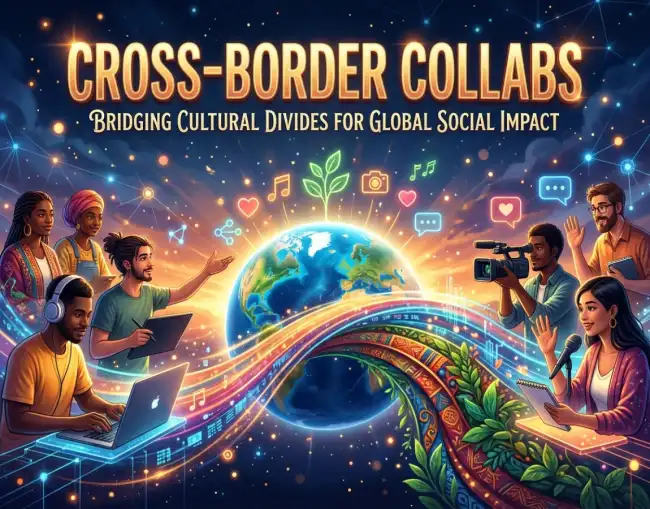
The geography of modern philanthropy has undergone a radical, irreversible decentralization. Gone are the days when international social change was dictated solely by institutional NGOs, legacy grant-makers, and top-down corporate social responsibility initiatives. Today, the most potent catalysts for global transformation reside in the hands of distributed digital ecosystems. When creators, activists, and thought leaders from opposing hemispheres unite their digital real estate, they do more than share audiences; they construct cultural bridges that bypass traditional geopolitical roadblocks. This phenomenon of borderless mobilization represents a profound democratization of social impact, proving that hyper-targeted digital communities can be harnessed for massive, collective humanitarian action.
Yet, scaling digital philanthropy across international borders is far more complex than simply dropping a donation link into a multinational comment section. As digital ecosystems mature, the baseline requirements for audience trust have skyrocketed. Creators who attempt to engage in cross-border collaborations without deep cultural fluency often face severe public backlash, accusations of performative activism, or cultural tokenism. To understand where this landscape is heading, one must look at how The Creator Economy in 2025: Trends, Predictions, and Where the Money Is Moving is fundamentally reshaping how funding, attention, and grassroots organizing converge on mobile screens. The transactional era of influencer marketing is giving way to mission-driven syndicates where digital footprint equals civic duty.
This comprehensive publication serves as the definitive manual for digital humanitarians, international creators, and social entrepreneurs seeking to orchestrate high-impact cross-border collaborations. We will deconstruct the anatomy of cross-border partnerships, explore advanced operational frameworks, analyze empirical case studies, and provide a rigorous strategic roadmap. By bridging ideological divides and leveraging decentralized networks, modern creators possess the unprecedented capacity to turn viral momentum into structural, lasting social good. Let us examine the foundational mechanics that make these international alliances possible.
FOUNDATIONAL PRINCIPLES & MECHANICS OF BORDERLESS PHILANTHROPY
To execute successful cross-border collaborations, digital humanitarians must first master the structural mechanics that separate viral awareness campaigns from sustainable social interventions. Unlike traditional commercial brand deals—where success is measured strictly in click-through rates, cost-per-acquisition, and conversion metrics—philanthropic digital campaigns operate on a complex matrix of trust indices, localization accuracy, and systemic friction reduction. Understanding these foundational principles ensures that international creators do not inadvertently cause harm or misallocate resources when attempting to address complex socio-economic issues abroad.
At the heart of every successful cross-border initiative lies the principle of reciprocal value exchange and equitable narrative ownership. Too often, Western creators adopt a "savior complex" framework, positioning themselves as benevolent benefactors bringing aid to passive recipients in the Global South. Modern international creators reject this obsolete dynamic, championing horizontal partnerships where local activists retain editorial and operational control over their own narratives. This decentralization of storytelling guarantees authenticity, shields the campaign from algorithmic fatigue, and ensures that the communities most impacted by an issue are the ones leading the charge and defining the solutions.
Furthermore, digital humanitarians must navigate the intricate web of digital infrastructure disparities across different regions. A strategy that relies on seamless live-streaming, high-bandwidth video, and frictionless digital payment gateways may thrive in urban European centers while completely collapsing in rural Southeast Asia or Sub-Saharan Africa. Designing campaigns for global impact requires a multi-layered technological approach that accommodates low-bandwidth environments, localized micro-transactions, and decentralized messaging platforms. By aligning the campaign’s mechanics with the actual digital habits of the target demographic, collaborators lay a bulletproof foundation for long-term engagement.
STEP-BY-STEP STRATEGIC BLUEPRINT
1. Identifying and Vetting International Co-Creators
The success of any cross-border collaboration hinges entirely on partner selection. When seeking international creators to champion a shared cause, superficial metrics such as follower count or aggregate view counts are dangerously misleading. You must conduct a thorough audit of a prospective partner’s audience demographics, community sentiment, and historical engagement patterns. Look for creators whose communities demonstrate genuine emotional resonance and active participation in civic discourse, rather than passive scrollers who merely double-tap aesthetic content.
Vetting also demands rigorous cultural and political due diligence. An influencer who is beloved in one region may hold polarizing, offensive, or controversial views in another, risking immediate reputation damage to your campaign. Utilize deep social listening tools to track past controversies, political affiliations, and brand associations. Establish direct, private communication channels to test their commitment to the cause. Are they willing to invest unmonetized time into deep-dive research meetings? Do they exhibit a genuine listening posture, or are they primarily hunting for algorithmic exposure? Answering these questions upfront prevents disastrous misalignments down the line.
Once vetted, formalize the partnership with clear expectations regarding creative freedom, brand safety guidelines, and accountability metrics. Draft memorandum of understandings (MOUs) that outline how funds will be tracked, how messaging will be localized, and how disagreements will be mediated. Transparency at this foundational stage eliminates friction when the campaign goes live under the intense scrutiny of global audiences, ensuring that all collaborating creators speak with a unified, empathetic voice.
2. Crafting Culturally Nuanced Narratives for Diverse Audiences
A narrative that evokes righteous indignation in New York may elicit confusion, apathy, or offense in Tokyo or Nairobi. Crafting a universal message that resonates across cultural divides requires abstracting the core human truth of an issue while hyper-localizing its framing, tone, and visual vocabulary. International creators must work side-by-side with local writers, translators, and cultural consultants to strip away idiom-heavy language and ethnocentric assumptions that alienate non-native viewers.
Consider the psychological triggers that motivate action within specific cultural frameworks. In individualistic societies, storytelling often centers on personal empowerment, overcoming systemic barriers, and individual agency. Conversely, in collectivist cultures, messaging that emphasizes familial duty, community resilience, and collective harmony yields exponentially higher engagement. By tailoring the narrative architecture of your campaign to reflect these underlying cultural psychology markers, you transform a generic charity plea into an irresistible invitation for cultural participation.
It is equally vital to ensure that Mastering the Algorithm: Why Consistency Matters Less Than Content Quality guides your content production strategy. Instead of spamming feeds with repetitive, low-effort donation prompts, focus on producing deeply immersive, high-value documentary shorts, interactive Q&A sessions, and multi-part educational carousels that unpack the root causes of the social issue. When international creators pool their creative resources to produce cinematic, intellectually stimulating narratives, algorithms across TikTok, YouTube, and Instagram reward the content with organic amplification, cutting through the digital noise.
3. Structuring Frictionless, Transparent Donation and Action Pipelines
Even the most viral cross-border campaign will fail to generate tangible social impact if the call-to-action (CTA) is plagued by bureaucratic friction. When a viewer feels emotionally compelled to support a cause, every additional click, complex form field, or currency conversion hurdle causes an exponential drop-off in conversion rates. Digital humanitarians must engineer a seamless user journey that bridges the gap between emotional resonance and immediate, measurable action.
Integrate localized payment processors and multi-currency donation gateways that allow supporters to contribute using their preferred local methods—whether that is credit card, Apple Pay, regional mobile wallets like M-Pesa or Alipay, or even cryptocurrency micro-donations. Furthermore, radical transparency is non-negotiable. Modern audiences are inherently skeptical of philanthropic initiatives due to historical mismanagement by legacy charities. Utilize blockchain-based ledgers, real-time funding trackers, and independent audit updates to prove precisely how every dollar is allocated on the ground.
Action pipelines must also extend beyond financial contributions. Not all supporters possess disposable income, particularly younger demographics. Design tiered participation models that allow users to take meaningful non-monetary action, such as signing verified international petitions, sharing hyper-targeted educational toolkits, or participating in localized decentralized activist networks. By empowering every segment of the audience to contribute according to their capacity, you foster a sense of genuine ownership over the campaign's success.
4. Leveraging Multi-Platform Syndication and Algorithmic Cross-Pollination
Cross-border collaborations thrive on strategic multi-platform deployment. Relying on a single social network is a catastrophic strategic error that leaves your campaign vulnerable to sudden algorithmic shifts, shadow-banning, or platform outages. Instead, design a synchronized syndication matrix where long-form documentary assets live on YouTube, bite-sized narrative clips dominate TikTok and Instagram Reels, and real-time community mobilization unfolds on Discord, Telegram, and X.
To maximize algorithmic cross-pollination, collaborating creators must cross-reference and co-author content using platform native tools—such as Instagram’s Collab feature, YouTube’s collaborative video chapters, and TikTok’s Stitch and Duet functionalities. This technique pools the algorithmic authority of multiple independent channels into a single traffic node, signaling to recommendation engines that the content possesses extraordinary, cross-demographic appeal. Consequently, the content is pushed out to broader "Explore" and "For You" feeds globally.
Moreover, orchestrate synchronized drop times that account for international time zone variances. Rather than publishing simultaneously when half the world is asleep, stagger the content release windows so that the campaign experiences continuous, 24-hour momentum. As one geographic market cycles down, another wakes up to trending discussions, user-generated reaction videos, and live Q&A sessions. This relentless, synchronized cadence keeps the campaign perpetually front-and-center across global digital real estate.
5. Measuring Impact, Mitigating Risk, and Fostering Long-Term Continuity
The true measure of a cross-border collaboration is not determined by vanity metrics like total views or peak concurrent livestreams, but by enduring systemic impact. Establishing a robust post-campaign evaluation framework is critical for validating results to donors, partners, and participating creators. Track quantitative metrics—such as funds raised, policy signatures gathered, and clean water wells built—alongside qualitative indicators like shifting public sentiment, legislative discussions sparked, and capacity building within local grassroots organizations.
Risk mitigation must also remain active throughout the post-campaign phase. International creators must be prepared to manage crisis communications if local political climates shift, misinformation spreads, or logistical bottlenecks threaten project delivery. Maintain an open, rapid-response feedback loop with on-the-ground project managers to diagnose and resolve emerging issues before they escalate into public relations crises. Transparency in failure is just transparency in success; if a milestone is missed, communicating it honestly preserves long-term community trust.
Finally, ensure that these collaborations do not operate as isolated, one-off stunts. Transition successful campaign syndicates into permanent coalitions or recurring initiative trusts. By nurturing these international relationships over years rather than weeks, creators build a resilient global infrastructure for social good, positioning themselves to mobilize rapid-response humanitarian aid whenever and wherever the next global crisis strikes.
REAL-WORLD CASE STUDIES & SCENARIOS
To ground these strategic principles in reality, let us examine two contrasting case studies drawn from recent digital humanitarian initiatives: one representing an expertly executed cross-border collaboration, and the other illustrating a textbook failure of cultural due diligence.
Scenario A: The Clean Water Syndicate (Successful Execution)
In 2024, a coalition of European lifestyle creators united with East African environmental activists to launch #PureFlow, a decentralized campaign aimed at installing solar-powered water filtration systems in rural drought-affected communities. Rather than relying on a traditional NGO-led PR tour, the campaign was co-led by a prominent Kenyan hydrologist and influencer who retained absolute veto power over all visual framing and messaging.
Execution Strategy: The creators deployed multi-platform syndication, utilizing YouTube for long-form documentary breakdowns of the region's water crisis and TikTok for rapid-fire educational updates. They implemented a zero-friction, multi-currency donation pipeline backed by transparent blockchain fund tracking. Furthermore, they actively amplified Voices of Tomorrow: Young Changemakers Revolutionizing Digital Activism by handing over their massive digital platforms to local youth leaders for weekly live-streaming AMAs.
Data & Results: Over a 14-day sprint, the campaign mobilized 1.2 million unique global donors, raising $2.4 million—400% above their initial target. More importantly, the localized filtration systems were successfully installed within six months, providing sustainable daily access to clean water for over 50,000 residents while empowering local technicians with permanent maintenance employment.
Scenario B: The Misguided Relief Stunt (Costly Failure)
Conversely, in late 2023, a group of high-profile North American lifestyle influencers independently organized a surprise food and clothing distribution drive in a densely populated urban slum in South Asia, filming the entire unannounced intervention for a high-production-value vlog.
Critical Flaws: The creators failed to coordinate with local municipal authorities, community leaders, or grassroots NGOs. The sudden influx of unregulated crowds scrambling for unorganized physical goods caused a severe safety hazard, trampling incidents, and widespread community humiliation. Furthermore, the framing of the content relied heavily on graphic poverty porn tropes, portraying the recipients as helpless victims awaiting Western rescue.
Consequences: Within 48 hours of publishing, the video sparked massive international backlash. Independent local activists exposed the lack of consent and cultural disrespect on X and TikTok, leading to corporate sponsors severing ties with the participating influencers, widespread public condemnation, and the permanent deletion of the offending content. The initiative produced zero lasting positive social impact and left the local community dealing with reputational damage and physical chaos.
CRITICAL MISTAKES & HOW TO AVOID THEM
Navigating the complex waters of international digital philanthropy is fraught with hidden traps. Even well-intentioned creators frequently stumble into predictable pitfalls that derail their campaigns and damage vulnerable communities. Here are the top five most costly mistakes practitioners make, along with their exact countermeasures:
- Perpetuating the "White Savior" Complex: The Mistake: Positioning Western or Global North creators as the heroic saviors rescuing passive, helpless populations in the Global South. The Countermeasure: Decentralize narrative authority immediately. Ensure that local creators, activists, and community leaders hold equal editorial control, framing the narrative around agency, resilience, and horizontal solidarity rather than charity and rescue.
- Neglecting Cultural and Political Contexts: The Mistake: Launching universal messaging without auditing how symbols, language, and political histories translate across diverse international regions. The Countermeasure: Partner with local cultural consultants and community stakeholders during the ideation phase. Conduct rigorous social listening and legal due diligence before publishing any cross-border campaign content.
- Ignoring Digital Infrastructure Disparities: The Mistake: Designing donation pipelines and high-bandwidth media assets that only function smoothly in affluent urban markets with high-speed internet. The Countermeasure: Build multi-tiered technological infrastructure that accommodates low-bandwidth environments, localized micro-payment gateways, and non-monetary participation frameworks (e.g., petition signing, decentralized community organizing).
- Chasing Vanity Metrics Over Systemic Impact: The Mistake: Measuring campaign success purely through aggregate view counts, viral shares, and short-term follower spikes while ignoring long-term structural outcomes. The Countermeasure: Establish a comprehensive post-campaign evaluation matrix that tracks tangible, long-term metrics such as funds deployed, policy changes, and capacity building within local grassroots organizations.
- Failing to Maintain Radical Transparency: The Mistake: Operating donation funnels with opaque financial tracking, vague allocation descriptions, and minimal accountability reporting. The Countermeasure: Implement transparent fund-tracking mechanisms, regular independent audits, and open-source reporting updates that prove precisely how every dollar is utilized on the ground.
COMPREHENSIVE COMPARISON TABLE
To help you evaluate different operational approaches for your next international initiative, review the following comparative analysis of philanthropic digital strategies:
| Strategic Approach | Primary Focus | Audience Engagement | Risk Profile | Long-Term Impact Potential |
|---|---|---|---|---|
| Traditional Top-Down NGO Model | Institutional funding, legacy PR, centralized grant distribution. | Low participation; passive donor relationship. | Low operational risk, high reputational detachment. | Moderate; sustainable structural programs but lacks viral momentum. |
| Transactional Influencer Stunt | Short-term viral exposure, aesthetic charity content, rapid follower growth. | High initial spike; rapid churn and high skepticism. | Extreme; high risk of cultural backlash and performative accusations. | Very Low; transient awareness with zero lasting infrastructure. |
| Decentralized Cross-Border Syndicate | Horizontal partnerships, shared narrative ownership, localized empowerment. | Deep, sustained community engagement and active civic participation. | Moderate; requires intensive due diligence and cultural navigation. | High; builds permanent global coalitions and resilient local capacity. |
FREQUENTLY ASKED QUESTIONS (FAQ)
What defines a true cross-border collaboration in digital philanthropy?
A true cross-border collaboration goes far beyond a casual shoutout or a guest appearance between creators from different countries. It is an intentional, horizontal partnership where creators, activists, and community leaders from multiple geographic regions co-create narrative strategies, pool their digital reach, and share operational control to address a specific socio-economic or humanitarian challenge. The core defining characteristic is equity: local stakeholders retain ultimate authority over how their communities are represented, ensuring the initiative drives authentic, systemic impact rather than superficial awareness.
How can creators avoid cultural appropriation and tokenism when collaborating internationally?
Avoiding tokenism requires dismantling the traditional "savior" narrative and replacing it with mutual respect and editorial decentralization. Creators must onboard local cultural consultants, activists, and journalists at the very inception stage of the project—long before any cameras start rolling or donation links are generated. Listen more than you broadcast, respect local taboos and political nuances, and ensure that local voices are front-and-center telling their own stories, rather than serving as props in a foreign influencer's content piece.
What are the best ways to track transparency and build trust with global donors?
Modern global donors are highly skeptical of traditional charity black boxes. To establish unbreakable trust, digital humanitarians must utilize radical transparency tools. This includes integrating blockchain-based fund trackers, publishing open-source financial ledgers, and partnering with verified local NGOs that provide on-the-ground accountability reports. Furthermore, regularly publishing unedited video updates from local project managers showing tangible progress—such as completed infrastructure or distributed aid—proves to donors that their contributions are making a real, measurable difference.
How do you manage international time zones and platform differences during a global campaign?
Orchestrating a multi-platform, multi-region campaign requires a synchronized syndication matrix. Instead of publishing simultaneously when half the world is asleep, map out staggered release schedules tailored to the peak active hours of each target geographic market. Leverage platform-native collaborative tools—such as Instagram Collab posts and YouTube shared chapters—to pool algorithmic authority. Finally, distribute content across diverse ecosystems (YouTube for deep dives, TikTok for rapid reach, Telegram/Discord for community mobilization) to ensure your message remains resilient against sudden algorithmic shifts.
Can micro-influencers make a meaningful impact in cross-border social campaigns?
Micro-influencers are often the most potent drivers of cross-border social impact. While mega-influencers provide massive top-of-funnel reach, micro-influencers boast hyper-engaged, highly trusting niche communities that demonstrate exceptional conversion rates and emotional investment. When multiple micro-influencers across different countries band together in a decentralized syndicate, their combined collective reach often surpasses that of a single mega-creator, while maintaining a level of authenticity and community intimacy that institutional campaigns can never replicate.
STRATEGIC ROADMAP & FINAL TAKEAWAY
As we look toward the next two to five years, the intersection of digital media and international philanthropy will continue to accelerate at a breakneck pace. Emerging technologies—ranging from real-time AI-powered translation tools that break down language barriers instantly to decentralized autonomous organizations (DAOs) funding grassroots activism—will radically lower the friction of global collaboration. Creators who master the art of ethical, culturally fluent, and structurally sound cross-border partnerships will not only dominate digital algorithms; they will redefine what it means to be a global citizen in the twenty-first century.
Your immediate next steps are clear. Begin by auditing your current network for international peers who share your commitment to social good. Invest time in building genuine, equitable relationships based on active listening and mutual respect rather than transactional exposure. Design your campaigns with rigorous cultural due diligence, frictionless donation pipelines, and radical financial transparency. By bridging cultural divides and uniting decentralized digital ecosystems, you hold the power to transform viral attention into lasting, systemic global impact.
Be the first creator to share your take on this story.