
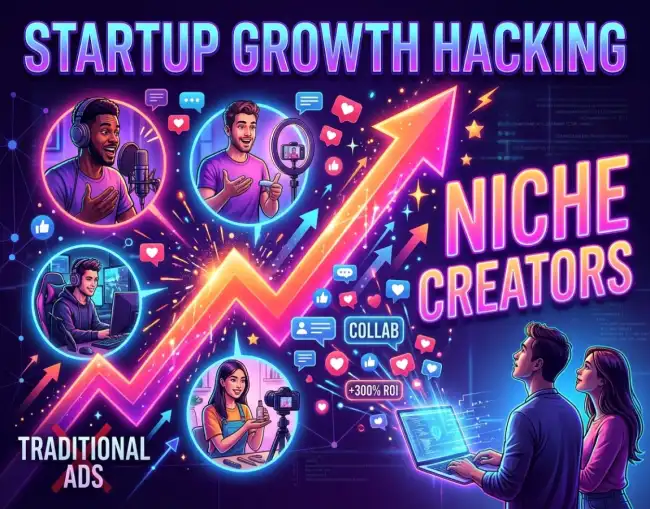
For over a decade, the standard playbook for early-stage startup growth was straightforward, scalable, and deceptively predictable: raise a round of venture capital, allocate 60% of it to Meta and Google ad managers, optimize bidding strategies, and watch the top-of-funnel user base expand. This pay-to-play paradigm built tech giants, but in the current economic landscape, that engine has seized. Customer Acquisition Cost (CAC) across paid social and search channels has skyrocketed by over 220% in recent years, driven by privacy shifts such as Apple's App Tracking Transparency (ATT) framework, ad saturation, and aggressive bidding competition from deep-pocketed incumbents. For bootstrapped and venture-backed startups alike, relying solely on traditional paid acquisition has mutated from a growth lever into a cash-burning liability.
As performance marketing efficiency declines, a fundamental shift is occurring across the digital growth landscape. Consumers have developed profound ad blindness to corporate spiels, algorithmic carousels, and slickly produced commercial spots. Trust has migrated away from brand logos and redirected toward hyper-focused individuals—niche creators who cultivate dedicated, highly engaged micro-communities around specific passions, technical domains, and lifestyle verticals. These creators do not merely possess reach; they hold concentrated authority, contextually dense trust, and high-converting audience intent.
This reality has given birth to modern trust-based growth hacking: systematically leveraging niche creators as product evangelists, co-creators, and dynamic distribution nodes instead of burning budget on traditional ad auctions. By shifting capital, product access, and strategic equity toward niche creator partnerships, early-stage companies can achieve exponential viral loops, dramatically lower CAC, and build defensive brand moats that paid ads can never replicate. This definitive guide details the exact frameworks, operational playbooks, and strategic architecture required to execute a hyper-scalable, niche creator growth hacking campaign.
The Mechanics of Niche Creator-Led Growth Hacking
To understand why niche creator strategies outperform paid channels, growth leaders must first re-examine the core mechanics of customer trust and attention. Traditional advertising functions through cold interruptions; it forces a commercial message onto a user who is engaged in an unrelated digital task. In contrast, creator-led distribution leverages warm context. When a specialized creator integrates a product into their workflow, tutorial, or narrative, the recommendation operates as a peer-to-peer endorsement rather than a corporate pitch.
This dynamic relies on a concept known as trust arbitrage. Establishing trust directly with a cold target audience requires substantial touchpoints, high creative spend, and prolonged retargeting sequences. However, a niche creator with 5,000 to 50,000 followers has already spent years establishing credibility, curating content, and engaging with their specific community. By partnering with these hyper-focused figures, startups effectively rent that pre-existing trust at a fraction of the cost required to build it from scratch through cold advertising.
Furthermore, growth-focused startups must distinguish between generic macro-influencer campaigns, basic User Generated Content (UGC), and true Creator Advocacy. The table below outlines the core differences between these content assets:
- Macro-Influencers (100k+ Followers): High reach, low contextual relevance, broad demographic mix, expensive flat fees, and rapidly diminishing engagement rates (often below 1.5%). Useful for legacy brand awareness, but disastrous for startup performance metrics.
- Basic UGC (User Generated Content): Scripted video assets created by actors or hired gig workers designed to mimic authentic social posts. While effective as creative variations within paid ad accounts, UGC lacks built-in organic distribution and creator audience trust.
- Niche Creator Advocates (1k–50k Followers): Deep vertical specialization (e.g., Rust software engineering, specialized biohacking, micro-SaaS design), high engagement rates (often 5% to 12%), and direct audience trust. Content naturally drives immediate action, organic discussion, and peer recommendations.
Deconstructing CAC: Why Niche Creators Outperform Traditional Ad Spend
The Math Behind the Margin Shift
The core economic argument for creator-led growth hacking lies in unit economics. In traditional digital ad channels, your Return on Ad Spend (ROAS) decreases as spend scales. Algorithmic auctions charge higher Prices Per Impression (CPM) as you broaden target audiences beyond early adopters, resulting in diminishing returns and inflating your CAC over time.
Niche creator strategies flip this cost structure. When a startup partners with micro and nano-creators, agreements are typically structured around performance incentives, revenue shares, product access, or low flat fees tied to performance bonuses. Because these creators operate within hyper-specific audience verticals, conversion rates (CVR) are significantly higher—often 3x to 5x higher than cold paid social ads. This hyper-relevance depresses CAC while maximizing Customer Lifetime Value (LTV), as users acquired through trusted niche recommendations demonstrate lower early-churn metrics.
Algorithmic Native Distribution & Organic Reach Multipliers
Modern short-form video algorithms (such as TikTok, Instagram Reels, and YouTube Shorts) prioritize content metrics like watch time, completion rates, shares, and comment velocity over raw follower accounts. A hyper-niche video created by an authentic user that deeply resonates with 10,000 technical specialists will trigger algorithmic distribution far more effectively than a generic commercial.
By coordinating synchronized content drops across dozens of niche creators simultaneously, startups can create an organic echo-chamber effect. Potential customers see the product referenced across multiple independent creators within a short window, creating a perception of ubiquity within that specific market niche—all without spending a single dollar on traditional ad impressions.
Sourcing and Vetting Hyper-Niche Creators
Contextual Density Over Follower Count
The primary error startups make when entering creator marketing is relying on vanity metrics like follower count. A creator with 200,000 generic lifestyle followers will routinely underperform a micro-creator with 8,000 followers focused strictly on workflow optimization for developer ops teams. Growth hackers evaluate potential partners through the lens of contextual density: the degree to which a creator's audience overlaps with your exact ideal customer profile (ICP).
When sourcing creators, analyze the conversation occurring in the comment section of their posts. Are followers asking detailed questions, seeking product advice, and sharing their own experiences? Or are the comments filled with generic emojis and surface-level compliments? High comment density with intent-driven inquiries signals an audience that acts on creator recommendations, making them ideal targets for growth collaborations. Aspiring creators looking to build this level of dedicated audience often rely on frameworks detailed in From Zero to 100K: The Step-by-Step Personal Branding Playbook for New Creators, which illustrates how narrow authority drives trust.
Audit Framework: Spotting Fake Engagement and Low-Intent Audiences
To protect your startup's capital and bandwidth, implement a systematic vetting process before extending partnership offers. Prior to reaching out, put prospective creators through a four-stage audit:
- Engagement Rate Calculation: Calculate the average engagement rate across their last 20 posts ((Total Likes + Comments + Shares) / Total Followers * 100). For micro-creators under 50,000 followers, target an engagement rate of at least 4% to 8%.
- Audience Authenticity & Distribution Check: Utilize discovery and analytical platforms (such as Modash, Phyllo, or HypeAuditor) to review follower growth trajectories. Watch out for sudden vertical spikes in follower count without corresponding viral content, as this typically indicates purchased bot accounts or engagement pods.
- Commercial Alignment & Ad Saturation: Review the creator’s recent feed. If every third post is a sponsored video for an unrelated product, their audience likely suffers from ad fatigue, diminishing the conversion impact of your partnership. Target creators who selectively partner with brands they naturally use.
- Brand Safety and Domain Authority: Ensure the creator’s past discourse aligns with your company’s core values and regulatory compliance standards, particularly for fintech, healthtech, and enterprise software startups.
Structuring Win-Win Compensation Models
Hybrid Compensation Models (Base + Performance Bonus)
To align creator incentives with startup business objectives, move away from high upfront flat-fee contracts. Instead, construct hybrid compensation models that reduce downside risk for the startup while providing upside potential for high-performing creators.
A proven hybrid compensation model combines a modest base fee—covering the creator's labor, production costs, and base distribution access—with an aggressive performance tier. For example, a developer tools startup might offer a $300 base fee per dedicated video post, supplemented by a $20 commission for every qualified free-tier sign-up and a 15% revenue share on paying subscriptions generated for the first 12 months. This structure establishes immediate trust with the creator while heavily incentivizing them to optimize their messaging for conversions.
Creator Equity and Revenue Share Playbooks
For early-stage startups with tight cash reserves, offering strategic equity or perpetual revenue shares can unlock access to top-tier niche creators who would otherwise demand thousands of dollars per post. This strategy transforms traditional influencer marketing into a long-term advisory and distribution partnership.
Insider Playbook: The Creator Equity Pool Framework
Set aside a dedicated pool of phantom equity or advisory options (typically 0.1% to 0.5% per high-impact creator, vesting over 12 to 24 months) reserved for niche creators who agree to act as official brand advisors and distribution anchors. In exchange, the creator commits to regular product integration, quarterly feature drops, user feedback sessions, and exclusive category representation. This strategy aligns the creator's financial incentives directly with the company's long-term valuation growth.
Content Co-Creation and Format Innovation
Moving Beyond Static Sponsorships to High-Tension Storytelling
Standard sponsored shout-outs—where a creator pauses their normal content to deliver a scripted 30-second commercial—yield poor conversion results in modern markets. High-growth startups focus instead on narrative integration, where the product serves as the resolution to a clear problem or core challenge showcased in the creator's video.
Work with creators to design high-tension, problem-solution arcs native to their content format. For instance, rather than having a productivity creator say, "This video is sponsored by App X," have them design a challenge video titled "I Rebuilt My Entire Workflow in 48 Hours Using Only AI Tools." The startup's product is then integrated organically into the narrative as an indispensable operational engine, maximizing retention and purchase intent. Understanding these structural shifts is vital, as explored in The Death of the Static Post: Why Dynamic Interactive Content Wins in 2025, which details how engaging formats outperform rigid promotional assets.
Interactive Demos and Product-Led Growth Integration
For Product-Led Growth (PLG) SaaS and digital software startups, content co-creation should directly trigger product trial experiences. Provide creators with unique landing page environments, specialized product templates, or pre-configured dashboards that their audience can duplicate with a single click.
When a creator demonstrates a workflow using a custom template created specifically for their community, the barrier to user activation drops dramatically. The user does not just sign up for your application; they immediately land in an optimized workspace pre-filled with values curated by the creator they trust, resulting in accelerated activation rates and lower early-stage drop-off.
Programmatic Outreach & Relationship Management Systems
Building Cold Outreach Pipelines That Convert
Scaling a niche creator strategy from a pilot program into a predictable growth engine requires a disciplined outreach process. Treat creator acquisition with the same operational rigor as outbound enterprise B2B sales pipelines.
Avoid generic, mass-blast emails sent to contact addresses found in social bios. Highly sought-after micro-creators ignore templated PR pitches. Construct personalized, contextually relevant cold emails using the following framework:
- Specific Observation: Open by referencing a specific piece of their content and explaining why a specific point resonated with your team.
- Value Proposition & Product Fit: Concisely explain what your startup builds and why it solves a tangible problem for their specific community.
- Clear, Low-Friction Offer: Propose a simple, flexible collaboration idea (e.g., free access to premium tiers, beta feature previews, or a custom performance package) without demanding immediate commercial commitments.
- Low-Stress Call to Action (CTA): Close with a simple, friction-free question (e.g., "Are you open to trying out the pro features this week, no strings attached?").
Managing Creator Ecosystems at Scale
As your program expands to include dozens or hundreds of active creators, managing logistics, product access, content approvals, tracking links, and payout processing becomes complex. Failing to streamline operational logistics causes campaign delays, communication breakdowns, and damaged creator relationships.
Build an internal operational infrastructure using dedicated CRM platforms (such as Grin, Modash, or custom Airtable databases) to monitor creator pipelines at each stage: Sourced, Contacted, Negotiating, Product Onboarding, Content Draft Received, Published, and Payout Sent. For startups operating campaigns across diverse geographic regions or running multi-creator pushes simultaneously, adopting cross-functional workflows is essential. Insights on managing complex creator initiatives can be found in Mastering the Multi-Creator Collab: Logistics, Egos, and Viral Masterpieces.
Real-World Case Studies: Execution Frameworks in Action
Scenario A: B2B SaaS Platform Scales to $1M ARR via Niche Developer Advocates
A early-stage cloud developer infrastructure startup faced prohibitive CAC on Google Search ads ($180 per free-trial sign-up for competitive terms like "CI/CD automation"). Their initial ad spend was burning cash with unsustainable payback periods exceeding 18 months.
The Strategy Pivot: The team reassigned 80% of their performance ad spend toward a programmatic micro-creator initiative. They identified 45 developers on YouTube, X (formerly Twitter), and Twitch who possessed specialized followings ranging from 2,000 to 25,000 subscribers. Instead of asking for paid ads, they invited these developers to open-source beta tests, built custom integrations for their open-source tools, and paid them a $200 stipend per video tutorial showcasing complex pipeline setups using the startup’s SDK.
The Results: Over a six-month period, the creators published 85 technical tutorials and code walkthroughs. Because the content targeted software engineers seeking real solutions, conversion rates from content link to sign-up averaged 14%. The startup's blended CAC plummeted from $180 down to $34, accelerating their ARR from $150k to $1.2M within 10 months, while building a library of high-ranking technical search content.
Scenario B: B2C Consumer Brand Failure vs. Niche Biohacker Strategy Shift
A direct-to-consumer functional beverage brand allocated $100,000 for a launch campaign built around high-cost macro-influencers (lifestyle creators with 200,000 to 500,000 followers). The initial campaign yielded visually attractive lifestyle assets, but resulted in disastrous conversion metrics: a net ROAS of 0.35x and a CAC nearly four times the product’s Average Order Value (AOV).
The Tactical Adjustment: The brand pivoted away from general lifestyle influencers and targeted hyper-niche scientific and health creators: longevity podcasters, functional medicine practitioners, and ultra-marathon runners with smaller followings (3,000 to 30,000 followers). They supplied these creators with batch-testing certificates, clinical trial documentation, and personal product allocations, structuring payouts as a low base fee combined with a 20% affiliate commission structure.
The Results: The niche health creators explained the physiological mechanisms behind the product's formulation, establishing credibility for the claims. The organic, educational content delivered a 3.4x ROAS, reduced target CAC by 68%, and built a monthly recurring subscription baseline that generated 45% of total company revenue within one year.
Top 5 Growth Hacking Pitfalls in Creator Marketing
-
Over-Scripting Content (Destroying Authenticity):
When founders attempt to force creators to read rigid, legal-approved corporate scripts word-for-word, the content instantly sounds like a traditional ad. This destroys creator authenticity and triggers immediate viewer bounce rates. Provide creators with structural guidelines, key technical features to highlight, and mandatory compliance disclaimers, but give them full creative freedom over the delivery and narrative frame.
-
Treating Creators as Transactional Ad Vendors:
Approaching creators with transactional, short-term attitudes creates friction and lowers content quality. Niche creators protect their personal brand and community trust carefully. Treat them as long-term strategic partners, solicit their direct product feedback, involve them in feature launches, and pay them promptly.
-
Failing to Whitelist and Spark Top-Performing Content:
Publishing content exclusively on a creator's organic social feed captures only a fraction of its total value potential. Negotiate user-access advertising rights (whitelisting or Meta Partnership Ads) upfront within your contracts. This allows your growth team to put performance ad spend behind high-converting creator posts, scaling their top-performing organic videos directly to lookalike audiences through performance paid ad channels.
-
Short-Term Campaign Mindsets vs. Perpetual Growth Engines:
Running a single one-off influencer push produces short-term spikes without sustainable growth momentum. Growth hacking with niche creators requires a perpetual flywheel approach: constantly sourcing, testing, optimizing, and scaling creator partnerships so content drops seamlessly week after week across your target market.
-
Neglecting First-Party Attribution & Dark Social Metrics:
Relying exclusively on standard last-click UTM attribution models leads to severe under-reporting of creator campaign impact. Consumers often view a niche creator's video, close the application, and search for the startup directly on desktop days later, or discuss it within private Slack communities, Discord channels, and dark social messaging threads. Implement post-purchase self-reported attribution surveys ("How did you first hear about us?") alongside custom referral discount codes to capture true full-funnel attribution.
Channel Comparison Matrix
The table below provides a side-by-side strategic analysis of traditional paid ad channels versus creator-led acquisition models to help growth leaders optimize their capital allocation strategies:
| Acquisition Vector | Avg. CAC Dynamics | Trust & Conversion Index | Content Longevity | Operational Effort | Optimal Startup Phase |
|---|---|---|---|---|---|
| Meta / Google Paid Ads | High & Increasing (Auction-based decay) | Low (High ad fatigue & ad-blocker usage) | Zero (Stops immediately when spend ceases) | Low (Algorithmic bidding & campaign management) | Post Product-Market Fit (Scaling established funnels) |
| Macro-Influencers (100k+) | Very High (Expensive upfront flat fees) | Moderate-Low (Broad, unsegmented audience) | Short (24-48 hour feed lifecycle) | Medium (Agency negotiations & contract management) | Series B+ (Mass brand awareness pushes) |
| Niche Creators (1k–50k) | Low to Moderate (High CVR offsets costs) | Very High (Hyper-focused domain authority) | High (Long-tail search discovery on YouTube/SEO) | High (Requires outbound sales infrastructure) | Pre-Seed to Series A (Validation & low-CAC growth) |
| Equity / Rev-Share Advocates | Ultra-Low Upfront (Capital preserved) | Maximum (Deep alignment & authentic advocacy) | Perpetual (Ongoing baseline integration) | Very High (Legal, relationship management, equity logistics) | Seed to Series A (Core category anchor building) |
Frequently Asked Questions
How do startups track direct ROI when niche creator mentions happen across dark social channels?
Tracking the full economic footprint of niche creator campaigns requires a multi-layered attribution architecture rather than relying solely on single-link Google Analytics tracking. Start by assigning every creator a dual attribution setup: a unique UTM link for direct description placements alongside a memorable, custom promo code (e.g., CREATOR15) displayed visually on-screen during the video content.
To capture dark social conversions—where a user sees a creator post, does not click the direct link, but converts later via direct search—implement an mandatory zero-party post-purchase attribution survey on your checkout page asking: "How did you first hear about us?" Selectable options should include specific creator names alongside general organic discovery options. Cross-reference survey response spikes, promo code usage, and baseline organic search lifts during active campaign periods to calculate accurate blended CAC and true marketing return on investment.
What is the ideal budget allocation for a pre-Series A startup testing niche creator growth hacking?
For early-stage startups initiating their first creator growth loops, allocate between $3,000 and $10,000 per month for a dedicated pilot phase lasting 90 days. Rather than spending that entire budget on one or two larger creators, distribute capital across a testing portfolio of 10 to 25 micro-creators, allocating $200 to $500 per partner in base compensation alongside affiliate incentives.
This distributed portfolio strategy spreads risk while generating statistically meaningful performance data across different messaging angles, content formats, and micro-audience verticals. Once the pilot identifies the top 20% of high-converting creators, reallocate remaining budget to double down on those top performers through long-term retainers, whitelisting authorization, and dynamic performance bonuses.
Should startups draft custom creator contracts or use standardized platform agreements?
While third-party influencer platforms provide standardized agreements, early-stage startups leveraging growth hacking strategies should utilize tailored creator agreement templates created alongside legal counsel. Standard agreements often omit critical intellectual property rights, whitelisting parameters, and usage terms that are essential for maximizing asset
Be the first creator to share your take on this story.