
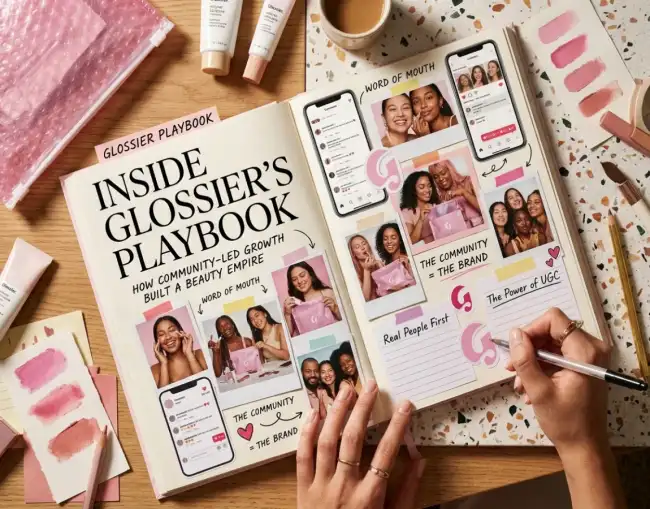
In the hyper-saturated landscape of modern digital commerce, legacy top-down advertising models are burning out. Consumers have grown aggressively immune to polished, high-production commercial spots and transactional celebrity endorsements. They no longer buy what brands tell them is desirable; instead, they buy what their peers, micro-creators, and deeply trusted community networks validate. This paradigm shift has fundamentally dismantled traditional marketing funnels, replacing them with dynamic, decentralized ecosystems where consumers are no longer passive targets, but active co-creators, stakeholders, and brand evangelists.
At the bleeding edge of this cultural and commercial revolution sits the iconic beauty brand that redefined direct-to-consumer (D2C) retail. By treating its audience not as a demographic to be milked for quarterly conversions, but as a living, breathing editorial collective, this disruptor bypassed millions in traditional ad spend to build a billion-dollar valuation. Dissecting the Glossier playbook reveals a masterclass in modern brand architecture. It proves that when you prioritize a genuine brand community over transactional customer service, retention skyrockets, acquisition costs plummet, and your audience becomes your most lethal sales force.
For modern digital publishers, brand strategists, and ambitious founders, understanding this blueprint is no longer optional—it is survival. As customer acquisition costs (CAC) across Meta, TikTok, and Google continue their relentless climb, the only sustainable moat left is an organic, self-sustaining community-led growth engine. This exhaustive, deep-dive investigative playbook breaks down the exact mechanisms, psychological triggers, and strategic execution steps that turned a humble beauty blog into a global empire—and how you can replicate its astonishing success in your own niche.
Deconstructing the Genesis: From Editorial Blog to E-Commerce Juggernaut
The Power of Intimacy and Insider Access
Long before a single tube of lip balm or cleanser was manufactured, the foundation of the empire was laid through a digital publication called Into The Gloss. Founded by Emily Weiss in 2010, the site interviewed industry insiders, models, and everyday women about their beauty routines. Crucially, it inverted the traditional beauty magazine dynamic. Instead of dictating what was cool from an ivory tower of editors, Into The Gloss invited readers into the physical bathrooms of aspirational figures, encouraging raw, unfiltered dialogue in the comments section.
This editorial approach established an unprecedented level of intimacy and trust. When the time came to launch physical products, the audience was primed. They weren't strangers being pitched a new SKU; they were founding co-creators who had spent years discussing product pain points, packaging desires, and formula preferences in blog comments. This early phase teaches a vital lesson: building a community-led brand requires laying a cultural foundation long before you ever monetize. You must build an intellectual and emotional stake with your audience first.
Listening as a Core Product Development Strategy
Most traditional consumer packaged goods (CPG) companies spend small fortunes on focus groups and blind testing, often missing the mark entirely. The Glossier playbook tossed out this playbook by treating their comment sections and Slack channels as an infinite, real-time R&FocusValue group. Every product launched in the early days—from the ubiquitous Balm Dotcom to the Boy Brow—was a direct response to a gap identified by the community.
When readers repeatedly lamented that they couldn't find a cleanser that didn't strip their skin or a brow gel that didn't feel crunchy, the brand listened, formulated, and tested publicly. By crowdsourcing product ideas and validating them through dialogue, they eliminated the risk of launching dead inventory. When you build products *with* your community rather than *for* them, the launch day demand is virtually guaranteed because the market has already pre-ordered validation.
Architecting the Community-Led Growth Engine
The Micro-Influencer Shift and Decentralized Advocacy
Traditional brand partnerships rely heavily on macro-influencers with millions of passive followers, often resulting in low engagement and exorbitant costs. Glossier pioneered a radically different approach by identifying and empowering everyday consumers, beauty enthusiasts, and micro-influencers as their primary brand representatives. They recognized that a recommendation from a college roommate with 1,500 followers carries infinitely more social proof than an endorsement from a Hollywood actress who clearly collected a check.
This decentralized advocacy model democratized influence. The brand equipped hundreds of passionate brand representatives with personalized discount codes, early access to product drops, and direct lines of communication to corporate headquarters. This strategy mirrors the collaborative dynamics seen when digital pioneers orchestrate Cross-Border Collabs: Bridging Cultural Divides for Global Social Impact, where shared values and mutual respect drive authentic audience mobilization rather than corporate mandates. By treating micro-creators as true partners rather than transient ad inventory, they built an army of fiercely loyal advocates.
Designing Instagram-Native Packaging and Physical Spaces
In a community-led growth model, your product packaging and retail touchpoints must double as organic marketing collateral. Glossier understood early on that beauty products needed to be aesthetically compelling enough to live on a customer's vanity—and more importantly, to be photographed and shared on social media. The signature millennial pink bubble wrap pouches, minimalist typography, and tactile bottles transformed unboxing into a ritualistic, shareable event.
Furthermore, their physical retail pop-ups and permanent flagships were meticulously designed not just to sell merchandise, but to serve as experiential hubs for the community. These spaces featured dedicated selfie stations, highly trained "offline editors" who acted as peers rather than aggressive commission-driven salespeople, and communal areas designed for gathering. Retail ceased to be a point of transaction; it became a clubhouse for the tribe.
Operationalizing the Playbook: Step-by-Step Strategic Blueprint
Step 1: Define Your Niche Cultural Identity
You cannot build a thriving brand community by trying to appeal to everyone. Mass appeal is the enemy of deep community connection. Your brand must stand for a distinct aesthetic, a specific philosophy, or a counter-cultural point of view that alienates the uninitiated while fiercely galvanizing the insiders.
To execute this, audit your brand’s core messaging. Does it sound like a sterile corporate entity, or does it sound like a passionate, opinionated friend? Establish a clear editorial voice across all digital channels, and lean into niche subcultures that are currently underserved by legacy incumbents.
Insider Tip: Create an internal brand manifesto that defines not just what your products do, but what cultural beliefs your company refuses to compromise on. Share this ethos openly with your earliest customers to filter for true believers.
Step 2: Cultivate Direct-to-Consumer Feedback Loops
Community-led growth requires active listening infrastructure. You cannot simply broadcast marketing messages on social media and ignore the comment sections. You must institutionalize feedback collection across every customer touchpoint.
Implement post-purchase surveys that go beyond basic star ratings to ask qualitative questions about customer desires and pain points. Set up dedicated Discord servers, private Facebook groups, or VIP customer councils where product developers can ask raw, unfiltered questions before finalizing a new line.
Insider Tip: Spotlight community feedback publicly. When a customer suggests a packaging tweak or a shade extension and you implement it, tag them and give them public credit. This reinforces the psychological contract that they co-own the brand.
Step 3: Transition from Paid Ads to Creator Partnerships
Scale your acquisition efforts by shifting budget away from opaque programmatic display ads and toward long-term, relationship-driven creator partnerships. Focus heavily on nano- and micro-influencers who demonstrate high engagement rates and genuine alignment with your niche.
Equip these partners with recurring commission structures, affiliate dashboards, and exclusive creative assets. Much like producers navigating The Dark Side of Sponsorships: Avoiding Predatory Brand Deals and Scams, you must ensure your creator agreements are transparent, equitable, and mutually beneficial to prevent burnout and protect your brand's integrity.
Insider Tip: Host intimate virtual or in-person salons for your top-performing creators. Giving them access to executive leadership fosters intense psychological loyalty that money alone cannot buy.
Step 4: Gamify Advocacy and Organic Sharing
Turn customer loyalty into a rewarding game. People love to feel recognized, valued, and elevated within a social hierarchy. Create clear pathways for dedicated community members to level up from casual buyers to official brand ambassadors.
Designate special titles, secret drop links, and physical insignia for your most active community participants. Encourage User-Generated Content (UGC) by running continuous challenges, hashtag campaigns, and creative contests where the prize is not just free product, but having their content featured on the brand's primary digital channels.
Insider Tip: Never underestimate the power of physical swag. Sending unexpected, personalized care packages to hyper-active community members triggers massive organic unboxing stories on social media.
Step 5: Leverage Live Experiences for Maximum Momentum
Take your digital community offline with high-impact, experiential activations. Whether it is an intimate dinner in a major metropolitan city or a large-scale interactive pop-up, physical gatherings solidify digital bonds into real-world friendships.
Ensure these events are designed with community connection in mind rather than hard selling. When brands master experiential marketing, attendees leave feeling like members of an exclusive club, driving powerful word-of-mouth referral loops in their local networks. For advanced execution frameworks on large-scale community events, study methodologies similar to those used when digital organizers orchestrate How to Host a Charity Livestream That Breaks Internet Records to capture massive concurrent attention and engagement.
Insider Tip: Give local community members early VIP access to these physical events before opening tickets to the general public, reinforcing their status as insiders.
Real-World Case Studies: Execution vs. Pitfalls
Case Study A: The Triumphant Rise of Glossier's Boy Brow Launch
When Glossier prepared to launch Boy Brow, they didn't rely on a traditional celebrity campaign. Instead, they shared the behind-the-scenes formulation journey on Into The Gloss, documenting how difficult it was to find a brow pomade that didn't stiffen hair. They teased the product to their micro-influencer network months in advance, seeding thousands of units to trusted beauty junkies.
The result was an organic tidal wave of enthusiasm. When the product officially dropped, it sold out within days, generating endless waitlists and organic review videos across YouTube and Instagram. By letting the community co-anticipate the release, the brand turned a simple grooming tool into a cultural artifact.
Case Study B: The Pitfall of Scaling Too Fast Without Core Alignment
Conversely, many DTC brands attempt to replicate the playbook by scaling paid acquisition and hyper-expansion before establishing a genuine community moat. When a brand floods the market with performance ads without a strong cultural foundation, their CAC skyrockets as soon as ad fatigue sets in.
Furthermore, when brands attempt to pivot their product lines to chase fleeting algorithmic trends without consulting their core audience, customer churn spikes dramatically. The lesson is clear: community-led growth cannot be faked or rushed. It requires deep patience, consistent listening, and unwavering commitment to your foundational tribe.
Critical Mistakes to Avoid in Community-Led Growth
- Treating Community as a Marketing Channel: Viewing your community as a cheap distribution list rather than a relational ecosystem will destroy trust instantly. Community is an end in itself, not a transactional funnel.
- Ignoring Negative Feedback: Deleting critical comments or silencing unhappy customers signals that you care more about PR than product excellence. Transparently addressing flaws builds monumental trust.
- Over-Corporate Messaging: Using sterile, overly polished corporate jargon alienates digital consumers who crave authenticity and human connection. Talk like a peer, not a conglomerate.
- Neglecting Micro-Advocates: Chasing only mega-influencers while ignoring the everyday creators who built your brand creates resentment and severs the grassroots connection.
- Failing to Scale Listening Infrastructure: As your brand grows, if you fail to invest in systems that capture community feedback, you will lose touch with the exact consumer base that made you successful.
Comprehensive Comparison Table: Traditional Marketing vs. Community-Led Growth
| Strategic Metric | Traditional Top-Down Marketing | Glossier-Style Community-Led Growth |
|---|---|---|
| Primary Acquisition Driver | Paid Meta/Google Ads & Celebrity Endorsements | Organic Word-of-Mouth & Micro-Creator Networks |
| Customer Relationship | Transactional buyer to be monetized | Co-creator, insider, and brand evangelist |
| Product Development | Closed internal R&D and executive guesswork | Crowdsourced feedback loops and public testing |
| Customer Acquisition Cost (CAC) | High and continuously rising with ad inflation | Low and sustainable via organic referral loops |
| Retention Rate | Low (reliant on continuous discounting and ads) | High (anchored in identity and tribal loyalty) |
Frequently Asked Questions (FAQ)
What is the core difference between influencer marketing and community-led growth?
Influencer marketing is typically transactional: a brand pays a creator to push a product to their audience. Community-led growth, on the other hand, is relational and decentralized. It treats customers and creators as co-owners and insiders of the brand’s journey, fostering organic advocacy that transcends paid sponsorships.
How long does it take to build a profitable brand community from scratch?
Building an authentic brand community is a marathon, not a sprint. Founders should expect to invest 12 to 24 months of consistent content creation, active listening, and relational engagement before seeing significant compounding returns in organic acquisition and retention.
Can community-led growth work for B2B or non-beauty brands?
Absolutely. While popularized in beauty and fashion, the principles of community-led growth—transparent communication, customer-led product development, and micro-advocacy—are successfully driving massive growth in SaaS, fintech, hardware, and consumer packaged goods.
How do you measure the ROI of a brand community?
Measuring community ROI requires looking beyond immediate sales conversions. Key metrics include organic referral traffic, customer lifetime value (LTV), repeat purchase frequency, user-generated content volume, and sentiment analysis within your digital touchpoints.
What tools are best for managing a modern brand community?
Depending on your audience, tools range from Discord and Slack for real-time dialogue to dedicated community platforms like Circle and Mighty Networks, alongside robust CRM systems that track micro-creator engagement and UGC sharing.
Strategic Roadmap & Final Takeaway
The playbook established by Glossier has forever altered the rules of modern commerce. In an era where digital noise is deafening and consumer skepticism is at an all-time high, brute-force advertising is a dying strategy. The future belongs entirely to brands that build authentic, resilient ecosystems rooted in listening, co-creation, and genuine human connection.
Your immediate next steps are clear: audit your current marketing mix, dismantle sterile corporate communication channels, and establish active feedback loops with your most passionate early adopters. Treat your audience like human beings rather than conversion metrics, and watch your brand evolve from a disposable product into an indispensable cultural movement.
Be the first creator to share your take on this story.