
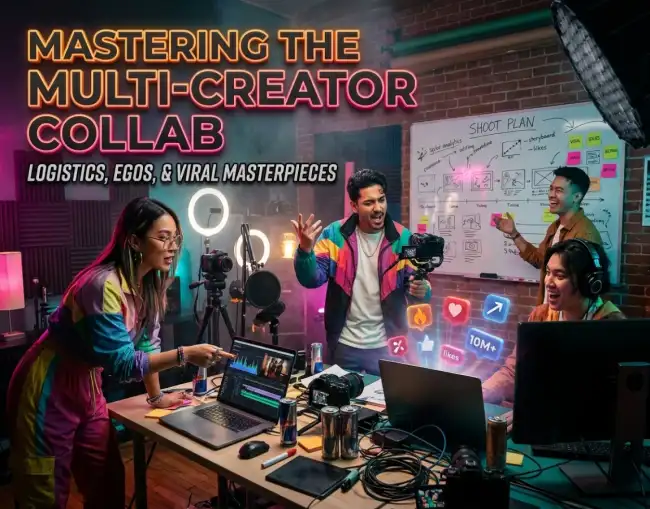
The digital content landscape has undergone a seismic shift away from isolated, single-creator broadcasts toward hyper-connected, sprawling collaborative ecosystems. Audiences are no longer satisfied with the polished yet predictable output of an individual influencer operating in a vacuum. Instead, modern viewers crave the dynamic friction, shared cultural cachet, and unpredictable chemistry that occur when multiple digital powerhouses collide on screen. However, orchestrating this convergence is far from a casual exercise in creative serendipity. Behind every viral multi-creator masterpiece lies a labyrinthine structure of logistical hurdles, competing contractual demands, clashing creative visions, and massive ego management that can make or break an entire marketing initiative.
For brands, agencies, and top-tier creators alike, executing a successful multi-creator collaboration requires moving past amateur enthusiasm into rigorous enterprise-grade campaign management. When three, five, or ten distinct creative brands merge their audiences and workflows, the margin for operational error shrinks to zero. A single miscommunicated deliverable date, an unresolved intellectual property dispute, or an unmanaged personality clash can cascade into public relational crises and wasted ad spend. As the digital economy pivots heavily toward shared attention economies, mastering the art and science of the multi-creator collaboration has become the definitive competitive advantage for industry leaders seeking exponential scale and enduring cultural relevance.
This comprehensive manual will deconstruct the anatomy of world-class multi-creator campaigns, offering an exhaustive, step-by-step framework to navigate the treacherous waters of multi-party logistics, ego mitigation, and viral content engineering. Whether you are scaling an enterprise product launch or attempting to capture lightning in a bottle through unscripted digital entertainment, the insights shared within this guide will transform chaotic group projects into calculated, predictable engines of digital dominance.
Foundational Principles and Mechanics of Multi-Creator Collaborations
To successfully execute a multi-creator campaign, one must first deconstruct the fundamental mechanics that govern audience crossover and psychological alignment. Unlike traditional single-creator partnerships, a multi-creator collaboration operates as a decentralized network where authority is distributed rather than centralized. Understanding the physics of attention distribution, algorithmic amplification, and creative synergy is the bedrock upon which all successful campaigns are built.
At its core, a multi-creator collaboration is designed to achieve audience arbitrage—the deliberate cross-pollination of loyal subscriber bases across distinct vertical niches or adjacent demographic segments. When creators pool their equity, they do not merely add their follower counts together; they create a compounding algorithmic effect. Platforms like YouTube, TikTok, and Instagram reward content that triggers simultaneous engagement spikes across disparate user graphs. If you want to understand how shifting consumer expectations have transformed digital publishing, consider reading insights outlined in The Death of the Static Post: Why Dynamic Interactive Content Wins in 2025, which details the interactive mechanics driving modern viewer retention.
Furthermore, managing the mechanics requires establishing a clear hierarchical structure of accountability before a single camera rolls. In many collaborative failures, the root cause is a lack of defined roles—who serves as the executive producer, who handles technical editing, and who owns final distribution rights. By establishing these operational parameters early, stakeholders can insulate the creative process from administrative friction, ensuring that artistic passion remains the primary engine driving the project forward.
Step 1: Strategic Alignment and Creator Selection
Defining Campaign Objectives and KPI Mapping
Every successful multi-creator collaboration begins with an unyielding commitment to clear, measurable objectives. Too many campaigns fail because brands and creators prioritize vanity metrics like aggregate view counts over tangible business outcomes such as conversion rates, app downloads, or community growth. Before initiating outreach, project leaders must define the primary Key Performance Indicators (KPIs) that will govern the partnership. Are you optimizing for top-of-funnel brand awareness, middle-of-funnel consideration, or direct-response sales? Aligning these targets early dictates every subsequent decision, from the choice of talent to the narrative structure of the content itself.
Once KPIs are established, map them directly to the strengths of the participating creators. For instance, if the goal is high-intent conversions, pair a macro-creator known for high production value with micro-creators who command hyper-engaged, niche communities. This hybrid approach ensures that top-of-funnel reach is immediately funneled into trusted community spaces where purchasing decisions are actually made. Document these expectations in a comprehensive brief that outlines not just what needs to be created, but why it matters to the broader strategic vision of all involved parties.
Audience Overlap Analysis and Niche Complementarity
A fatal error in creator selection is collaborating with influencers whose audiences are exact carbon copies of one another. True growth stems from strategic complementarity—pairing creators whose niches intersect naturally without cannibalizing each other's core demographics. Conduct a thorough audience overlap analysis using advanced social listening tools and demographic data reports. You are looking for adjacent verticals: a fitness creator collaborating with a nutritional tech reviewer, or a travel vlogger teaming up with a specialized gear designer.
This complementarity creates a natural narrative tension that captivates audiences. When two creators from slightly different digital worlds come together, there is an inherent educational and entertainment value as they exchange perspectives. Creators who are too similar often result in redundant content that fails to stimulate algorithmic curiosity, whereas poorly matched creators create cognitive dissonance that alienates both fanbases. Strive for the "adjacent sweet spot" where distinct communities discover shared passions.
Assessing Creative Chemistry and Brand Safety
Data metrics and follower counts are merely table stakes; true viral potential hinges on interpersonal chemistry. Before signing contracts, conduct live chemistry reads or casual virtual workshops with prospective collaborators. Can they riff off one another? Do their comedic timings or analytical styles complement or compete with each other? If two creators display underlying tension or forced camaraderie during a test call, that friction will magnify exponentially under the hot lights of production.
Simultaneously, rigorous brand safety audits must be performed across all participating creators. A single controversial past statement or misaligned brand association from one collaborator can instantaneously contaminate the reputation of the entire cohort. Implement a multi-layered vetting process that reviews historical content, engagement sentiment, and off-platform digital footprints. Protecting the collective equity of the group requires zero tolerance for unmitigated reputational liabilities.
Step 2: Ironclad Contractual Frameworks and Legal Logistics
IP Ownership, Usage Rights, and Licensing Terms
When multiple creators contribute intellectual property, likeness, and creative output to a single master asset, legal ambiguity is a ticking time bomb. The contractual framework must explicitly define who owns the master footage, how raw files can be repurposed, and what usage rights are granted to participating brands and individual creators. Without explicit clauses addressing intellectual property, disputes over monetization splits, derivative works, and archival distribution can paralyze a campaign post-launch.
Furthermore, usage rights must detail exact timelines, geographical limitations, and platform-specific deployments. Can a participating creator chop up the master video into TikToks months after the initial drop? Can the sponsoring brand utilize snippets in paid performance marketing campaigns? These questions must be answered in black and white within the master collaboration agreement. For emerging creators looking to navigate these complex legal waters and protect their long-term equity, studying foundational strategies found in From Zero to 100K: The Step-by-Step Personal Branding Playbook for New Creators provides essential guidance on safeguarding intellectual property.
Revenue Sharing Models and Compensation Structures
Financial transparency is the ultimate safeguard against collaboration toxicity. Compensation models in multi-creator projects generally fall into three categories: flat-rate sponsorships, tiered performance bonuses, and back-end revenue sharing. When multiple creators share screen time, flat fees can lead to resentment if one creator feels they drove 80% of the traffic while receiving an equal payout. Implementing a hybrid model—base compensation coupled with affiliate kickbacks or proportional ad-revenue splits—aligns incentives across the board.
Drafting clear payment milestones tied to deliverable approvals ensures compliance and maintains momentum. Never disburse the entirety of project funds upfront. Instead, structure payments around pivotal gateways: contract execution, rough-cut approval, final master delivery, and post-campaign analytics review. This rigorous financial scaffolding maintains leverage and ensures all parties remain fully invested in the campaign's ultimate success.
Dispute Resolution and Crisis Management Protocols
No matter how meticulously a campaign is planned, unforeseen crises will inevitably arise—ranging from production delays and medical emergencies to sudden public relations storms. An ironclad contract must include a dedicated dispute resolution clause that outlines mediation procedures, arbitration venues, and predetermined off-ramps for uncooperative participants. If a creator decides to walk away halfway through production, what happens to their likeness rights and already-shot footage?
Additionally, establish a unified crisis management protocol. Designate a single authoritative voice or agency lead to handle external communications if a controversy erupts during the campaign rollout. Creators are fiercely protective of their personal brands, and panic can cause them to make impulsive public statements that exacerbate rather than mitigate crises. Pre-approved messaging frameworks ensure the collective response remains calm, coordinated, and protective of all stakeholders.
Step 3: Orchestrating the Creative Vision and Production Logistics
Co-Authoring the Narrative and Scriptwriting
The transition from individual content creation to multi-creator production requires a shift from solo authorship to collaborative screenwriting. When multiple distinct voices attempt to direct a narrative, the final product can easily devolve into an incoherent mess of competing talking points. To prevent this, appoint a lead showrunner or creative director—someone respected by all participants—to anchor the narrative arc while weaving in each creator's signature comedic or analytical style.
The writing process should involve an interactive workshop where all creators pitch ideas, test hooks, and challenge weak plot points. This collaborative scriptwriting builds collective ownership of the final piece. Every creator should feel that their character archetype, signature catchphrases, and core messaging pillars are authentically represented in the script. When creators genuinely believe in the script, their on-camera performance radiates authentic enthusiasm that viewers can instantly perceive.
Managing Production Schedules, Locations, and Crew Logistics
Aligning the calendar of a single top-tier creator is challenging enough; synchronizing the travel itineraries, shooting schedules, and personal commitments of five major influencers is an extreme logistical marathon. Production management requires booking dates months in advance, securing neutral production spaces or travel hubs, and building generous contingency buffers into the timeline. If Creator A experiences flight delays or Creator B falls ill, the entire production schedule must possess the elasticity to absorb the shock without collapsing.
Beyond talent management, technical crew logistics demand meticulous oversight. Ensure that lighting, multi-cam audio rigs, and data management workflows are standardized across the entire shoot. In multi-creator setups, dropped audio tracks or mismatched color profiles from inferior secondary cameras can ruin hours of priceless unscripted banter. Invest in professional production crews who specialize in unscripted digital entertainment and understand how to manage high-energy talent on set.
Balancing Creative Freedom with Brand Guidelines
One of the most delicate tightropes in influencer marketing is balancing the rigorous compliance demands of corporate brand guidelines with the raw, unfiltered authenticity that made the creators famous in the first place. When corporate legal and marketing teams over-sanitize a multi-creator project, the content becomes stiff, overtly commercial, and is promptly rejected by cynical digital audiences.
The solution lies in shifting from prescriptive scripting to thematic guardrails. Instead of handing creators a rigid, word-for-word commercial script, provide a robust messaging matrix that outlines core value propositions, mandatory product callouts, and legal disclaimers, while granting creators complete autonomy over *how* they deliver those points in their native voice. Trust the creators—they understand their audiences better than any brand manager ever could.
Step 4: Ego Management and Interpersonal Dynamics
Navigating the Psychology of Digital Powerhouses
High-performing digital creators are, by nature, high-agency individuals who are accustomed to being the undisputed stars of their own digital universes. When you place three or four alpha creators into the same room, invisible psychological battles for screen dominance, comedic timing, and conversational control inevitably ignite. Mastering ego management is arguably the most critical skill required for campaign success; ignore it, and your production will implode from internal tension.
Successful producers act as diplomatic anchors on set, consciously validating each creator's unique status while gently steering the group dynamic toward collaborative harmony. This involves understanding the psychological triggers of talent—some creators need public praise and aggressive hyping, while others require quiet focus and technical reassurance. By tuning into these micro-dynamics, you can neutralize defensive behaviors and foster an environment of genuine mutual respect.
Structuring Screen Time and Equalizing Value Perception
Perceived slights regarding screen time are the number one catalyst for behind-the-scenes drama in multi-creator collaborations. If Creator C notices that Creator A received twice as many close-up shots or punchlines during the edit, resentment builds rapidly and can permanently sever professional relationships. To prevent this, establish clear, equitable parameters for screen distribution during the pre-production storyboard phase.
This does not mean every creator must receive mathematically identical screen time, but rather that the allocation must align transparently with their pre-agreed roles and compensation structures. If a supporting creator's role is intentionally brief, establish that expectation upfront so there are no bruised egos when reviewing the rough cut. Transparency is the ultimate antidote to paranoia in collaborative environments.
Establishing Transparent Feedback Loops During Post-Production
The post-production editing suite is where long-simmering egos often reach their boiling point. Reviewing rough cuts with multiple creators can turn into a logistical nightmare if every influencer demands that edits be restructured to highlight their best moments at the expense of the overall narrative flow. To maintain order, institute a centralized, time-boxed feedback protocol.
Distribute the rough cut to all participants simultaneously with a strict 48-hour window for consolidated feedback. Crucially, establish a rule that creators can only provide notes on their *own* performance and direct factual errors, rather than attempting to re-edit their peers' segments. By centralizing the final editorial authority with the showrunner or brand lead, you prevent the project from descending into endless creative compromises that dilute the final masterpiece.
Step 5: Viral Engineering and Multi-Platform Distribution
Coordinated Launch Timelines and Algorithmic Momentum
Creating a viral masterpiece is only half the battle; distributing it effectively across a fragmented digital ecosystem requires military-grade timing and coordination. A rookie mistake is staggering creator uploads across weeks, which diffuses momentum and allows the algorithm to lose track of the collective engagement wave. Instead, execute a synchronized drop where all participating creators publish teaser content simultaneously, followed by the master video release.
This concentrated burst of cross-platform traffic triggers simultaneous engagement spikes on YouTube, TikTok, Instagram, and X (formerly Twitter). Recommendation algorithms interpret this coordinated surge as a major cultural moment, dramatically expanding organic reach beyond the combined subscriber base of the creators. To ensure your investment yields maximum returns, study insights revealed by industry leaders in Brand Founders Reveal: What Separates a Profitable Collab From a Total Waste of Money, which highlights how precise distribution timing separates profitable campaigns from expensive failures.
Optimizing Cross-Platform Assets and Derivative Content
A master-length collaborative video is a goldmine of raw material that must be aggressively repurposed into dozens of derivative short-form assets. During the editing process, mandate that your post-production team extract high-impact, emotionally charged soundbites, humorous exchanges, and dramatic cliffhangers specifically formatted for TikTok, YouTube Shorts, and Instagram Reels.
Each participating creator should receive a tailored asset package containing vertical clips featuring their best moments, optimized with custom captions and dynamic framing. When all creators simultaneously post these derivative clips to their respective short-form channels over the course of two weeks, they create an inescapable echo chamber that funnels millions of new viewers back to the full-length master video.
Leveraging Community Engagement and Cross-Pollination Loops
The true viral lifecycle of a multi-creator collaboration extends far beyond the initial launch window through active community engagement and reaction loops. Encourage participating creators to film reaction videos to each other's behind-the-scenes vlogs, or host joint live streams on Twitch and YouTube to break down the making of the project. These secondary content loops keep the conversation alive and invite audience participation.
Furthermore, seed community prompts in the comments section—pinning debate questions, running interactive polls, and highlighting fan edits. When audiences feel actively included in the ongoing narrative surrounding a collaboration, they transition from passive viewers into passionate brand advocates who organically share, stitch, and amplify the content across the broader digital landscape.
Real-World Case Studies & Scenarios
Examining concrete real-world scenarios highlights the razor-thin margin between spectacular collaborative success and costly operational disaster. Consider the landmark 2023 Creator Survival Challenge executed by a consortium of gaming and lifestyle influencers. By uniting five creators with distinct fanbases under a unified narrative of competing for a charity grand prize, the campaign generated over 45 million views in under a week. The success was driven by meticulous contractual planning, transparent revenue-sharing models, and a dedicated showrunner who insulated the creators from administrative stress.
Conversely, examine the cautionary tale of a high-profile fashion brand that attempted an unscripted multi-creator styling challenge without establishing clear creative boundaries or ego protocols. Because three dominant fashion influencers arrived on set expecting total creative control over the lighting, styling, and final edit, production was delayed by six hours due to arguments in the dressing rooms. The resulting video felt forced, disjointed, and corporate, ultimately generating abysmal engagement rates and forcing the brand to quietly scrub the campaign from their channels. The lesson is unequivocal: structure, strategy, and empathy are not optional accessories; they are the absolute prerequisites of viral scale.
Critical Mistakes and How to Avoid Them
Navigating the multi-creator landscape requires avoiding recurring pitfalls that trap even seasoned marketing professionals. Here are the top five most costly mistakes and their exact countermeasures:
- Failing to Define Editorial Ownership: Leaving the final cut up to a democratic vote among creators guarantees perpetual delays and a watered-down product. Countermeasure: Appoint a single executive producer or showrunner with final, contractually backed editorial authority.
- Ignoring Audience Overlap and Cannibalization: Partnering with creators who share identical demographics results in diminishing returns and wasted budget. Countermeasure: Conduct rigorous audience overlap and niche complementarity analyses before drafting agreements.
- Vague Contractual IP and Usage Terms: Failing to clarify who owns raw footage and where derivative clips can be posted leads to post-launch legal disputes. Countermeasure: Implement ironclad IP, licensing, and usage clauses in master collaboration agreements specifying exact platforms and timelines.
- Over-Sanitizing Content for Brand Compliance: Forcing corporate messaging scripts onto authentic creators destroys viewer trust and tanks engagement. Countermeasure: Provide thematic messaging guardrails while granting creators complete autonomy over their delivery style.
- Staggered Launch Timelines: Releasing content across uncoordinated dates diffuses algorithmic momentum and mutes the collective impact. Countermeasure: Execute a synchronized multi-platform drop paired with a tailored short-form asset package for every participating creator.
Comprehensive Multi-Creator Collaboration Comparison Matrix
To assist practitioners in evaluating different execution models, the following semantic matrix compares various multi-creator collaboration approaches across key operational metrics:
| Collaboration Model | Logistical Complexity | Ego Risk Factor | Viral Potential | Best Suited For |
|---|---|---|---|---|
| The Hybrid Reality Show | Extremely High | Very High | Maximum | Major enterprise product launches & high-budget brand sponsorships. |
| The Roundtable/Podcast Crossover | Moderate | Moderate | High | Thought leadership, educational niches, and deep-dive discussions. |
| The Asynchronous Stitch Relay | Low | Low | Moderate-High | Rapid trend capitalization, TikTok challenges, and micro-influencer swarms. |
| The Joint Product Co-Creation | High | Moderate | High | Direct-to-consumer e-commerce drops and long-term brand partnerships. |
Frequently Asked Questions
How do you manage compensation fairly when collaborating with creators of vastly different follower sizes?
Fair compensation in asymmetrical collaborations requires evaluating value contribution rather than raw subscriber counts alone. While a macro-creator brings top-of-funnel reach, a micro-creator often brings exceptional conversion rates and deep community trust. To structure a fair deal, combine a tiered base fee reflecting audience size with a shared pool of performance incentives, such as affiliate revenue splits or proportional ad-revenue sharing. This ensures that all participants feel financially respected and motivated to drive results.
What is the ideal number of creators to include in a single collaborative project?
The ideal number typically ranges between three and five participants. Collaborating with just two creators can feel like a standard interview or guest appearance rather than a true collective event, whereas scaling beyond six creators often results in chaotic scheduling nightmares, diluted screen time, and unmanageable ego friction. A cohort of four creators provides the optimal balance of diverse conversational dynamics, manageable production logistics, and concentrated audience cross-pollination.
How can brands prevent creative friction between competing influencers on set?
Preventing friction begins long before production day during the vetting and chemistry-read phase. Ensure that selected creators have genuine mutual respect or pre-existing professional rapport. On set, maintain a structured environment led by an experienced showrunner who clearly delineates roles, screen time allocations, and narrative arcs. Transparent pre-production communication eliminates guesswork and keeps all participants focused on delivering a shared creative vision rather than fighting for individual spotlight.
Who owns the intellectual property and derivative short-form assets after the campaign?
Intellectual property ownership must be explicitly negotiated and documented in the master collaboration agreement prior to production. Typically, the commissioning brand or lead production entity retains ownership of the master long-form video, while participating creators are granted perpetual, non-exclusive licenses to chop, repurpose, and publish derivative short-form clips (like TikToks and Shorts) on their personal channels to promote the main feature.
What are the best metrics to measure the true ROI of a multi-creator campaign?
Relying solely on vanity metrics like aggregate views or follower growth is insufficient. True campaign ROI should be measured using a blended matrix that tracks unique link-clicks, custom discount code redemptions, direct conversion rates, audience sentiment analysis, and earned media value (EMV). Additionally, evaluate the long-term follower retention rate across participating channels to assess whether the audience cross-pollination resulted in sustainable community growth.
Strategic Roadmap and Final Takeaway
As the digital publishing ecosystem matures over the next two to five years, the era of the isolated influencer is rapidly giving way to interconnected creator networks and decentralized entertainment studios. Brands and creators who master the intricate mechanics of multi-creator collaborations will command disproportionate market share, capturing the shrinking attention spans of modern audiences through authentic, high-energy, and culturally resonant storytelling.
Your strategic roadmap moving forward is clear: abandon ad-hoc execution in favor of enterprise-grade campaign management. Invest heavily in meticulous pre-production alignment, ironclad contractual frameworks, empathetic ego management, and synchronized multi-platform distribution. By treating collaboration not as a casual experiment, but as a disciplined science of shared cultural engineering, you will consistently transform complex multi-creator logistics into viral masterpieces that stand the test of time.
Be the first creator to share your take on this story.