
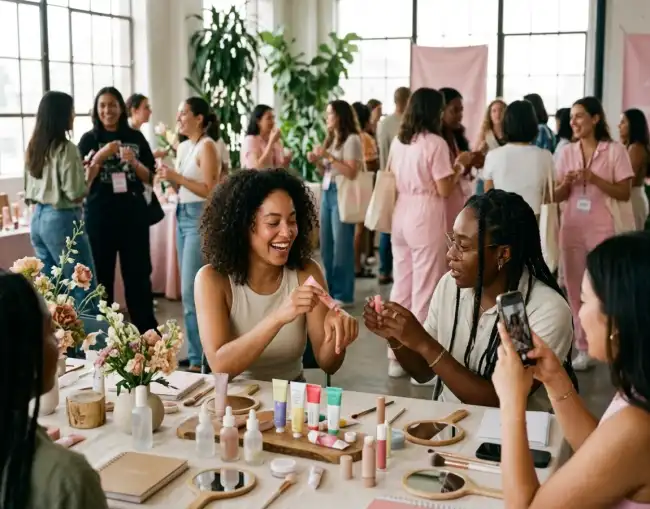
In the digital-first era of beauty retail, traditional advertising models have steadily lost their grip on consumer trust. Audiences have grown exceptionally adept at tuning out high-gloss, heavily scripted corporate commercials, seeking instead authentic voices that mirror their own realities, skin types, and aesthetic values. Enter the epoch of community-driven commerce—a paradigm where brands do not merely sell products to consumers, but rather invite them into an active, collaborative ecosystem. Among the pioneers of this tectonic shift, Glossier stands apart as a masterclass in modern digital marketing.
Long before community-led growth became a ubiquitous buzzword across venture capital boardrooms and marketing agencies, Glossier capitalized on the democratization of influence. By treating its everyday customers and micro-creators not as transactional billboards, but as co-architects of its brand identity, the company fundamentally re-engineered how beauty brand partnerships operate. This deep dive examines the anatomy of Glossier's revolutionary creator community, deconstructing the strategic blueprint, mechanics, and operational principles that transformed a beloved digital-native blog into a multi-hundred-million-dollar global cosmetics empire.
For modern digital publishers, brand architects, and influencer marketing professionals, analyzing this ecosystem offers invaluable lessons. Navigating today's crowded digital landscape requires more than just budget allocation; it demands structural empathy, algorithmic fluency, and an unwavering commitment to authentic value exchange. Whether you are scaling an emerging beauty line or optimizing enterprise-level creator networks, understanding how to replicate and adapt Glossier’s community-first ethos is the definitive key to unlocking sustainable, long-term brand equity.
Foundational Principles and Mechanics of Community-Led Growth
To truly understand Glossier's triumph, one must first deconstruct the core mechanics of modern influencer marketing and how it differs from legacy promotional structures. At its heart, Glossier influencer marketing rejects the traditional hierarchy of celebrity endorsement. Instead of paying a-list actors or mega-influencers exorbitant fees to hold a product they may never use, Glossier pioneered an inverted funnel where grassroots advocates—often termed 'Into the Gloss' readers and micro-creators—hold the highest institutional trust.
This structural shift relies heavily on psychological proximity. When a consumer sees an everyday skincare enthusiast with 3,000 followers posting an honest, unvarnished review of a brow flick or skin tint, the psychological distance between the reviewer and the viewer collapses. The core principles governing this model include radical transparency, reciprocal value distribution, and decentralized storytelling. Rather than enforcing strict brand guidelines that strip creators of their unique voice, Glossier provides a foundational toolkit that empowers creators to tell their own stories through the lens of the brand.
Furthermore, managing these expansive networks requires sophisticated operational frameworks. Modern beauty brand partnerships cannot survive on chaotic email chains and manual spreadsheets alone. They necessitate robust internal alignment, clear data-sharing protocols, and a deep understanding of remote workflow management. For teams spread across different geographies, mastering How to Collaborate Effectively When Working With Remote Remote Teams and Creators becomes an absolute operational prerequisite to ensure that creative assets, affiliate payouts, and campaign briefs flow seamlessly between the brand and its external roster.
Step 1: Cultivating the Grassroots Creator Ecosystem
Identifying and Vetting True Brand Advocates
The foundation of any successful creator community lies in the precision of its initial curation. Glossier’s strategy bypassed traditional talent agencies in the early stages, opting instead to comb through existing social mentions, engagement patterns, and user-generated content to find individuals who were already organically talking about the brand. Vetting goes far beyond vanity metrics such as follower counts or high impression numbers. Brands must look for qualitative indicators: consistency of voice, aesthetic alignment, and genuine audience resonance.
When building a creator community case study from the ground up, practitioners should establish a tiered evaluation rubric. Tier one consists of everyday consumers who post organic product love; tier two comprises micro-creators with highly engaged, niche communities; and tier three includes macro-influencers who share the brand's core values. By establishing clear pathways for upward mobility within these tiers, brands can incentivize organic advocates to invest deeper into the ecosystem over time, creating a self-sustaining talent pipeline.
Building Two-Way Value Exchanges
A fatal flaw in many early influencer programs is the expectation of uncompensated or under-compensated labor disguised as "exposure." Glossier revolutionized beauty brand partnerships by ensuring that value flowed reciprocally. Creators were not only given early access to coveted product drops and affiliate commission opportunities, but they were also granted a psychological stake in the brand's journey through exclusive community Slack channels, feedback loops, and co-creation sessions.
To operationalize this, brand marketers must design reward structures that blend financial incentives with experiential perks. Commission-based affiliate links, exclusive merch drops, invitations to private brand excursions, and direct lines of communication to product development teams make creators feel valued as true partners. When a creator feels seen, respected, and adequately compensated, their content naturally transitions from transactional advertising to impassioned advocacy.
Step 2: Leveraging Data and Algorithmic Intelligence
Integrating Predictive Analytics into Creator Selection
While intuition and aesthetic alignment are critical in the beauty sector, scaling a creator community requires hard data. Relying solely on gut feelings when vetting hundreds of global creators can lead to misallocated budgets and mismatched partnerships. Modern influencer marketing demands predictive analytics to forecast which collaborations will capture algorithmic attention and drive high conversion rates before the contract is even signed.
For brands looking to master this quantitative edge, studying How to Use AI Analytics to Predict Which Creator Collabs Will Go Viral provides invaluable tactical frameworks. By analyzing historical engagement velocities, audience overlap percentages, and content format performance across platforms like TikTok and Instagram, marketers can mathematically pinpoint creators whose output aligns with high-converting algorithmic thresholds, thereby minimizing financial risk and maximizing return on ad spend.
Tracking Sentiment and Community Resonance
Quantitative metrics such as likes, shares, and click-through rates only tell half the story. In a community-driven model, qualitative sentiment analysis is equally paramount. Brands must deploy advanced social listening tools to monitor how audiences react to creator content in real time. Are commenters asking where to buy, or are they expressing skepticism regarding the partnership's authenticity?
Establishing regular audit cadence allows brand managers to shift strategy dynamically. If sentiment dips around a specific product line or creator archetype, the partnership guidelines can be instantly adjusted. Data-driven community management ensures that the brand maintains absolute control over its narrative integrity while granting creators the creative freedom necessary to produce engaging, organic media assets.
Step 3: Co-Creation and Product Development Feedback Loops
Turning Creators into Product Designers
One of Glossier’s most genius operational innovations was blurring the line between consumer, creator, and product developer. By utilizing digital forums, comment sections, and direct surveys distributed to its creator network, Glossier crowdsourced product ideas long before launching manufacturing runs. When a creator community feels that their feedback directly shaped a bestselling cleanser or moisturizer, their subsequent promotional content is infused with an authentic sense of pride and ownership.
To implement this methodology, brands should establish dedicated co-creation councils composed of select micro-creators. These councils can participate in blind product testing sessions, vote on packaging colorways, and help brainstorm shade extensions. Not only does this de-risk the product launch by guaranteeing built-in market demand, but it also generates endless storytelling angles for the creators to share with their respective audiences during launch week.
Scaling Authentic Storytelling Through User-Generated Content (UGC)
Glossier’s social media feeds famously look less like curated luxury advertising campaigns and more like a collage of real skin, unretouched textures, and everyday bathrooms. This commitment to user-generated content (UGC) lowers the barrier to entry for prospective buyers, who can easily visualize the products working in their own daily lives. Creators act as conduits for this style of raw, unfiltered storytelling.
Marketers should encourage their creator networks to document imperfect, real-world application moments—such as applying a balm on a crowded subway or touching up makeup in a car mirror. This anti-perfectionism ethos resonates deeply with modern digital consumers who are fatigued by hyper-filtered digital spaces. By championing authentic representation, brands foster an inclusive community where diverse beauty standards are celebrated and normalized.
Step 4: Operationalizing Affiliate and Repurposing Strategies
Structuring Win-Win Affiliate and Ambassador Programs
An engaged creator community must have a clear economic engine driving it forward. Glossier’s early iteration of its ambassador program empowered beauty enthusiasts with personalized discount codes and commission structures, turning everyday fans into micro-affiliates. This decentralized sales force acted as a tireless engine of acquisition, operating around the clock across multiple time zones.
When structuring these programs, brands must balance commission rates with low friction for the creator. Automated payout platforms, transparent dashboards where creators can track their real-time earnings, and timely customer support are essential. Furthermore, establishing tiered commission bonuses for creators who consistently hit volume milestones incentivizes them to continually optimize their content and push brand products more prominently across their channels.
Repurposing Creator Assets Across Omnichannel Touchpoints
The utility of creator content does not end on the creator's personal grid. Glossier mastered the art of omnichannel asset recycling, taking high-performing posts from their creator community and repurposing them across paid social ads, email marketing campaigns, website product description pages, and physical retail store displays.
This creates a cohesive, closed-loop brand experience where consumers encounter the same trusted creator faces across every touchpoint of the buyer journey. To execute this effectively, brand legal teams must secure explicit rights usage clauses within initial creator contracts, ensuring seamless omnichannel deployment without incurring unexpected licensing fees or copyright disputes down the road.
Real-World Case Studies and Scenarios
To fully grasp the practical application of these strategies, let us examine two contrasting scenarios within the beauty and lifestyle sector: Brand Alpha, which successfully adopted a community-led model, and Brand Beta, which fell into legacy pitfalls.
Scenario A: Brand Alpha’s Micro-Community Triumph
Brand Alpha, an emerging indie clean-beauty startup, was struggling to break through the noise of established conglomerates with multi-million dollar ad budgets. Instead of bidding on expensive macro-influencers, Brand Alpha allocated 70% of its marketing budget to build a vetted community of 500 micro-creators spanning skincare, acne positivity, and minimalist makeup niches.
They provided these creators with full-size product kits, enrolled them in a tiered affiliate program, and invited them to a private digital workspace to share feedback. Within twelve months, Brand Alpha saw a 300% increase in direct-to-consumer sales, driven primarily by authentic UGC and affiliate-driven traffic. Their customer acquisition cost (CAC) dropped by 45%, proving that community-led distribution vastly outperforms traditional paid social ads in high-trust categories.
Scenario B: Brand Beta’s Transactional Misstep
Conversely, Brand Beta attempted to launch a new serum line by mailing free products to 50 mega-influencers with no prior relationship to the brand, attaching strict, highly corporate scripts that demanded over-the-top praise. The resulting content felt hollow, robotic, and blatantly promotional. Audiences immediately called out the lack of authenticity in the comment sections.
Furthermore, because the contracts were purely transactional with zero ongoing value exchange or community integration, none of the influencers posted about the product a second time. Brand Beta burned through its entire marketing budget in a single weekend, resulting in dismal conversion rates and negative brand sentiment. The lesson is clear: capital without community is merely expensive noise.
Critical Mistakes and How to Avoid Them
Even with the best intentions, brands frequently stumble when attempting to build and scale creator communities. Avoiding these five critical mistakes is essential for long-term viability:
- Over-Scripting and Controlling Content: Stripping creators of their authentic voice destroys audience trust. Countermeasure: Provide broad brand guardrails and key messaging pillars, but grant creators absolute freedom in execution and tone.
- Focusing Exclusively on Follower Counts: Chasing vanity metrics often leads to partnerships with dormant or unengaged audiences. Countermeasure: Prioritize engagement rates, audience demographics, and qualitative content relevance over raw follower numbers.
- Neglecting Post-Campaign Relationships: Treating creators as one-off media placements rather than long-term partners halts organic growth. Countermeasure: Cultivate ongoing engagement through exclusive perks, feedback loops, and tiered loyalty programs.
- Ignoring Data and Analytics: Relying purely on intuition makes it impossible to optimize spend or scale effectively. Countermeasure: Integrate predictive analytics, sentiment tracking, and comprehensive dashboard reporting into your daily workflow.
- Failing to Clear Legal Rights for Repurposing: Using creator assets across paid ads or web pages without proper licensing agreements can result in legal liabilities. Countermeasure: Ensure all creator contracts include explicit omnichannel usage rights and fair compensation terms upfront.
Comprehensive Comparison Table
To help you evaluate your current influencer strategy against community-led benchmarks, review the following comparison of legacy advertising versus Glossier-style community building:
| Strategic Dimension | Legacy Advertising Model | Glossier Creator Community Model |
|---|---|---|
| Primary Focus | One-way corporate broadcasting and celebrity endorsement | Two-way dialogue, co-creation, and grassroots advocacy |
| Creator Selection | High follower counts and mega-celebrities | High engagement, niche alignment, and micro-creators |
| Content Style | Highly produced, heavily scripted, polished commercials | Raw, unretouched user-generated content (UGC) |
| Value Exchange | Purely transactional flat-fee payments | Tiered commissions, product access, and community perks |
| Consumer Trust | Declining due to perceived lack of authenticity | Exceptionally high due to peer-to-peer recommendation |
Frequently Asked Questions (FAQ)
What makes Glossier's creator community different from traditional influencer marketing?
Glossier’s model diverges from traditional influencer marketing by dismantling the top-down hierarchy of celebrity endorsements. Instead of treating creators as hired billboards, Glossier treats them as core members of an inclusive brand ecosystem. The focus is placed on micro-creators and everyday consumers who share genuine product experiences, fostering peer-to-peer trust and long-term loyalty rather than short-term transactional spikes.
How can small beauty brands replicate Glossier's community success on a limited budget?
Small beauty brands do not need massive capital to build a thriving creator community; they need authenticity and proactive engagement. Start by identifying customers who are already posting organic reviews of your products, regardless of their follower count. Reach out with personalized notes, free product samples, and low-barrier affiliate commission structures. By nurturing these early advocates with genuine care and exclusive perks, you can organically scale a powerful micro-influencer network.
What metrics matter most when vetting creators for a community-led strategy?
While follower count is often the first metric examined, it is rarely the most important. Marketers should focus heavily on engagement rate, audience demographics, comment sentiment, and content consistency. Additionally, utilizing predictive AI analytics to evaluate a creator's historical conversion potential and audience overlap will ensure that your partnerships yield high-intent traffic rather than empty impressions.
How do you maintain brand consistency while giving creators creative freedom?
Maintaining brand integrity while empowering creators requires a delicate balance of structure and autonomy. Instead of providing rigid scripts that destroy authenticity, supply creators with comprehensive brand guidelines that outline your core values, visual aesthetic, and key messaging pillars. Once those guardrails are established, trust the creators to translate your brand message into their own unique, native content style.
What are the legal considerations when repurposing creator content for omnichannel marketing?
When you plan to take creator content and repurpose it across paid social ads, email campaigns, or retail displays, you must secure explicit usage rights within your initial contract agreements. Failing to do so can lead to copyright infringements and damaged relationships. Always ensure that licensing terms, duration of use, and fair compensation for paid media extensions are clearly negotiated upfront.
Strategic Roadmap and Final Takeaway
As we look toward the next two to five years of digital commerce, the trajectory is unmistakably clear: corporate broadcasting is out; community-driven collaboration is in. Consumers have developed an acute radar for artificial marketing ploys, choosing instead to invest their attention and capital in brands that listen, adapt, and co-create alongside them. Glossier's revolutionary creator community is not merely a transient marketing tactic; it is a foundational blueprint for how modern consumer brands must operate to survive and thrive.
To translate these insights into immediate action, audit your current influencer marketing operations today. Shift your budget away from disconnected mega-celebrity campaigns and redirect those resources toward cultivating a vetted, highly engaged network of micro-creators. Invest in robust data tools, prioritize genuine two-way value exchanges, and always honor the authentic voice of your community. By executing this strategic roadmap with discipline and empathy, you will build a resilient brand impervious to shifting algorithmic tides and poised for enduring market leadership.
Be the first creator to share your take on this story.