
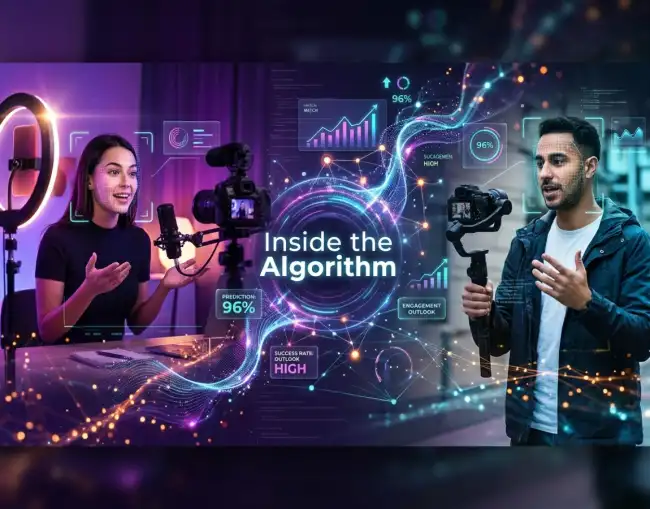
For over a decade, influencer marketing operated as an exercise in calculated intuition. Brand managers, agency directors, and public relations specialists spent countless hours scrolling through social media feeds, analyzing surface-level metrics like follower counts and aesthetic cohesion, and rolling the dice on high-stakes creator partnerships. The prevailing methodology was largely reactive—brands launched campaigns based on vanity metrics, crossed their fingers, and evaluated ROI only after the financial capital had been fully deployed. In an industry moving at digital speed, this trial-and-error approach represented a massive financial leak, leaving billions of dollars vulnerable to cultural misalignments, low conversion rates, and public relations crises.
Today, a seismic technological shift has redefined the landscape. The integration of AI in influencer marketing has fundamentally altered how brands identify, vet, and partner with digital talent. No longer driven by gut feelings or lagging indicators, modern marketing executives leverage sophisticated machine learning models, natural language processing (NLP), and computer vision to peer into the future. Through advanced predictive analytics, algorithms now simulate campaign performance, evaluate psychological audience resonance, and forecast financial yields with startling accuracy long before a single piece of content goes live. This transition from retrospective analysis to prospective forecasting marks the dawn of a new era in the creator economy.
At the center of this transformation is the science of creator collaboration prediction. By processing multi-dimensional datasets encompassing historical engagement patterns, semantic audience sentiment, macroeconomic shifts, and cross-platform behavior, modern artificial intelligence strips away the guesswork. This exhaustive guide explores the inner workings of these algorithms, detailing the exact methodologies, data pipelines, and strategic frameworks top-tier agencies and enterprise brands use to guarantee collaboration success before launching a campaign. Whether you are restructuring your approach after reviewing resources like The Anatomy of a Failed Collab: 5 Red Flags That Ruined These Major Campaigns or looking to scale your enterprise operations, understanding the mechanics of algorithmic forecasting is no longer optional—it is your primary competitive advantage.
Foundational Principles: How Predictive Engines Read the Creator Economy
To harness the power of predictive intelligence, one must first deconstruct the underlying architecture that fuels modern algorithmic engines. Unlike traditional database software that relies on static queries, AI-driven marketing platforms ingest unstructured data at petabyte scale, transforming chaotic social media signals into structured, actionable vectors. These systems evaluate thousands of variables simultaneously, recognizing complex patterns that human analysts would take months to uncover.
At the core of these platforms are neural networks trained on historical campaign data across diverse verticals, ranging from beauty and gaming to enterprise B2B software. These networks learn the subtle correlations between creator characteristics and audience actions. For instance, an algorithm might discover that an audio tone shift in a creator’s second video of the month correlates with a 14% drop in comment sentiment among Gen Z cohorts, alerting predictive engines to potential creative fatigue before it impacts brand safety.
The Anatomy of Multi-Dimensional Data Ingestion
Predictive analytics engines begin their work long before a brand reaches out to a talent manager. They continuously scrape and index public and authorized first-party data across Instagram, TikTok, YouTube, Twitch, and emerging vertical networks. This ingestion process captures not just public metrics, but deep behavioral telemetry including comment velocity, share-to-view ratios, hashtag co-occurrence networks, and audience demographic overlap maps.
By mapping this data into high-dimensional vector spaces, machine learning models can identify structural similarities between seemingly disparate creators. A micro-creator in sustainable fashion with a highly engaged, hyper-niche following might score higher in predicted conversion propensity than a mega-celebrity with ten million unengaged followers. The algorithm weights these variables dynamically, ensuring that the final success score reflects genuine commercial potential rather than superficial reach.
Natural Language Processing and Sentiment Forecasting
Quantitative reach tells only half the story; qualitative resonance dictates whether a consumer ultimately opens their wallet. Modern AI platforms employ advanced Natural Language Processing (NLP) and Large Language Models (LLMs) to analyze millions of comments, captions, and direct message transcripts. This semantic analysis goes beyond simple keyword counting to evaluate tone, sentiment polarity, and cultural context.
When predicting a collaboration's success, the algorithm simulates how a creator’s community will react to a specific product category based on historical sentiment shifts. If a creator has recently experienced subtle negative sentiment drift regarding consumerism or fast fashion, the predictive engine flags this risk, preventing brands from entering partnerships that could result in backlash or diminished brand equity.
Step-by-Step Strategic Blueprint for Algorithmic Creator Selection
Integrating artificial intelligence into your partnership workflow requires a systematic, step-by-step approach. Brands that treat AI tools as simple search bars frequently fail to capture their true predictive power. Below is the blueprint top-tier organizations use to operationalize predictive analytics across their marketing pipelines.
Step 1: Defining Campaign Objectives and Training Vector Parameters
Before launching any software query, marketing teams must translate qualitative business goals into quantitative parameters that machine learning models can process. Whether the primary Key Performance Indicator (KPI) is app downloads, direct-to-consumer sales, brand lift, or community growth, the predictive engine requires clear constraint definitions.
- Establish baseline conversion thresholds and acceptable cost-per-acquisition (CPA) limits to feed into the optimization algorithm.
- Input target audience personas, including psychographic traits, geographic boundaries, and purchasing power indices.
- Define risk tolerance levels regarding past creator controversies, political commentary, and competitive brand overlap.
By establishing these parameters upfront, you train the predictive model to filter out thousands of irrelevant profiles instantly. This ensures that the shortlisted creators align not only with your aesthetic vision but also with your rigorous financial and operational criteria.
Step 2: Executing Algorithmic Compatibility and Audience Overlap Analysis
Once the parameters are set, the predictive engine cross-references your brand's digital footprint with the potential creator pool. This phase evaluates audience overlap, brand safety histories, and historical sponsor performance to calculate an initial Compatibility Index (CI).
Sophisticated platforms analyze the follower graphs of both the brand and the creator to determine the true incremental reach of the partnership. If an algorithm detects a 70% audience overlap between a target creator and your existing customer base, it will penalize the predicted efficiency score, redirecting your budget toward creators who can unlock untapped market segments.
Furthermore, machine learning models evaluate historical brand integrations executed by the creator. By analyzing how previous sponsored posts performed relative to organic content, the algorithm forecasts audience fatigue, ad blindness, and expected engagement decay over multi-post campaign arcs.
Step 3: Simulating Creative Performance and Content Vector Testing
One of the most revolutionary advancements in AI in influencer marketing is the ability to simulate creative performance before production begins. Advanced predictive models allow marketers to test different content formats—such as unboxing videos, tutorial walkthroughs, narrative storytelling, or comedic sketches—against historical audience response vectors.
Marketers can input draft scripts, storyboard concepts, or visual assets into AI-powered testing platforms. These systems analyze visual composition, hook strength within the first three seconds, audio pacing, and call-to-action placement, generating a predicted engagement and conversion score for each creative variation.
When working with elite talent who command significant retainers, streamlining internal operational friction is equally critical. For insights into how top digital professionals manage their workloads and maintain creative output without sacrificing quality, review strategies detailed in Creator Burnout is Real: How Top Streamers Are Restructuring Their Workflows to ensure your collaborative timelines align with sustainable creator schedules.
Step 4: Financial Modeling and ROI Yield Forecasting
Predictive analytics excels at transforming creative art into hard financial science. By integrating historical conversion data, average order values (AOV), lifetime value (LTV) projections, and creator fee structures, machine learning models generate comprehensive financial forecasts for every prospective collaboration.
These financial models run Monte Carlo simulations—thousands of iterative calculations accounting for market volatility, seasonal buying trends, and platform algorithm updates—to produce a probabilistic range of returns. Instead of expecting a single guaranteed ROI figure, brand leaders receive a confidence interval, allowing for informed budget allocation and risk-adjusted portfolio management.
If a particular creator demands a high flat fee but the algorithmic simulation shows a 90% probability of falling below your minimum ROAS (Return on Ad Spend) threshold, the system automatically suggests counter-offer structures, such as hybrid base-plus-commission compensation models.
Real-World Case Studies & Scenarios: Success vs. Algorithmic Failure
To truly grasp the impact of predictive intelligence, we must examine real-world applications where data-driven forecasting separated high-performing campaigns from expensive failures. The following case studies illustrate the stark contrast between traditional intuition-based methods and modern algorithmic execution.
Scenario A: The Direct-to-Consumer Beauty Brand Breakthrough
A fast-growing DTC beauty brand prepared to launch a revolutionary skincare line across North America. Historically, the brand relied on manual creator selection, partnering with mid-tier lifestyle influencers based on aesthetic grid alignment and follower counts exceeding 100,000.
For this product launch, the marketing leadership deployed an advanced predictive analytics platform. The AI engine ingested the brand's product formulation details, target skin-concern demographics, and pricing structure. Instead of suggesting macro-influencers, the algorithm identified a cluster of 45 nano- and micro-creators—many with fewer than 25,000 followers—who demonstrated hyper-specific audience trust in clinical ingredient efficacy.
Furthermore, the predictive tool simulated three distinct creative hooks for each creator, directing them to emphasize scientific peer reviews rather than glamorous aesthetic shots. The result was staggering: the campaign achieved a 4.8x ROAS, a 34% lower customer acquisition cost (CAC) than previous manual campaigns, and zero negative brand safety incidents. The algorithm had successfully forecasted that deep scientific authority outweighed broad superficial reach for this specific product vertical.
Scenario B: The Enterprise Software Miscalculation
Conversely, consider the cautionary tale of a major enterprise software corporation launching a project management application. Relying on traditional agency relationships, the marketing team contracted a high-profile technology generalist YouTuber with two million subscribers to review the software.
While the video generated impressive vanity metrics—over 500,000 views in the first week—the actual conversion rate was virtually negligible, resulting in a negative campaign ROI. Post-campaign algorithmic post-mortems revealed why the partnership failed: NLP sentiment analysis of the creator's audience showed that 82% of the viewers were student hobbyists and freelance gamers with no enterprise purchasing authority or budget allocation power.
Had the brand utilized predictive intelligence prior to contract execution, the algorithm would have immediately flagged the profound mismatch between the creator's viewer demographic and the software's B2B procurement persona, saving the company a six-figure sponsorship investment.
Critical Mistakes and How to Avoid Them
While artificial intelligence and predictive analytics offer unprecedented clarity, technology is only as effective as the professionals wielding it. Many marketing teams stumble when adopting these tools, falling into common cognitive and operational traps. Below are the five most costly mistakes practitioners make and the exact countermeasures required to avoid them.
1. Over-Reliance on Purely Quantitative Metrics
The Mistake: Treating algorithm-generated scores as absolute truth while ignoring qualitative brand alignment, creator voice authenticity, and cultural nuance.
The Countermeasure: Use predictive scores as a high-pass filter rather than a final decision-maker. Always combine algorithmic shortlists with human creative review to ensure the creator's personal brand ethos aligns seamlessly with your corporate values.
2. Ignoring Data Recency and Algorithmic Drift
The Mistake: Relying on historical creator performance data that is more than 90 days old, failing to account for rapid shifts in social media platform algorithms.
The Countermeasure: Ensure your predictive analytics stack ingests real-time telemetry and updates creator scoring vectors on a weekly or bi-weekly basis to capture emerging trends and sudden engagement shifts.
3. Failing to Calibrate Models with First-Party Conversion Data
The Mistake: Feeding predictive engines exclusively with third-party social media metrics without integrating internal sales, CRM, and customer lifetime value data.
The Countermeasure: Connect your customer data platform (CDP) and enterprise resource planning (ERP) systems directly to your influencer marketing software, allowing machine learning models to learn from your brand's unique conversion history.
4. Static Creative Direction in Dynamic Ecosystems
The Mistake: Providing creators with rigid, corporate scripts that destroy the authentic storytelling style that made their audience trust them in the first place.
The Countermeasure: Utilize AI creative testing platforms to identify winning narrative themes and hooks, but grant creators the creative freedom to adapt those themes into their native, organic voice.
5. Neglecting Post-Campaign Feedback Loops
The Mistake: Treating each campaign as a standalone event without feeding actual performance outcomes back into the machine learning training pipeline.
The Countermeasure: Implement rigorous attribution tracking and feed post-campaign conversion data back into the AI model, continuously refining and calibrating the predictive engine for future campaign cycles.
Comprehensive Comparison Table: Traditional vs. AI-Driven Influencer Marketing
To contextualize the evolution of the industry, examine the following semantic comparison detailing the operational differences between legacy manual approaches and modern AI-driven predictive methodologies.
| Operational Dimension | Traditional Manual Approach | AI-Driven Predictive Approach |
|---|---|---|
| Creator Discovery | Manual keyword searches, manual profile scrolling, subjective aesthetic review. | Automated vector matching across millions of profiles based on deep behavioural parameters. |
| Audience Vetting | Reliance on self-reported creator media kits and surface-level follower counts. | Deep semantic NLP analysis, demographic overlap mapping, and fake follower detection. |
| Performance Forecasting | Gut instinct based on past campaigns and general industry benchmarks. | Probabilistic Monte Carlo simulations forecasting revenue, ROAS, and CAC confidence intervals. |
| Creative Optimization | Single-version asset production approved via subjective management consensus. | Algorithmic pre-testing of visual hooks, pacing, and narrative variations against audience data. |
| Risk Management | Reactive crisis management after public backlash or poor campaign performance. | Proactive sentiment drift monitoring, brand safety scoring, and predictive compliance filters. |
Frequently Asked Questions (FAQ)
How accurate are predictive analytics algorithms in forecasting influencer campaign ROI?
Modern machine learning models trained on robust first-party data and historical campaign telemetry typically achieve forecast accuracy rates between 85% and 92%. However, accuracy depends heavily on the quality and volume of data fed into the system. Brands that integrate their internal CRM and sales attribution data into the AI platform experience significantly higher predictive precision than those relying solely on public social media metrics.
Can predictive analytics completely replace human talent managers and creative directors?
No. Artificial intelligence excels at processing vast datasets, identifying hidden patterns, and calculating probabilistic financial outcomes, but it lacks human empathy, cultural intuition, and emotional intelligence. The optimal workflow combines algorithmic forecasting for data-driven creator selection with human creativity for relationship building, contract negotiation, and authentic artistic collaboration.
How do predictive engines detect fake followers and engagement pods?
Predictive analytics platforms employ anomaly detection algorithms that analyze comment velocity, follower growth curves, and audience interaction patterns. If an account experiences sudden, unnatural spikes in follower counts without a corresponding increase in organic reach, or if comments consist of repetitive generic emojis generated by bot networks, the algorithm flags the profile and penalizes its overall credibility and performance score.
What is the minimum budget required to implement AI-driven influencer marketing tools?
Enterprise-grade predictive influencer platforms typically operate on annual SaaS subscription models ranging from $20,000 to over $100,000 per year, making them ideal for mid-market and enterprise brands managing substantial media spend. However, many boutique agencies and smaller brands can access scaled predictive features through modern, modular influencer marketing software platforms starting at lower monthly tiers.
How long does it take for a machine learning model to adapt to a brand's specific product vertical?
Most advanced AI platforms come pre-trained on billions of data points across major consumer and B2B verticals, providing immediate out-of-the-box utility. When fed your brand's historical campaign data, CRM records, and specific conversion parameters, the model typically achieves high calibration and vertical-specific accuracy within 30 to 60 days of continuous data ingestion.
Strategic Roadmap and Final Takeaway
As the creator economy matures into a multi-billion-dollar enterprise ecosystem, the margin for error in campaign execution has narrowed dramatically. The era of spending marketing budgets on hopeful intuition and vanity metrics is officially over. Brands that continue to select creators based on follower counts and aesthetic appeal alone risk being outpaced by agile competitors leveraging machine learning and advanced data science.
Looking ahead over the next two to five years, we will witness the total convergence of predictive analytics, automated programmatic creator bidding, and real-time generative creative optimization. Algorithms will not only predict collaboration success before launch; they will dynamically adjust campaign parameters mid-flight, reallocating budgets across creator portfolios autonomously to maximize financial yield.
Your immediate strategic roadmap is clear: audit your current influencer marketing stack, integrate your first-party sales data with predictive analytics engines, and shift your operational mindset from reactive evaluation to prospective forecasting. By mastering the algorithm and embracing data-driven creator collaboration, you transform influencer marketing from a volatile cost center into a predictable, high-performing revenue machine.
Be the first creator to share your take on this story.