
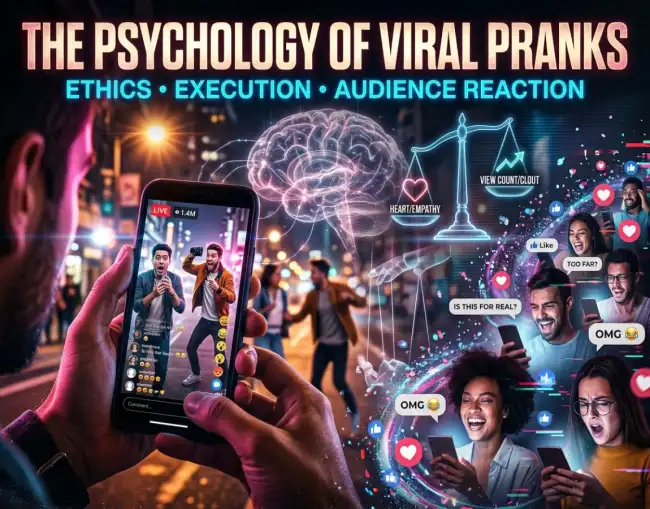
In the high-stakes, hyper-accelerated ecosystem of modern digital media, capturing and holding public attention has become the ultimate currency. Across TikTok, YouTube, Instagram Reels, and emerging short-form video platforms, creators constantly push the envelope of creative expression to achieve the coveted status of algorithmic virality. Among the most potent—and perilous—tools in the digital creator's arsenal is the prank video. When executed with precision, psychological astuteness, and genuine comedic empathy, viral pranks can transform an unknown creator into a global sensation overnight, generating millions of views, building fierce community loyalty, and unlocking unprecedented monetization avenues. Yet, behind the bright, hyper-saturated aesthetics of these viral hits lies a complex, often volatile engine of human emotion, ethical tightropes, and algorithmic mandates.
The landscape of prank content has undergone a seismic shift over the past decade. What began as harmless, lighthearted practical jokes inspired by classic television shows has evolved into high-production-value social experiments, flash-mob spectacles, and high-risk public stunts. This evolution has not occurred in a vacuum; it is deeply intertwined with changes in human psychology, dopamine-driven feedback loops, and platform algorithms that explicitly reward shock value, emotional polarization, and unexpected narrative twists. As creators race to outdo one another, the margin for error narrows. Missteps that cross ethical boundaries can lead to immediate public backlash, platform de-monetization, legal consequences, and irreversible reputational damage—lessons similarly observed when reviewing broader corporate miscalculations, such as those analyzed in Lessons From Failed Brand Collabs: What General Mills and Bud Light Taught Us.
To master the delicate art and science of modern prank creation, creators, digital strategists, and brands must move beyond superficial shock tactics and ground their approach in the rigorous study of behavioral psychology and ethical responsibility. Understanding why audiences react the way they do, how algorithmic distribution amplifies specific emotional triggers, and where the legal and moral lines are drawn is no longer optional—it is the prerequisite for sustainable digital longevity. This comprehensive exploration delves deep into the foundational principles, strategic blueprints, real-world case studies, critical risk factors, and future outlook of viral pranks, providing an indispensable guide for navigating the turbulent waters of modern digital attention economies.
Foundational Principles and Mechanics of Viral Pranks
At its core, a viral prank is a carefully orchestrated disruption of everyday social norms designed to elicit an authentic, unscripted emotional response from unsuspecting participants and viewing audiences alike. To understand why certain pranks achieve planetary scale while others fall flat, we must examine the intersection of sociology, evolutionary psychology, and digital distribution mechanics. Sociologically, human society operates on an intricate framework of unwritten rules, shared expectations, and predictable routines. When a prank disrupts this framework—whether through absurd juxtaposition, benevolent deception, or mild bewilderment—it forces the human brain to rapidly process an anomaly.
The cognitive mechanics of audience reaction are rooted in the brain's predictive processing systems. When viewers watch a prank unfold, their mirror neurons fire, allowing them to empathetically experience the anticipation, confusion, and ultimate resolution right alongside the participant. This vicarious emotional journey triggers a release of dopamine and adrenaline, creating a potent cocktail of entertainment and suspense. However, the exact nature of the emotional release depends heavily on the perceived intent of the prankster. If the prank feels mean-spirited, exploitative, or degrading, the audience's moral outrage circuits activate, turning potential fans into vocal detractors. Conversely, if the prank concludes with warmth, generosity, or shared laughter, the audience experiences communal validation and emotional uplift.
Furthermore, digital platforms act as active amplifiers of these psychological triggers. Algorithms do not care about artistic merit; they care about engagement velocity, watch time, completion rates, and comment sentiment. Pranks that induce high-arousal emotions—such as surprise, amusement, or indignation—drive viewers to immediately comment, share, and debate the ethics of the situation in real time. This user-generated commentary feeds the algorithmic machine, propelling the content into broader recommended feeds and igniting the self-sustaining flywheel of virality.
The Neuroscience of Surprise and Social Validation
Decoding the Brain's Reward Pathways During Unexpected Events
The human brain is an evolutionary prediction machine, constantly scanning the environment to anticipate what happens next. When a prank successfully subverts these predictions, it creates a cognitive gap that the brain scrambles to resolve. This sudden resolution of ambiguity stimulates the brain's ventral striatum, releasing a surge of dopamine associated with humor and discovery. Creators who understand this neural feedback loop design their hooks to establish a familiar baseline within the first three seconds, only to shatter it with an unexpected visual or verbal disruption.
To maximize this neurological impact, successful pranksters meticulously pace their reveals. If the disruption is too subtle, the brain fails to register the anomaly; if it is too chaotic, the participant and viewer experience cognitive overload rather than amusement. Balancing this delicate threshold requires rigorous pre-testing and an intuitive grasp of human situational awareness. By framing the unexpected event within relatable, everyday environments—such as coffee shops, elevators, or grocery store aisles—creators lower the barrier to entry, making it effortless for millions of digital viewers to project themselves into the scenario.
The Role of Mirror Neurons and Empathy in Shared Viewing Experiences
Viewing a prank is fundamentally a social act mediated through a screen. As audiences watch a participant's facial micro-expressions and body language shift from confusion to realization, mirror neurons enable viewers to simulate those exact feelings internally. This empathetic bridge explains why group viewing reactions—such as reaction channels, streaming watch parties, and viral compilation videos—perform exceptionally well. The collective processing of emotion magnifies the perceived stakes of the prank, turning a localized joke into a global cultural moment.
Moreover, the emotional payoff must feel authentic to satisfy the viewer's empathy receptors. Audiences possess highly tuned radar for staged or fake reactions. When a prank appears overly choreographed or utilizes paid actors without disclosure, the illusion shatters, triggering feelings of betrayal and skepticism. Maintaining raw authenticity while balancing production quality is the hallmark of elite content creators who build enduring, trusting relationships with their communities over years rather than weeks.
Strategic Blueprint: Designing Ethical and High-Impact Pranks
Step 1: Ideation and Conceptualization Grounded in Benevolence
The foundation of any successful, sustainable viral prank begins long before the camera rolls, rooted deeply in the conceptual framework of benevolence. Modern audiences have grown increasingly weary of predatory, humiliating pranks that punch down at vulnerable individuals. Instead, the most enduring viral formats—often categorized as "wholesome pranks" or "reverse pranks"—focus on uplifting the participant, solving a minor inconvenience, or engineering a surprisingly positive outcome. When brainstorming concepts, creators must evaluate the core premise through an ethical lens: Does the prank rely on the suffering or embarrassment of another human being, or does it ultimately leave them better, happier, or wealthier than before?
Translating this empathetic mindset into actionable production requires mapping out the entire narrative arc before stepping into the field. Creators should write detailed scripts that outline potential participant reactions, worst-case scenarios, and clear de-escalation protocols. By anticipating how a regular person might feel when approached by a stranger with an absurd proposition, creators can build safety valves into the concept, ensuring that the joke remains lighthearted and consensual from the participant's perspective right up until the reveal.
Step 2: Securing Consent and Navigating Legal and Platform Boundaries
Navigating the legal and ethical gray areas of public pranks requires rigorous adherence to local privacy laws, harassment statutes, and platform-specific community guidelines. While filming in public spaces is generally permissible in many jurisdictions under freedom of expression laws, harassing individuals, causing intentional infliction of emotional distress, or creating hazardous public safety conditions can result in severe legal liability. Professional production teams routinely integrate legal consent workflows into their field operations, ensuring that unscripted participants sign release forms post-prank before the footage is cleared for public distribution.
Platform safety guidelines are equally stringent. Major platforms like YouTube, TikTok, and Meta enforce strict algorithmic and manual reviews regarding dangerous activities, cyberbullying, and harassment. A prank that crosses the line into intimidation or property damage will not only be rapidly de-monetized but can lead to immediate channel termination. Creators must balance the desire for viral shock value with robust risk-management strategies, recognizing that a single banned account can wipe out years of audience accumulation and brand equity in an instant.
Execution and Field Operations: Directing Chaos
Managing Unpredictable Public Environments and Human Variables
Executing a prank in the wild means surrendering control to an unpredictable environment where real people react with infinite variability. Unlike scripted sketches, field pranks unfold in real-time amidst shifting crowds, ambient noise, unexpected weather, and unpredictable human temperaments. Successful field directors employ specialized crew setups, utilizing hidden camera arrays, discreet wireless audio transmitters, and spotters stationed at strategic vantage points to monitor safety and capture cinematic framing without arousing suspicion.
Communication between the undercover prankster and the off-site production crew must be seamless and silent. Using discreet in-ear monitoring systems, directors can guide the talent in real-time, signaling when to escalate the bit, when to hold for a reaction shot, or when to abort the mission entirely if a participant exhibits signs of genuine distress, anxiety, or aggression. This level of operational discipline transforms chaotic public encounters into cohesive, narrative-driven pieces of digital entertainment.
De-escalation Techniques and Immediate Post-Prank Protocols
The most critical moment in any prank occurs immediately after the punchline: the reveal. This is the exact transition point where confusion must instantly give way to clarity, reassurance, and shared laughter. Pranksters must be master communicators capable of reading micro-expressions and rapidly de-escalating heightened physiological states. If a participant shows initial signs of anger or fear, the prankster must drop character immediately, display open, non-threatening body language, and offer genuine apologies and reassurance.
Establishing standardized post-prank protocols ensures safety and maintains ethical standards. Every successful production should include an immediate off-camera debrief where the crew reveals the hidden cameras, explains the context of the video, compensates the participant generously for their time and patience, and presents the formal release documentation. If a participant expresses discomfort at any point during this debrief, ethical creators must unconditionally delete the footage on the spot, prioritizing human well-being over algorithmic metrics.
Audience Reaction Psychology: Decoding the Comment Section
Analyzing Sentiment Shifts and Community Polarization
Once a viral prank goes live, the digital ecosystem responds instantly, transforming the comment section into a living psychological laboratory. Audience reactions rarely exhibit uniform consensus; instead, they fracture into polarized camps of passionate defenders and vocal critics. Analyzing these sentiment shifts provides invaluable insights into cultural norms, generational divides, and evolving societal expectations regarding humor and respect. Creators who actively monitor and categorize comment sentiment can fine-tune their future content strategy to align with healthy community standards.
Moreover, the comment section serves as an organic feedback loop that actively shapes product design, community guidelines, and future content formats. By deeply listening to audience feedback—a dynamic similarly explored when examining how From Comment Section to Co-Founder: How Fan Engagement Shapes Product Design—creators can pivot their channels to better serve their community's evolving desires, fostering deep-seated loyalty that transcends transient viral spikes.
The Psychology of Virality: Why People Share, Debate, and Remix Content
Content does not go viral by accident; it spreads because it serves a specific psychological function for the user who shares it. When a viewer shares a prank video, they are signaling their personal identity, values, and social affiliation to their network. A wholesome, heartwarming prank allows sharers to project empathy and kindness, while a chaotic, controversial prank invites debate, allowing users to signal their intellectual stance, skepticism, or moral superiority.
Furthermore, modern platforms thrive on remix culture—duets, stitches, reaction videos, and parody memes. Pranks that leave narrative "gaps" or ambiguous moral dilemmas invite the audience to participate actively by creating response content. This decentralized amplification multiplies the original reach exponentially, turning passive viewers into active co-creators of the overarching viral phenomenon.
Real-World Case Studies and Practical Scenarios
Scenario A: The Wholesome Reverse Prank vs. The Exploitative Stunt
To understand the stark divergence in outcomes between ethical and unethical pranks, consider two contrasting real-world content strategies observed across social media platforms:
- The Exploitative Stunt: A creator approaches random commuters in a subway station, abruptly knocks their coffee to the ground under the guise of a "clumsy accident," and films their frustrated reaction before laughing and walking away. While this video generates immediate algorithmic traction driven by outraged comments and debate, it triggers severe platform backlash, results in user reports, alienates brand sponsors, and tarnishes the creator's long-term reputation.
- The Wholesome Reverse Prank: A creator approaches a struggling street vendor, pretends to accidentally drop a hundred-dollar bill near their cart, and then insists the vendor must have dropped their hard-earned money, following up by purchasing their entire inventory to distribute to passersby. This video achieves explosive organic reach, commands overwhelmingly positive sentiment, attracts premium brand partnerships, and builds a fiercely loyal community of devoted supporters.
Scenario B: Corporate Thought Leadership vs. Public Prank Missteps
The principles governing public perception in viral pranks mirror those found in professional corporate communications and influencer marketing. Just as B2B executives must carefully calibrate their thought-leadership content—a dynamic dissected in The Rise of B2B Influencers: How Corporate Thought Leaders Are Winning-on-LinkedIn—prank creators operate within a delicate ecosystem where authenticity and credibility are fragile assets. A single tone-deaf stunt can destroy months of strategic brand building, proving that ethical alignment is paramount across all tiers of digital media.
Critical Mistakes and How to Avoid Them
Even seasoned creators occasionally fall victim to the pressures of algorithmic growth, leading to costly strategic errors. Recognizing these pitfalls is essential for safeguarding your channel, brand, and personal well-being.
- Failing to Secure Informed Consent: Publishing footage of distressed participants without post-prank clearance invites lawsuits, harassment claims, and swift channel termination. Countermeasure: Always establish a strict protocol where consent is secured, compensation is provided, and footage is immediately deleted if the participant expresses discomfort.
- Crossing the Line into Physical or Psychological Harm: Designing stunts that induce genuine terror, property damage, or physical injury violates basic human empathy and platform terms of service. Countermeasure: Maintain a strict ethical review board for every concept, ensuring the joke remains lighthearted and safe for all participants.
- Faking Reactions for Algorithmic Bait: Relying on paid actors while disguising them as unsuspecting members of the public destroys long-term audience trust once the deception is uncovered. Countermeasure: Prioritize genuine, unscripted human reactions, and if dramatizations are used, transparently label them as sketches or social experiments.
- Ignoring Local Legal Jurisdictions and Public Safety Laws: Violating public disturbance laws, trespassing in restricted areas, or interfering with emergency services during a prank can result in criminal charges. Countermeasure: Consult with legal counsel familiar with local public filming laws and secure proper permits when executing complex public stunts.
- Neglecting Post-Production Sentiment Management: Launching a controversial video without actively moderating community discussions or addressing valid ethical criticisms can cause toxic polarization in the comment section. Countermeasure: Engage constructively with your audience, pin clarifying context in the comments, and take accountability swiftly if a video misses the ethical mark.
Comprehensive Comparison Table: Prank Content Strategies
| Strategy Dimension | Exploitative Stunts | Wholesome Reverse Pranks | Social Experiment Formats |
|---|---|---|---|
| Core Emotional Trigger | Outrage, shock, anxiety | Joy, relief, warmth | Curiosity, reflection, empathy |
| Risk Level (Legal/PR) | Extremely High (bans, lawsuits) | Low (positive reception) | Moderate (requires careful framing) |
| Brand Sponsor Friendliness | Poor (brands avoid controversy) | Exceptional (high sponsorship demand) | Good (appeals to mission-driven brands) |
| Long-Term Audience Retention | Transient (churns quickly) | High (builds fierce community loyalty) | Steady (attracts thoughtful viewers) |
| Algorithmic Velocity | Rapid initial spike via debate | Consistent organic sharing | Steady compounding views over time |
Frequently Asked Questions (FAQ)
What constitutes crossing the ethical line in a viral prank?
A prank crosses the ethical line when it inflicts genuine emotional distress, psychological trauma, physical harm, or public humiliation upon an unsuspecting participant. If the joke relies on making someone feel unsafe, degraded, or violated for the entertainment of a digital audience, it is predatory rather than comedic. Ethical pranks respect human dignity, ensure consent is secured before final publishing, and conclude in a manner that leaves the participant respected and compensated.
How do content creators legally protect themselves when filming public pranks?
Creators protect themselves by adhering strictly to local public filming laws, avoiding private property without permission, and never obstructing emergency services or pedestrian traffic. Crucially, professional production teams utilize post-prank release forms where participants review the footage, understand the context, and sign legal waivers granting permission for their likeness to be broadcast. If a participant declines to sign or expresses distress, ethical creators immediately discard the footage.
Why do negative or controversial pranks often get more initial views?
Negative and controversial pranks trigger high-arousal emotions such as moral outrage, indignation, and shock. When viewers feel strong anger or disbelief, they are statistically more likely to comment, argue in the comment section, and share the video with their networks to express their disapproval. This surge in engagement velocity signals platform algorithms to aggressively distribute the content to a broader audience, creating a temporary viral spike driven by friction.
How can creators rebuild their reputation after a prank backlash?
Rebuilding reputation after a public backlash requires radical accountability, transparent communication, and a demonstrable shift in content strategy. Creators must issue sincere, unreserved apologies without making excuses, permanently retire problematic formats, and invest time and resources into producing wholesome, community-driven content. Rebuilding trust is a gradual process that requires patience and consistent positive action over an extended period.
Are staged pranks acceptable if viewers enjoy them?
Staged pranks occupy a gray area in digital media. While audiences enjoy polished comedic sketches, deception becomes problematic when creators falsely market scripted content as real, spontaneous public occurrences to manufacture fake outrage or awe. Transparency is key; creators who clearly indicate that their content is scripted, cinematic entertainment maintain audience trust without misleading viewers about real-world events.
Strategic Roadmap and Final Takeaway
As the digital attention economy continues to evolve over the next two to five years, the landscape of viral pranks will undoubtedly undergo further transformation. Platform algorithms are growing increasingly sophisticated at detecting forced drama, toxic engagement, and safety violations, while audiences are exhibiting heightened media literacy and lower tolerance for exploitative content. The future belongs to creators and brands who master the delicate equilibrium between creative disruption and deep human empathy.
To future-proof your content strategy, commit to an ethos of benevolent disruption. Focus on building formats that surprise and delight participants rather than belittling them. Implement rigorous pre-production safety protocols, respect legal and ethical boundaries, and listen actively to your community's feedback in the comment sections. By prioritizing human dignity alongside creative ambition, you will not only achieve sustainable algorithmic growth but also build a resilient, fiercely loyal community that stands the test of time.
Be the first creator to share your take on this story.