
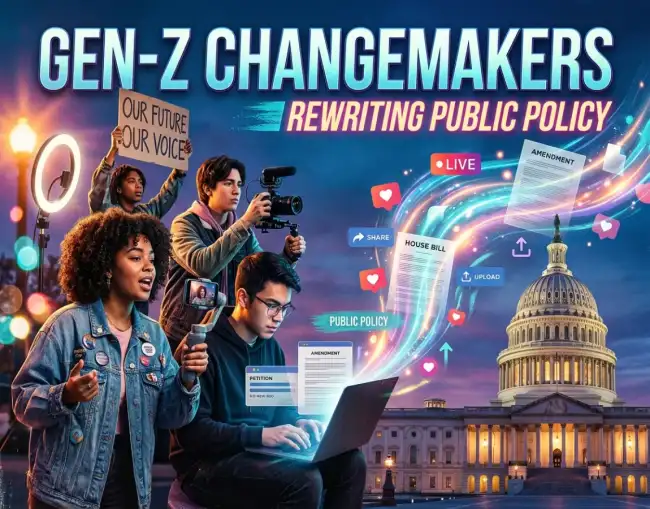
For decades, public policy was viewed as the exclusive domain of suited bureaucrats, seasoned lobbyists, and elected officials sequestered behind mahogany doors. Political engagement meant town hall meetings, petition drives, and door-to-door canvassing—channels that historically alienated younger demographics who felt entirely disconnected from traditional legislative pipelines. Today, that institutional monopoly has dissolved. A radical transformation is unfolding across social media feeds worldwide, spearheaded by a digital-native generation that refuses to accept passive citizenship. These young leaders are not merely commenting on the political landscape; they are actively dismantling and rebuilding it through bite-sized videos, livestreamed hearings, and decentralized digital coalitions.
This paradigm shift represents a fundamental evolution in how influence translates into legislative action. As detailed in insights from The Global Creator Economy Report: Key Markets to Watch in 2025 and Beyond, the monetization of attention has matured past commercial brand deals into sophisticated socio-political mobilization. Gen-Z creators command unprecedented distribution networks that bypass legacy media gates. Armed with smartphones, ring lights, and an innate understanding of algorithmic distribution, these changemakers unpack complex legislative bills, expose corporate lobbying, and mobilize millions of constituents within hours. They are transforming abstract public policy into viral, highly engaging, and actionable digital content.
Understanding this phenomenon requires examining the intersection of digital activism, audience psychology, and legislative mechanics. When young voices unite around a common cause, they wield a collective pressure that modern lawmakers can no longer afford to ignore. This comprehensive investigation explores the anatomy of Gen-Z policy influence, detailing how contemporary creators bridge the chasm between online virality and systemic legal reform. By analyzing strategic playbooks, real-world case studies, and critical execution pitfalls, we unpack the exact mechanisms these digital natives use to rewrite public policy from the ground up.
Foundational Principles and Mechanics of Digital Policy Influence
To comprehend how Gen-Z creators influence public policy, one must first deconstruct the mechanics of modern digital attention. Traditional lobbying relies on financial contributions and access to political insiders. In contrast, youth-led digital activism relies on hyper-engaged communities, distributed storytelling, and decentralized mobilization. The core principle governing this ecosystem is algorithmic translation: taking dense, 400-page congressional bills and breaking them down into digestible, culturally resonant, 60-second video essays.
The mechanics of this process operate on a continuous feedback loop between creator and audience. First, a creator identifies a policy blind spot—such as algorithmic bias in hiring software, environmental degradation in frontline communities, or student debt relief frameworks. Second, they utilize emotive storytelling, data visualization, and localized context to frame the issue not as a distant government concern, but as an immediate threat to individual rights and livelihoods. Finally, they deploy frictionless calls to action, transforming passive viewers into active constituents through embedded QR codes, automated call scripts, and direct-to-legislator email campaigns.
Moreover, the scalability of digital activism relies heavily on cross-platform synergy. While TikTok serves as the primary engine for top-of-funnel awareness and emotional hook, platforms like Instagram provide deep-dive infographic carousels, and Discord servers host the operational war rooms where strategy is debated and refined. This multi-tiered ecosystem ensures that young voices do not just shout into a digital void; they build structured operational units capable of sustaining long-term legislative campaigns.
The Evolution of Youth Civic Engagement
From Performative Posting to Structured Advocacy
The early days of social media activism were frequently criticized as performative—a digital exercise in virtue signaling characterized by black squares on Instagram and fleeting hashtag trends. However, Gen-Z creators quickly recognized the superficiality of vanity metrics and initiated a structural evolution toward measurable accountability. Modern digital campaigns are backed by exhaustive policy research, data verification partnerships with think tanks, and direct consultations with constitutional lawyers before a single video is published.
This shift from performative posting to professionalized advocacy means creators now function as modern-day independent journalists and community organizers. They maintain internal databases of legislative calendars, committee assignments, and voting records. When a critical markup session occurs in a congressional subcommittee, these creators are often live-tweeting or streaming real-time commentary, breaking down procedural jargon into plain English for millions of constituents watching from their phones.
Building Coalitions Across Partisan Divides
One of the most potent weapons in the Gen-Z changemaker's arsenal is the intentional de-escalation of hyper-partisan rhetoric in favor of issue-specific coalition building. While legacy political machinery thrives on polarization, young creators frequently focus on pragmatic outcomes that transcend traditional party lines. Whether advocating for mental health resources in public schools or fighting for comprehensive privacy protections regarding user data, these campaigns unite creators from diverse political backgrounds under singular, cohesive policy goals.
This cross-ideological solidarity disarms defensive politicians who are accustomed to dismissing youth movements as fringe partisan talking points. When a conservative creator with a rural, working-class audience and a progressive urban creator align on a specific piece of legislation, it signals to elected officials that the issue commands broad, bipartisan voter support. Consequently, lawmakers find themselves compelled to negotiate with digital influencers in the same manner they once engaged traditional special interest groups.
Strategic Playbook: How Creators Mobilize Millions for Policy Reform
1. Identifying and Translating Legislative Targets
The first step in any successful policy intervention is target identification. Creators do not wait for mainstream media to dictate the news cycle; they monitor legislative databases, statehouse dockets, and municipal agendas daily. Once an impactful bill is identified, the creator embarks on a rigorous translation phase. They strip away archaic legal terminology, translating clauses regarding zoning laws, data privacy, or environmental review processes into relatable, human-centric narratives.
Insider Tip: Successful creators often collaborate directly with public interest law firms and policy fellows to ensure absolute factual accuracy before publishing explainers. This rigorous fact-checking shields the creator from defamation claims and establishes ironclad credibility with both their audience and skeptical lawmakers.
2. Deploying Frictionless Mobilization Tools
Awareness without action is merely entertainment. To transform a viral video into actual policy pressure, creators must reduce the friction of civic participation to absolute zero. If a viewer has to spend twenty minutes searching for their representative's contact information, the momentum is lost. Gen-Z changemakers solve this by integrating micro-software tools directly into their content ecosystems.
Practitioners utilize tools like automated call-routing software, pre-filled SMS templates, and geo-targeted voter lookup links. When a user clicks the link in a creator's bio, the system automatically identifies their specific congressional district, connects them to their representative's office phone line, and provides a concise script to read aloud. This seamless bridge between digital engagement and real-world action has generated millions of constituent phone calls to legislative offices in single afternoon windows.
3. Sustaining Momentum Through Campaign Lifecycle Management
A common pitfall in digital activism is the flash-in-the-pan campaign that spikes in virality for forty-eight hours and vanishes before a bill even reaches committee. Master creators treat policy advocacy as an ongoing campaign lifecycle. They post regular accountability updates, track committee votes, spotlight supportive politicians, and publicly name-and-shame obstructionist legislators.
This sustained pressure creates a prolonged feedback loop. Politicians realize that the conversation does not end when the hashtag stops trending. By keeping a spotlight on specific legislative milestones—from introduction and committee markup to floor votes and executive signature—creators ensure that public policy remains front-of-mind for young voters long after the initial viral wave subsides.
Real-World Case Studies: Successes, Failures, and Strategic Takeaways
Examining concrete deployments of digital policy advocacy reveals the stark contrast between meticulously planned campaigns and mismanaged digital outbursts. Consider the historic mobilization led by youth climate coalitions targeting state-level clean energy mandates. By coordinating a synchronized release of localized data across TikTok and Instagram, these creators bypassed traditional lobbying roadblocks. They mobilized over 500,000 youth constituents to submit video testimony for virtual state legislative hearings, ultimately forcing the passage of landmark renewable energy legislation in three key states.
Conversely, consider the cautionary tale of a high-profile influencer-led campaign attempting to fast-track municipal transit reform. The campaign went viral rapidly, generating millions of views and widespread online outrage. However, because the creators failed to consult local urban planning experts, the specific policy demands they advocated for violated federal funding guidelines. Consequently, city council members easily dismissed the entire movement as uninformed internet noise, and the proposed transit overhaul was quietly shelved.
The lesson learned from these contrasting scenarios is clear: digital charisma must be married to structural competence. The most successful initiatives operate similarly to modern non-profit organizations, echoing the strategic rigor highlighted in Nonprofit Spotlight: How Charities Are Scaling Donations Through Creator Networks, where structured digital networks amplify organizational impact. Passion sparks the fire, but operational expertise and legal accuracy sustain the flame of true public policy reform.
Critical Mistakes in Digital Policy Activism and How to Avoid Them
Even the most well-intentioned digital creators frequently stumble when entering the complex arena of public policy. Recognizing these critical pitfalls is essential for anyone seeking to effect genuine legislative change.
- Relying on Outrage Without Actionable Solutions: Fostering anger without providing a clear, constructive policy remedy leads directly to activist burnout and voter apathy. Always pair critique with a concrete call to action.
- Neglecting Factual Verification: Spreading misinformation regarding legislative text destroys a creator's credibility overnight, handing political opponents an easy opportunity to discredit the entire movement.
- Ignoring Local and State Politics: Fixating exclusively on federal gridlock while ignoring city councils, school boards, and state legislatures where everyday policy is actively decided.
- Failing to Diversify Communication Channels: Relying on a single social media platform leaves campaigns vulnerable to sudden algorithmic shifts, account suspensions, or abrupt policy bans.
- Isolating Traditional Stakeholders: Treating legacy advocacy groups, labor unions, and policy experts as adversaries rather than invaluable strategic allies.
Comprehensive Comparison: Traditional Lobbying vs. Gen-Z Digital Advocacy
To fully grasp the shifting dynamics of legislative influence, it is instructive to compare traditional institutional lobbying against modern Gen-Z digital activism across key operational metrics.
| Operational Metric | Traditional Lobbying | Gen-Z Digital Advocacy |
|---|---|---|
| Primary Resource | Financial Capital & PAC Contributions | Audience Attention & Algorithmic Reach |
| Speed of Mobilization | Slow, deliberate legislative calendars (Months/Years) | Instantaneous, viral mobilization (Hours/Days) |
| Audience Demographics | Elite insiders, donors, and elected officials | Mass grassroots constituents, youth voters, general public |
| Transparency | Often opaque, behind-closed-doors negotiations | Public-facing, decentralized, and highly visible |
| Sustainability | Persistent institutional presence backed by funding | Requires active lifecycle management and continuous engagement |
Frequently Asked Questions
How do Gen-Z creators maintain financial independence while engaging in unpaid policy advocacy?
Many creators sustain their civic advocacy work through a hybrid revenue model. They balance sponsored commercial brand partnerships with creator funds, crowdfunding platforms, and grants from philanthropic foundations dedicated to civic education. Additionally, some creators have successfully launched mission-driven merchandise lines or educational workshops that directly fund their policy research operations.
Can digital activism truly influence lawmakers who are ideologically opposed to youth movements?
Yes, absolutely. While ideological opposition exists, elected officials ultimately respond to one overriding incentive: political self-preservation. When thousands of constituents within a specific voting district flood a representative's phone lines, email inboxes, and local town halls regarding a specific issue, the politician's calculus shifts. Digital activism makes ignoring constituent demands politically costly, regardless of initial ideological friction.
What role do legal experts play in creator-led policy campaigns?
Legal experts and policy fellows act as the critical backbone for credible digital campaigns. They ensure that draft bills, petitions, and public testimony comply with local, state, and federal statutes. Creators partner with these professionals to protect themselves against legal liability and to ensure that the policy solutions they promote are legally enforceable and practically viable.
How do creators combat algorithmic censorship or shadow-banning on political content?
Creators mitigate algorithmic volatility by practicing cross-platform diversification and building owned-media ecosystems. Rather than relying solely on TikTok or Instagram feeds, successful changemakers maintain active email newsletters, private Discord communities, and dedicated websites. This ensures that even if algorithmic suppression occurs on one platform, their direct line of communication with constituents remains entirely intact.
What is the best way for a new creator to start engaging with public policy?
The most effective starting point is hyper-local. Instead of attempting to tackle national macroeconomic or federal tax policy immediately, new creators should investigate municipal zoning laws, school board decisions, or local environmental ordinances. Covering local issues allows creators to build foundational research skills, establish direct relationships with local government officials, and cultivate an engaged, localized audience before scaling to broader legislative fights.
Strategic Roadmap and Final Takeaway
The intersection of digital influence and public policy is no longer an experimental frontier; it is the new battleground for modern democracy. As we look ahead over the next two to five years, the boundary between online content creation and civic leadership will continue to blur irrevocably. Lawmakers who fail to adapt to this decentralized reality will find themselves speaking to empty rooms, while creators who master the art of structured, fact-based advocacy will wield unprecedented legislative leverage.
For brands, creators, and institutional leaders navigating this evolving ecosystem—similar to the strategic shifts explored in Instagram Reels vs. YouTube Shorts: Where Should Brands Invest Their Collab Budget?—the imperative is clear: agility, authenticity, and operational depth are paramount. The definitive takeaway for aspiring Gen-Z changemakers is that digital influence is a profound responsibility. By combining viral storytelling with rigorous policy research and frictionless mobilization tools, young voices are not just participating in the legislative process—they are actively rewriting the future of public policy for generations to come.
Be the first creator to share your take on this story.