
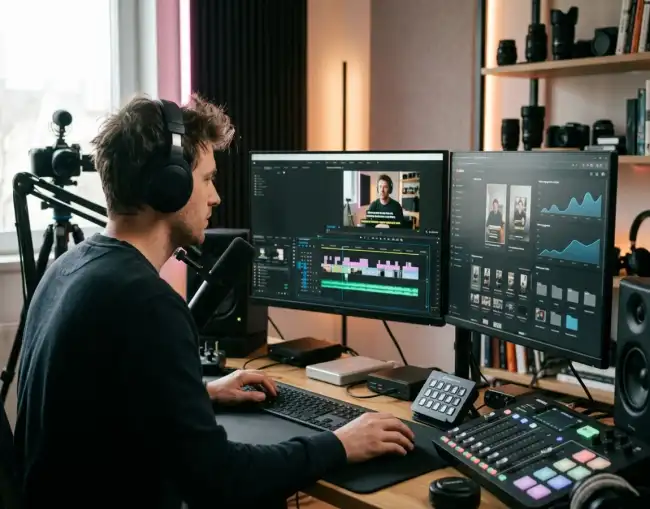
In the modern creator economy, linear content distribution is effectively a relic of the past. Creators who rely on a single medium—whether it is an exclusive audio podcast or a standalone short-form video feed—are leaving massive audiences, exponential revenue streams, and cultural relevance on the table. The modern media landscape demands fluidity, where ideas must travel seamlessly across digital ecosystems, shifting formats while maintaining their core resonance. At the epicenter of this shift are cross platform projects, a strategic methodology that treats an initial piece of media not as a finished product, but as raw intellectual property waiting to be engineered into a multi-format empire.
Consider the traditional podcast production cycle: hours of deep, intellectually stimulating conversations are recorded, polished, published to audio feeds, and largely forgotten in algorithmic feeds within seventy-two hours. Meanwhile, platforms like TikTok, Instagram Reels, and YouTube Shorts consume billions of hours of attention daily, driven by hyper-visual, fast-paced, episodic storytelling. Bridging these two worlds through systematic podcast to video adaptation is no longer an optional growth hack; it is a fundamental survival requirement for top-tier creators, networks, and brands looking to dominate algorithmic feeds. When executed with precision, this process transforms long-form listening sessions into an unstoppable flywheel of viral engagement, subscriber acquisition, and brand partnerships.
To unpack this phenomenon, we must look beyond basic clipping tools and examine the structural mechanics of multi-format media creation. Creators who master this discipline do not simply chop up audio files; they deconstruct narrative arcs, reframe visual psychology, and engineer psychological triggers tailored specifically to the unique consumption behaviors of different platform algorithms. As we explore the blueprints, frameworks, and strategic methodologies in this guide, you will learn how to transition your long-form audio assets into high-converting, viral video series that command attention and drive exponential community growth.
Foundational Principles and Mechanics of Cross-Platform Media
Understanding the mechanics of multi-format media creation requires a fundamental shift in how producers view content consumption. An audio listener and a short-form video viewer are fundamentally different psychological states. The podcast listener is typically engaged in deep-dive mode—commuting, working out, or doing chores—willing to invest forty-five to ninety minutes into a nuanced discussion. Conversely, the short-form video consumer is in an active state of curation, scrolling through algorithmic feeds where retention is measured in milliseconds, and the threshold for losing interest is razor-thin.
Therefore, the core principle of cross-platform transformation relies on extractive storytelling. You are mining long-form conversations for high-yield nuggets of emotional resonance, controversial insights, unexpected humor, or counter-intuitive wisdom. These nuggets must be isolated, structurally rebuilt, and visually reinforced to function independently of the original context. Furthermore, this systemic approach ties directly into broader industry trends, such as those highlighted in Industry Expert Panels: Decoding the 2025 Creator Partnerships Playbook, where modern monetization models require creators to demonstrate omnipresence and cross-channel value to brand sponsors.
Mechanically, a successful pipeline demands clear taxonomy and asset management. Audio files, raw multi-cam video recordings, isolated microphone tracks, and transcribed text documents must be synchronized, cataloged, and indexed in collaborative cloud workspaces. Without a structured backend infrastructure, the sheer volume of assets generated from a single podcast episode will quickly overwhelm a production team, leading to bottlenecks, missed deadlines, and inconsistent publishing schedules across secondary channels.
Step 1: Audio Audit and Content Mining
Deconstructing Long-Form Audio for High-Impact Moments
The journey from a two-hour podcast recording to a viral video series begins long before a single video editing timeline is opened. It starts with a rigorous content audit and transcription analysis. Using advanced AI transcription tools alongside human editorial judgment, producers must comb through the dialogue to identify self-contained narrative arcs. These segments typically range from 30 seconds to three minutes and possess a clear beginning, middle, and unexpected resolution or punchline.
During this auditing phase, editors should tag segments based on emotional triggers: curiosity, outrage, validation, humor, or profound paradigm shifts. By categorizing these soundbites, you create an inventory of content that can be matched against specific platform trends or audience demographics. Insider tip: Never rely solely on automated sentiment analysis; pair AI transcription searches with a human listener log to catch subtle tonal shifts, deadpan sarcasm, and non-verbal reactions that often drive the highest viral engagement on social feeds.
Selecting Themes for Serialized Storytelling
Once individual clips are isolated, the next strategic imperative is grouping them into cohesive thematic categories rather than treating them as disconnected one-offs. If your podcast episode touched on entrepreneurship, personal mental health, and industry predictions, do not scatter these topics randomly across your publishing schedule. Instead, bundle them into mini-series.
For example, create a five-part vertical video series explicitly focused on "The Hidden Pitfalls of Startup Funding" extracted from a single founder interview. By serializing the content, you train the platform's algorithm to recognize your account as an authority on a specific niche, while simultaneously encouraging viewers to binge multiple videos on your profile, boosting session duration metrics.
Step 2: Visual Engineering and Aesthetic Adaptation
Translating Audio Dynamics into Visual Language
A common pitfall in podcast repurposing is publishing static waveforms or unedited talking-head videos with zero visual dynamic range. To convert passive audio into an arresting visual experience, producers must engineer visual motion that mirrors the emotional cadence of the speech. This includes strategic camera angle switching, digital zooms that emphasize key words, and dynamic kinetic typography that highlights critical phrases.
The visual language must be fast-paced without inducing motion sickness. Dynamic text placement, emoji punctuation, and branded color grading ensure that even if a viewer watches on mute—a massive percentage of mobile consumption—they can still absorb the narrative instantly. Master editors layer subtle sound effects, riser swells, and beat drops under dialogue beats to keep the brain stimulated.
Building Multi-Cam Layouts for Vertical and Horizontal Feeds
AspectRatio management is a technical minefield that requires absolute precision. While your primary podcast may be recorded in 16:9 horizontal format for YouTube, your viral video series will likely live in 9:16 vertical feeds on TikTok, Instagram, and Shorts. Simply cropping a horizontal two-person interview down the middle results in awkward framing that cuts off the speakers.
The gold standard is multi-camera ISO recording, where each speaker is captured on a dedicated 4K camera. In post-production, editors re-frame each camera angle independently within a vertical container, utilizing automated speaker-tracking plugins or manual keyframing to keep the active speaker dead-center. This technique ensures that your repurposed clips maintain cinematic production value, rivaling natively shot mobile content.
Step 3: Algorithmic Optimization and Hook Engineering
Mastering the First Three Seconds
In the ecosystem of short-form video, the hook is everything. You have less than three seconds to convince a swiping user to stop their thumb. When repurposing podcast content, the absolute best moment of the conversation is rarely located at the very beginning of the soundbite. Therefore, editors must perform "chronological restructuring" by moving the climax, a shocking statistic, or a controversial statement to the absolute front of the video.
For example, if a guest spends thirty seconds building up to a revelation about industry corruption, start the video with the final punchline: *"Every major agency is lying to you about their conversion rates."* Once the viewer is hooked, the video seamlessly loops back or transitions into the explanatory buildup, retaining audience attention through sheer narrative curiosity.
Leveraging Platform-Specific Metadata and Captioning
Algorithmic distribution is heavily reliant on contextual metadata, but each platform interprets data differently. A caption that performs exceptionally well on LinkedIn—professional, analytical, and text-heavy—will fall flat on TikTok, where conversational, punchy hooks and trending audio tracks drive discovery.
Develop a workflow where your core description is adapted into three distinct variants: a search-optimized, keyword-rich description for YouTube Shorts; a conversational, community-engaging caption with relevant trending hashtags for TikTok; and a visually formatted, aesthetic caption tailored for Instagram Reels. Additionally, embed closed captions directly into the video file using high-contrast, brand-aligned fonts, ensuring accessibility and retention for silent scrollers.
Step 4: Strategic Distribution and Scheduling Flywheels
Staggered Rollouts vs. Content Blitzes
Timing can make or break a cross-platform campaign. Should you release all derivative clips from an episode at once, or stagger them over weeks? The ideal strategy depends on your overarching goals. A staggered rollout—releasing one highlight clip every two to three days over a two-week period—acts as a continuous drip campaign that constantly drives traffic back to the full-length podcast episode.
Conversely, a content blitz—dropping multiple related clips across different channels simultaneously—can create an omnipresence effect, making it feel as though your brand or guest is everywhere at once. Many top creators use a hybrid model: dropping a high-impact teaser trailer on launch day, followed by serialized micro-clips spaced out over the subsequent fortnight, keeping the algorithmic momentum alive long after the initial episode release.
Driving the Conversion Loop Back to Long-Form
The ultimate objective of repurposing content is not merely collecting vanity views on short-form platforms; it is funneling that rented attention into owned media assets—namely, your full-length podcast subscribers, newsletter readers, and community members.
Every viral clip must feature a clear, frictionless pathway to the full episode. This is achieved through pinned comments with direct links, dynamic end-screens on YouTube, and clear verbal call-to-actions woven naturally into the video. Furthermore, creators must be mindful of how rapid scaling affects their internal operations, keeping in mind lessons learned when navigating sudden digital expansion, akin to the challenges explored in discussions on managing sudden exposure and platform growth.
Step 5: Analytics, Iteration, and Performance Attribution
Decoding Retention Graphs and Drop-off Points
Data is the compass of the modern digital publisher. Once your viral video series goes live, your analytical deep-dive begins. Platform analytics tools provide granular retention graphs that reveal second-by-second audience behavior. Look closely at where viewers drop off: Is there a sharp cliff at second four? If so, your hook failed. Did viewership plateau and then spike? Analyze what visual or auditory cue triggered that re-engagement.
By reviewing analytics across fifty or a hundred repurposed clips, you will begin to identify patterns. You will learn precisely which topics, guest archetypes, and editing styles resonate with your specific audience, allowing you to feed these insights back into your long-form podcast recording strategy.
Building an Iterative Feedback Loop
The most successful media brands do not guess what works; they run systematic split-testing across hooks, thumbnails, and caption styles. Create a weekly data review meeting with your editing and content teams to evaluate top performers. If a particular clip format outperforms your baseline average by 300%, reverse-engineer its success and immediately produce a follow-up or "Part 2" utilizing the same structural template.
Real-World Case Studies & Scenarios
Case Study A: The Technical Execution of a B2B Tech Podcast
The Challenge: A niche B2B tech podcast focused on enterprise cloud architecture was struggling to break past a loyal base of 5,000 downloads per episode. The content was highly technical, dry, and traditional in its audio-only format.
The Strategy: The production team implemented a rigorous cross-platform project framework. They recorded in 4K multi-cam, hired a specialized short-form editor, and mined each one-hour interview for three distinct operational debates. They reformatted these debates into 45-second vertical clips featuring dynamic kinetic typography, bold visual callouts of data points, and aggressive hooks highlighting industry controversies.
The Result: Within 90 days, the podcast's associated TikTok and YouTube Shorts channels generated over 4.2 million organic views. More importantly, podcast downloads surged by 340%, and the show secured its first major enterprise sponsor, proving that complex, niche B2B content can thrive in viral video formats when properly engineered.
Case Study B: The Pitfall of Low-Effort Repurposing
The Scenario: A lifestyle podcast network attempted to scale up their output by utilizing fully automated, AI-driven clipping software without human editorial oversight. The software automatically selected clips based solely on audio volume spikes and generated generic, unedited vertical crops with automated captions.
The Failure: The resulting videos featured awkward face-framing, clipped sentences that made no logical sense out of context, and zero visual engagement. The accounts quickly suffered from algorithmic suppression due to low average view duration (under 18%). Viewers left critical comments complaining of low quality, damaging the parent brand's reputation and forcing the network to completely scrap the automated pipeline and rebuild with a human-led editorial team.
Critical Mistakes and How to Avoid Them
- Mistake 1: Treating Short-Form Video as an Afterthought. The Fix: Stop treating video editing as something done *after* the podcast is finished. Plan visual moments, camera movements, and quote-worthy soundbites *during* the recording session itself. Instruct your guests to deliver concise, punchy soundbites specifically designed for clipping.
- Mistake 2: Ignoring Platform-Native Aesthetics. The Fix: Never cross-post the exact same video file with the exact same caption across TikTok, Instagram, Reels, and YouTube Shorts without tailoring. Respect the unique community culture, native font styles, and algorithmic nuances of each destination platform.
- Mistake 3: Weak or Misleading Clickbait Hooks. The Fix: While strong hooks are essential, clickbait that misrepresents the actual core conversation destroys audience trust and tanks retention graphs. Ensure your hook is an authentic, amplified distillation of a real point made in the episode.
- Mistake 4: Failing to Optimize for Sound-Off Viewing. The Fix: Over 70% of mobile video is consumed on mute initially. Always burn stylized, highly readable open captions into your video files and utilize clear visual storytelling elements that communicate the message without audio.
- Mistake 5: Neglecting the Downstream Conversion Funnel. The Fix: Virality without conversion is vanity. Never publish a clip without a clear, intentional call-to-action and direct pathways guiding viewers to subscribe to your main podcast feed, newsletter, or community platform.
Comprehensive Comparison Table: Repurposing Approaches
To help you evaluate your production workflow, the table below compares three distinct approaches to podcast repurposing, analyzing resource requirements, algorithmic potential, and conversion efficiency:
| Repurposing Approach | Resource & Cost Level | Algorithmic Potential | Brand Equity Impact | Conversion to Long-Form |
|---|---|---|---|---|
| Automated AI Clipping (Low Effort) | Minimal (Software subscription only) | Very Low (High drop-off rates) | Negative (Can look spammy/cheap) | Minimal (< 0.5%) |
| In-House Hybrid Team (Balanced) | Moderate (1 dedicated video editor) | High (Optimized hooks & formatting) | Positive (Consistent, professional branding) | Moderate (2% - 5%) |
| Full-Service Agency Pipeline (Elite) | High (Dedicated producers, editors, strategists) | Maximum (Omnipresent multi-channel scaling) | Exceptional (Market leadership positioning) | High (6% - 12%+) |
Frequently Asked Questions (FAQ)
What is the ideal length for a repurposed podcast video clip?
The optimal length depends heavily on the target platform and the strength of the narrative arc, but the sweet spot for maximum algorithmic retention typically sits between 30 and 60 seconds. This duration allows enough time to deliver a compelling hook, develop a concise argument or story, and deliver a satisfying punchline or cliffhanger without testing the viewer's notoriously short attention span. For deeply educational or complex breakdowns, clips can stretch up to 90 seconds, provided the visual and auditory pacing remains relentless.
Do I need expensive multi-cam camera setups to make this work?
While a professional multi-camera 4K setup delivers the highest cinematic quality, it is not a strict barrier to entry. Many successful creators start with a high-definition single-camera recording (or clean Zoom/Riverside ISO video tracks) and utilize digital pan-and-zoom editing techniques in post-production to create the illusion of multi-camera switching. The quality of the audio content, the strength of the editing, and the punchiness of the hook matter infinitely more to the algorithm than whether your camera rig cost five thousand dollars.
How many short-form clips should I generate from a single podcast episode?
As a general rule of thumb, a standard 45-to-60-minute long-form conversation yields between 5 and 10 high-yield short-form video candidates. Pushing past 10 clips often results in diminishing returns, forcing editors to publish weaker, low-engagement filler content that can dilute your channel's overall algorithmic authority. Quality must always supersede quantity; three exceptionally engaging, high-retention clips will outperform twenty mediocre ones every single time.
How do I protect my brand when repurposing sensitive or controversial podcast topics?
When mining long-form conversations, out-of-context clipping can easily lead to misrepresentation, PR backlash, or sensationalized misunderstandings. To mitigate this risk, establish a strict editorial review gate where the podcast host or senior producer reviews every short-form cut before it is published. Ensure that the core nuance of the statement is preserved, and avoid leaning into malicious out-of-context framing just for short-term algorithmic shock value.
Should I post the exact same video across TikTok, Instagram Reels, and YouTube Shorts?
While you can use the same underlying video master file, you should never publish with a blanket approach. Each platform features distinct algorithmic preferences, watermarking sensitivities, caption character limits, and community cultures. Tailor your cover images, title hooks, captions, and hashtag strategies natively for each specific platform to maximize your organic reach and algorithmic distribution potential.
Strategic Roadmap and Final Takeaway
The evolution of digital media publishing demands that creators stop thinking in silos. Long-form audio and short-form video are not competing mediums; they are two halves of a powerful, symbiotic content engine. By treating your podcast episodes as foundational intellectual property and executing a disciplined, multi-format repurposing strategy, you unlock the ability to scale your audience exponentially without exponentially increasing your recording workload.
Looking ahead over the next two to five years, we will see artificial intelligence integration streamline asset logging, automated multi-aspect reframing, and predictive hook generation. However, technology will never replace human editorial intuition, narrative empathy, and strategic curation. Creators and agencies that master the delicate balance between systemic efficiency and creative storytelling will dominate algorithmic feeds, build impenetrable brand moats, and command the future of the digital creator economy.
Be the first creator to share your take on this story.