
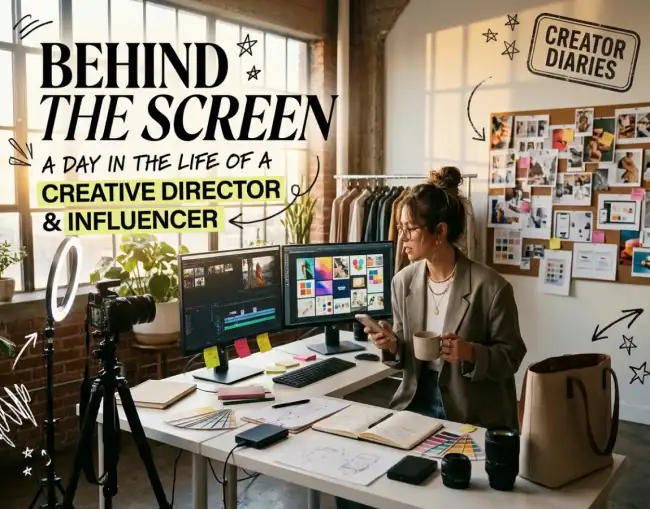
The alarm chimes at 5:00 AM, not with the gentle pulse of a wellness app, but with the cold, demanding urgency of a global enterprise. For the modern hybrid professional operating at the intersection of executive corporate leadership and personal brand building, the morning does not begin with quiet meditation; it begins with an unyielding cascade of Slack notifications, asynchronous feedback loops from production teams across three continents, and the silent, pressing gravity of an algorithmic feed that never sleeps. In the high-stakes world of digital publishing and media creation, the title of 'Creator' is no longer a quaint hobby or a weekend side hustle—it is a rigorous executive mandate requiring the strategic acuity of a chief executive officer combined with the relentless output of an independent television network.
This dynamic tension defines the contemporary digital landscape. As we examine evolving industry trends, the chasm between traditional corporate creative direction and independent creator monetisation has completely dissolved. Brands no longer look to static agencies for campaigns; they seek multi-hyphenate tastemakers who command both the artistic vision of a creative director life and the deeply authentic audience trust inherent to a daily influencer routine. This dual existence demands an unprecedented level of cognitive switching, shifting seamlessly from high-level enterprise brand guidelines and multi-million-dollar art direction down to raw, unfiltered storytelling that resonates on a human level through intimate creator diaries. Understanding this ecosystem requires looking past the curated highlight reels to examine the gritty, unvarnished mechanics of operational execution.
At its core, this article establishes a definitive thesis: long-term sustainability in the modern creator economy is exclusively achieved by treating oneself as a media holding company rather than an individual personality. The professional balancing act of managing high-level creative direction while scaling a personal brand requires an ironclad operational infrastructure. Whether you are scaling an emerging channel or executing enterprise-grade campaigns, adopting From 0 to 100K Followers: The Exact Content Matrix That Drives Organic Growth provides the vital structural framework needed to transition from chaotic daily posting to predictable, high-yield digital expansion. In the sections that follow, we pull back the curtain on an authentic 24-hour cycle, dissecting the psychological, operational, and strategic realities of the modern creative director.
Deconstructing the Dual Role: Mechanics and Terminology
To truly grasp the daily cadence of a full-time creative director and influencer, one must first decode the complex taxonomy that governs this professional tier. Unlike traditional creators who rely solely on intuition and trend-jacking, hybrid professionals operate within a rigorous matrix of performance marketing metrics, aesthetic cohesion, and brand equity management. The synergy between corporate creative direction and influencer content creation creates a unique operational friction that tests even the most disciplined schedules.
At the foundation of this workflow is the concept of asynchronous output generation. Because a creative director often leads external teams—ranging from copywriters and video editors to motion designers and developer squads—their day is bifurcated into deep creative work and executive oversight. The terminology here matters: 'creative direction' implies the ownership of visual language, brand positioning, and emotional resonance across all touchpoints, while 'influencing' requires the continuous, real-time conversion of personal authenticity into audience engagement and transactional leverage.
Furthermore, understanding the modern creator economy requires mastering advanced data analytics and audience segmentation. Just as enterprise brands utilize sophisticated software to evaluate partnerships, creators must study audience retention curves, click-through rates, and algorithmic distribution triggers with clinical precision. For a deeper look at how data science intersects with digital talent management, exploring How AI Analytics Are Revolutionizing Influencer Discovery for Global Brands reveals the exact quantitative benchmarks that corporate sponsors use when evaluating high-level creator partnerships.
Phase One: The Executive Morning Routine (5:00 AM – 9:00 AM)
Strategic Triage and Global Communication
The morning hours set the trajectory for the entire day. For a creative director balancing international brand campaigns and daily content production, the hours between 5:00 AM and 7:00 AM are dedicated exclusively to asynchronous triage. Checking communication channels across Slack, WhatsApp, and enterprise email requires strict compartmentalization to prevent cognitive overload. The objective is not to answer every message immediately, but to categorize operational bottlenecks, approve pending creative assets, and unblock production teams operating in European and Asian time zones.
During this window, high-priority creative decisions—such as final sign-offs on color grading for an upcoming product launch or approving script revisions for a sponsored brand video—are executed with surgical precision. By establishing a strict morning triage protocol, the creative director ensures that operational delays are minimized before the domestic workday even begins. This foundational discipline prevents the reactive panic that often plagues unstructured digital entrepreneurs.
Deep-Focus Ideation and Content Capture
Once global operations are stabilized, the 7:00 AM to 9:00 AM block is reserved for high-cognitive creative work while cortisol levels and mental clarity are at their peak. This is when raw concepts for daily creator diaries are ideated, scripted, and outlined. Unlike general lifestyle influencers who capture content haphazardly throughout the day, a professional creative director treats content creation as a scheduled, intentional production process with defined deliverables and narrative arcs.
This morning session also involves a brief, highly focused physical capture window. Whether filming a talking-head segment for an educational breakdown or recording B-roll of the morning workflow, the emphasis is on efficiency and quality. Studio lighting is pre-configured, audio chains are permanently mounted, and recording takes are kept to a minimum through meticulous pre-planning. This disciplined approach guarantees a steady stream of authentic, visually compelling material without sacrificing the hours required for executive duties.
Phase Two: Corporate Creative Direction and Brand Leadership (9:00 AM – 2:00 PM)
Managing Cross-Functional Creative Teams
By 9:00 AM, the hat transitions firmly from personal brand builder to enterprise creative director. The late morning is defined by a dense schedule of syncs, design reviews, and strategic planning sessions with internal stakeholders, client marketing teams, and external agency partners. Leading a creative team requires translating abstract brand visions into concrete, actionable production briefs that inspire rather than constrain artistic talent.
In these meetings, the hybrid professional must navigate competing priorities: satisfying corporate compliance guidelines while pushing the boundaries of innovative visual storytelling. Effective delegation is the ultimate survival skill during this block. By empowering senior designers and associate art directors to make autonomous execution choices, the creative director preserves their mental bandwidth for high-level conceptual approvals and overarching campaign architecture.
Overseeing Asset Production and Quality Control
Interspersed between meetings is the rigorous task of quality control across multiple parallel media streams. Whether reviewing UI/UX designs for a digital product, inspecting packaging mockups, or evaluating the rough cut of a commercial spot, the creative director's eye must remain uncompromising. Every asset is evaluated against the master brand guidelines, ensuring absolute consistency in typography, color space, photographic tone, and brand voice.
This phase often involves real-time problem-solving. When a production roadblock arises—such as a delayed asset delivery from a third-party vendor or an unexpected creative pivot required by a corporate client—the creative director must rapidly formulate alternative solutions that preserve project timelines and budget constraints. This capacity for rapid, unflappable pivot management separates amateur creators from seasoned executive directors.
Phase Three: Influencer Production, Filming, and Batching (2:00 PM – 6:00 PM)
Executing the Daily Content Pipeline
As the afternoon progresses, the professional shifts back into creator mode, focusing on the heavy lifting of content production for their personal channels. This block is dedicated to batch filming—a methodology where multiple videos, photographs, and audio assets are recorded in a single consolidated session to maximize efficiency and minimize setup/teardown friction. The studio environment, pre-lit and acoustically treated, becomes a high-output production line.
The key to successful batching lies in meticulous pre-production organization. Script outlines, visual reference boards, and wardrobe changes are mapped out on a digital kanban board prior to entering the studio. By grouping similar production requirements together—such as filming all educational monologue videos back-to-back followed by all lifestyle B-roll sequences—the creator maintains high energy and artistic focus, significantly reducing the total time required to generate a week’s worth of publishable media.
Leveraging Multi-Platform Repurposing Frameworks
Creation is only half the battle; distribution mechanics dictate reach. During the late afternoon production block, the strategy for content atomization is meticulously applied. A single long-form recording or comprehensive tutorial is systematically broken down into bite-sized clips designed for short-form algorithmic distribution across platforms like TikTok, Instagram Reels, and YouTube Shorts.
To master this distribution engine without burning out, top-tier creators rely on advanced structural frameworks. For an exhaustive blueprint on maximizing media efficiency across channels, studying The Secret Formula for Repurposing One Long Podcast Into 30 Viral Videos offers invaluable methodologies for extracting maximum organic value from every single hour of raw recording time.
Phase Four: Community Engagement, Analytics, and Rest (6:00 PM – 10:00 PM)
Data Review and Algorithmic Auditing
When the sun sets and the active production work concludes, the modern creator opens the dashboard. The evening hours are dedicated to rigorous data analysis. Reviewing performance metrics from the day's published content is not an exercise in vanity tracking, but a vital scientific audit. Which hook retained viewers past the 3-second mark? Where did the drop-off occur in the audience retention graph? What sentiment dominated the comment sections?
By constantly analyzing these performance indicators, the creative director refines their content hypothesis for the following day. This iterative feedback loop ensures that the personal brand remains agile and responsive to shifting audience behaviors and algorithmic updates, rather than blindly publishing content into a vacuum.
Intentional Community Nurturing and Unwinding
The final operational task of the day involves strategic community engagement. Rather than mindless scrolling, the hybrid professional spends a dedicated 30 minutes interacting with top-tier community members, responding to thoughtful comments, and studying peer content within their niche to maintain a pulse on industry culture. This human element is essential for sustaining genuine audience connection in an increasingly automated digital landscape.
Finally, the transition to rest is protected with religious dedication. Screen time is systematically eliminated at least one hour before sleep, replaced by reading, analog reflection, and physical relaxation. A burnt-out creative director cannot lead teams or inspire audiences; therefore, ruthless recovery is treated as a non-negotiable professional obligation.
Real-World Case Studies: Execution vs. Burnout
Examining the lives of real practitioners illuminates the fine line between sustainable multi-hyphenate success and catastrophic burnout. Consider two contrasting archetypes within the digital media landscape: Creator Alpha and Creator Beta.
Creator Alpha: The Systems-Driven Executive
Creator Alpha operates as a full-time creative director for a venture-backed tech startup while simultaneously running a robust personal brand focusing on design and digital entrepreneurship. By implementing strict time-blocking, outsourcing low-level video editing to a trained virtual assistant, and utilizing batch-production protocols, Alpha consistently delivers on corporate milestones while publishing three high-quality pieces of content weekly. Over 24 months, Alpha’s personal channel grew by 250,000 followers, and their corporate team successfully launched two major product rebrands without missing a single deadline. The secret? Relentless systems integration and refusal to rely on reactive hustle.
Creator Beta: The Reactive Hustler
Creator Beta attempted the exact same dual-career path without operational infrastructure. Relying purely on spontaneous daily recording, answering DMs at all hours of the night, and attempting to edit every video independently, Beta quickly fell into the trap of severe creative fatigue. Corporate deliverables suffered due to divided attention, personal content became erratic and uninspired, and within nine months, Beta experienced complete physical and mental exhaustion, forcing a three-month hiatus from all digital platforms. The lesson is unequivocal: talent and ambition are worthless without operational architecture.
Critical Mistakes and How to Avoid Them
Navigating the demanding life of a creative director and influencer is fraught with hidden traps. Recognizing these pitfalls early saves months of wasted effort and prevents severe professional setbacks.
- Neglecting Boundary Management Between Corporate and Personal Roles: Blurring the lines between your employer's intellectual property and your personal brand creates legal and ethical vulnerabilities. Countermeasure: Establish explicit operating agreements with employers regarding side-brand activities, use separate equipment and storage drives, and maintain distinct operational hours for each role.
- Failing to Build an Asynchronous Content Pipeline: Living in a perpetual state of 'live' creation leads directly to erratic publishing schedules and plummeting algorithmic favor. Countermeasure: Adopt a strict batch-production calendar, maintaining a minimum two-week content buffer at all times.
- Ignoring Data-Driven Iteration in Favor of Pure Artistic Intuition: Creating solely based on personal aesthetic taste without analyzing audience data often leads to low engagement and stagnant growth. Countermeasure: Dedicate specific evening hours to reviewing retention curves, click-through rates, and audience demographics to inform future creative briefs.
- Underestimating the Administrative and Financial Overhead: Treating creator income as pure profit without managing business structures, tax obligations, and team payroll invites financial disaster. Countermeasure: Form an S-Corp or LLC early, hire a specialized digital CPA, and reinvest a fixed percentage of revenue back into operational infrastructure.
- Neglecting Physical and Mental Recovery Protocols: Operating at high cognitive output without mandatory rest periods inevitably triggers cognitive burnout and creative stagnation. Countermeasure: Treat sleep, physical exercise, and digital detox windows with the same uncompromising discipline applied to high-stakes business meetings.
Comprehensive Comparative Analysis of Creator Workflows
To better understand the operational differences between unstructured hobbyist creation and systematic executive-creator management, examine the comparative matrix below:
| Operational Dimension | The Hobbyist Creator | The Full-Time Creative Director & Influencer |
|---|---|---|
| Content Production | Spontaneous, daily reactive recording with zero buffer. | Systematic batch production with a 2-4 week content buffer. |
| Time Management | Unstructured blending of personal life, work, and creation. | Rigorous time-blocking and asynchronous communication protocols. |
| Team Delegation | Solopreneur execution handling every task independently. | Strategic outsourcing of editing, admin, and distribution to specialized contractors. |
| Data Utilization | Focuses primarily on vanity metrics like follower count and total likes. | Analyzes deep retention curves, click-through rates, and audience sentiment. |
| Brand Monetisation | Opportunistic sponsorships accepting low-paying, misaligned deals. | Long-term equity partnerships, owned digital products, and high-ticket consulting. |
Frequently Asked Questions
How does a full-time creative director manage the potential conflict of interest between their day job and personal brand?
Managing potential conflicts of interest requires absolute transparency and rigid compartmentalization. Most professional creative directors review their employment contracts and non-compete clauses with legal counsel before launching or scaling a public personal brand. By ensuring that personal content focuses on general industry insights, design philosophy, and broad creative methodologies rather than proprietary company data, trade secrets, or client-specific work, professionals can successfully protect both their corporate standing and their independent digital presence.
Be the first creator to share your take on this story.