
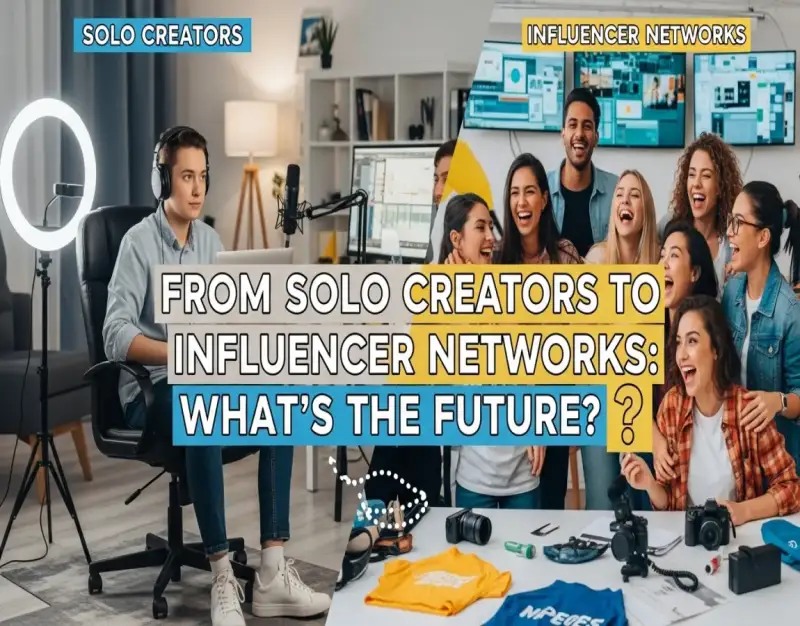
From Solo Creators to Influencer Networks: What’s the Future?
Key Takeaways
-
The creator economy is evolving from individual influencers to structured influencer networks that offer scale, strategy, and shared value.
-
Solo creators face challenges with brand deals, content burnout, and monetization, leading many to join or build collaborative ecosystems.
-
Influencer networks provide creators with negotiation power, content support, cross-promotion, and revenue diversification.
-
The future lies in collective branding, audience pooling, niche-based collaboration, and decentralized creator organizations.
-
Creator unions, digital collectives, and blockchain-based revenue sharing models are likely to redefine influencer marketing.
-
Hybrid models combining personal branding with network scalability will dominate the next phase of digital influence.
Introduction: A Creator Economy on the Move
It began with selfies, vlogs, and 15-second dances. The influencer economy exploded as individuals built brands from their bedrooms, park benches, and phone screens. Solo creators became celebrities. Side hustlers became millionaires.
But today, we’re witnessing a shift.
The age of the independent influencer is evolving—not dying, but transforming into something bigger, smarter, and more sustainable: the influencer network model. This transition is redefining not just how creators collaborate, but how they scale, earn, and sustain their careers in a highly competitive, algorithm-controlled ecosystem.
So what does the future look like when creators stop going solo and start building together? Let’s explore.
The Rise (and Limits) of the Solo Influencer
For the past decade, influencers have built empires with nothing but a smartphone and relentless hustle. But the solo model comes with hard ceilings:
-
Burnout is real: Managing filming, editing, negotiating, scheduling, and engagement alone is overwhelming.
-
Income is unstable: Sponsorships fluctuate, algorithms change, and brand budgets move.
-
Lack of support: There’s often no team, no manager, and no mentor—just the creator against the noise.
While many creators thrive independently, thousands more struggle in silence. The pressure to constantly “be on,” generate engagement, and grow can erode mental health and creative passion.
Enter Influencer Networks: Collaboration Meets Structure
Influencer networks—also called creator collectives, talent houses, or content clusters—are organized ecosystems where creators share resources, support, audiences, and even revenue. These networks range from formal agencies to casual group chats and include:
-
Multi-Channel Networks (MCNs)
-
Talent collectives
-
Brand-aligned influencer groups
-
Physical content houses (like Hype House or FaZe Clan)
The core idea? Together, we’re stronger.
Why Influencer Networks Are Booming
1. Scalability
Brands prefer negotiating with one network contact to access 10 creators rather than messaging each one individually. It saves time, simplifies legalities, and ensures broader reach.
2. Cross-Promotion
Creators grow faster when they feature in each other’s content. Networks amplify reach organically, helping smaller voices scale quickly.
3. Revenue Diversification
From shared merch drops to collective ad deals and subscription platforms, networks enable multiple income streams that creators couldn’t access alone.
4. Creative Collaboration
Ideas multiply in groups. Brainstorming sessions, co-hosted videos, and themed weeks—networks fuel innovation.
5. Emotional & Professional Support
Networks offer more than money; they offer belonging. Creators help each other navigate trolls, trends, contracts, and creative blocks.
From Algorithm Slaves to Collective Resilience
Algorithms change. Platforms shift priorities. What works today might be irrelevant tomorrow. But influencer networks offer resilience:
-
When one creator’s engagement dips, another may trend.
-
When platforms throttle visibility, shared audiences keep content alive.
-
When sponsors shift focus, networks offer diversified exposure.
In a world where creators are at the mercy of the algorithm, networks create internal ecosystems of distribution that reduce risk and offer stability.
Case Studies: From Individuals to Industry Forces
MrBeast and the Beast Network
Jimmy Donaldson didn’t just build a channel; he built a universe. From Feastables to Beast Gaming, his network includes editors, collaborators, and spinoff brands. His team-first mindset powers massive content and global expansion.
FaZe Clan
Once a group of gaming creators, FaZe evolved into a media company, clothing line, and esports empire. The network model allowed FaZe to monetize influence beyond content, turning creators into cultural icons.
The Sidemen
A UK-based group of friends turned creators. Their YouTube group channel, crossovers, charity events, and merch lines are textbook examples of network-based brand building.
Challenges of the Network Model
Of course, networks aren’t magic fixes. They come with their own set of challenges:
-
Creative Conflicts: Too many cooks can spoil the content.
-
Revenue Sharing Disputes: Money can turn friends into enemies without clear contracts.
-
Power Dynamics: When one creator is more famous, the balance can tilt.
-
Brand Alignment: If creators have wildly different styles, brands may hesitate to sponsor the group.
-
Audience Fatigue: Too much collaboration or repetitive content can bore followers.
The Future: What’s Next in Creator Collaboration?
1. Decentralized Creator Collectives
Blockchain tech will allow creators to pool revenue, govern themselves, and vote on project directions without centralized agencies. Imagine a creator DAO (Decentralized Autonomous Organization) where every collab is a smart contract.
2. Micro-Niche Creator Networks
Not all networks need millions of followers. Imagine 10 vegan chefs doing recipe collabs or 20 digital educators launching a shared “Learn2Earn” channel. Small, tight collectives will flourish.
3. Brand-Led Creator Networks
Brands will build their own creator teams for long-term storytelling—think of creator ambassadors who co-create, not just promote.
4. Shared Monetization Models
We’ll see tools that allow creators to split ad revenue, affiliate income, or merchandise profits automatically and transparently.
5. AI-Supported Collaboration
AI tools will help match creators by niche, style, and values, curating ideal collab groups and suggesting formats, trends, and scripts in real-time.
Should Solo Creators Join a Network?
Only if it aligns with their vision. Ask yourself:
-
Do I need help scaling?
-
Do I struggle with content planning or monetization?
-
Can I trust this group’s leadership and ethics?
-
Will this elevate me or drain me?
Solo creators don’t need to abandon their independence. Many will thrive as hybrids—maintaining a solo brand while participating in selective collaborations, building networks without losing their identity.
Conclusion: The Creator of the Future Builds Together
In the early days of the internet, success meant standing out. Today, it’s about lifting others up while you climb. The future of influence isn’t just a solo voice; it’s a choir of collaboration.
Be the first creator to share your take on this story.