
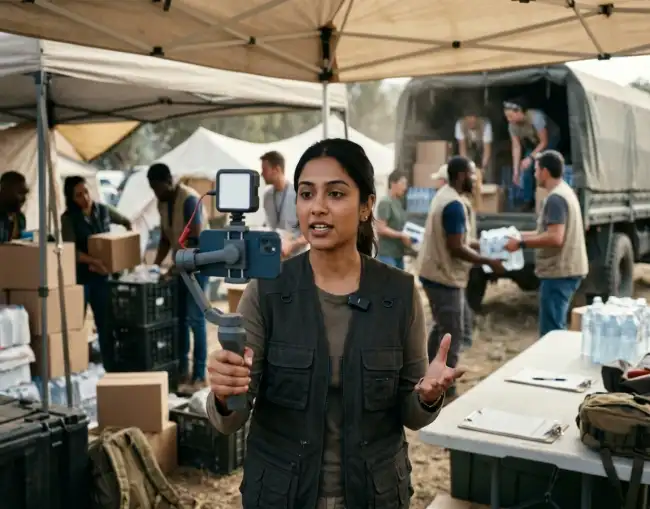
In the digital age, a single smartphone screen can become a lifeline. When natural disasters strike, political crises escalate, or humanitarian emergencies unfold across the globe, the traditional pathways of humanitarian aid—often encumbered by bureaucratic red tape, slow institutional mobilization, and archaic communication channels—are increasingly being bypassed. Enter the new vanguard of modern philanthropy: **digital humanitarians**. These are not traditional aid workers sitting in Geneva or Washington, but rather content creators, internet celebrities, and online authorities who leverage their massive digital footprints to mobilize millions of dollars, coordinate grassroots rescue operations, and bring real-time visibility to forgotten crises. This paradigm shift has redefined what it means to be a humanitarian, transforming passive social media audiences into active, highly engaged participants in global relief efforts.
The contemporary landscape of disaster response is no longer solely dictated by state-run organizations or multinational non-governmental organizations (NGOs). Instead, the democratization of media has empowered individual creators to wield unprecedented influence. From Instagram-native micro-influencers organizing localized supply drives to multi-platform mega-creators launching multi-million-dollar **emergency aid campaigns**, the velocity of modern giving has accelerated exponentially. By cutting out the intermediaries, these digital operators bridge the critical gap between disaster zones and global pockets of capital. This phenomenon relies heavily on the profound trust these creators have cultivated with their communities—a dynamic that, when channeled toward social good, produces staggering results that routinely outperform traditional public service announcements.
However, this transition is not without its operational friction points, ethical dilemmas, and logistical hurdles. As **social media philanthropy** scales, questions surrounding transparency, regulatory compliance, operational safety, and accountability have taken center stage. Can a YouTuber with millions of subscribers effectively manage the logistics of distributing clean water in a war-torn region? How do creators ensure that funds raised via digital platforms reach victims without getting lost in administrative black holes? Examining these dynamics requires a deep dive into the mechanics of modern digital activism, the structural strategies deployed by effective **disaster relief influencers**, and the evolving frameworks necessary to govern this new era of digital generosity.
The Evolution and Mechanics of Digital Humanitarianism
Defining the Digital Humanitarian Ecosystem
At its core, the ecosystem of digital humanitarianism is built upon three pillars: instantaneous communication infrastructure, algorithmic amplification, and parasocial trust. Unlike legacy charity models that rely on direct mail, television telethons, or corporate gala events, digital humanitarians operate inside the native architectures of platforms like TikTok, YouTube, Instagram, and X. These platforms allow creators to communicate directly, authentically, and unfiltered with millions of individuals simultaneously. This direct line of communication strips away the polished, corporate feel of traditional NGOs, replacing it with raw, immediate human connection that drives rapid emotional resonance and financial action.
Furthermore, the structural mechanics of this ecosystem rely on the frictionless nature of modern payment gateways. Integrations like GoFundMe, Tiltify, Stripe, and native platform tipping mechanisms mean that a viewer can move from witnessing a devastating disaster to contributing financially in less than thirty seconds. This reduction in cognitive and logistical friction is the single largest driver behind the success of contemporary **emergency aid campaigns**. When giving is as simple as a double-tap or a linked click-through, conversion rates soar far beyond historical benchmarks established by traditional fundraising methods.
The Psychological Drivers of Social Media Philanthropy
Understanding why individuals donate through social media requires an examination of modern digital psychology. Creators understand how to harness the power of community identity and shared purpose. When a trusted creator dedicates their platform to a crisis, followers do not feel like they are donating to an faceless organization; they feel like they are participating in a collective mission led by someone they know, respect, and watch on a daily basis. This creates a powerful sense of social proof and peer accountability.
Moreover, the interactive nature of social media allows donors to receive immediate social validation and updates. Creators routinely post follow-up videos, behind-the-scenes footage of aid delivery, and personalized thank-you messages. This closes the feedback loop of philanthropy. Donors see the immediate tangible impact of their dollars, which reinforces positive behavior and encourages further sharing. This viral amplification loop transforms everyday social media users into active digital advocates who organically market the cause to their own personal networks.
Strategic Frameworks for Deploying Emergency Aid Campaigns
Audience Alignment and Crisis Mapping
Successful **disaster relief influencers** do not simply broadcast random appeals; they execute hyper-strategic campaigns tailored to their specific audience demographics and niche. Before deploying an emergency campaign, master digital humanitarians conduct rapid crisis mapping to evaluate logistical feasibility, communication infrastructure in the impact zone, and the specific material needs on the ground. Aligning the scale of the campaign with the creator's audience size and purchasing power prevents logistical bottlenecks and ensures that pledges translate into actionable relief.
For instance, an influencer with a predominantly Gen-Z audience on TikTok will deploy short-form, high-impact vertical video narratives paired with gamified donation challenges, whereas a LinkedIn-based thought leader might focus on corporate matching grants and B2B resource allocation. Understanding these behavioral nuances ensures that the chosen strategy matches the medium. It also aligns with broader digital marketing principles, much like How Startups Can Use Micro-Influencer Seed Programs to Launch Products, where targeted seeding and community-driven momentum dictate overall campaign success.
Collaborative Multi-Creator Coalitions
No single creator—regardless of their follower count—can single-handedly solve a complex humanitarian crisis. The most successful **social media philanthropy** initiatives are built on collaborative coalitions. Creators frequently pool their audiences, coordinate staggered posting schedules, and cross-pollinate messaging to maintain sustained algorithmic visibility over several weeks. By uniting diverse creator pools, campaigns can break out of isolated content echo chambers and reach entirely distinct demographic segments.
Establishing these coalitions requires clear operational guidelines, shared branding assets, and unified links to verified fundraising portals. When multiple high-profile voices synchronize their messaging around a single disaster relief effort, it signals to mainstream media outlets and institutional partners that the movement holds undeniable cultural weight. This synergy often triggers secondary waves of mainstream news coverage, further amplifying donations and compelling corporate entities to step in with massive matching donations.
Navigating Transparency, Ethics, and Trust in Digital Relief
The Imperative of Absolute Financial Traceability
As the volume of funds managed by independent creators scales into the millions, the scrutiny surrounding financial accountability increases exponentially. One of the greatest vulnerabilities of **digital humanitarians** is the historical lack of institutional financial oversight compared to registered 501(c)(3) or international NGO entities. Without rigorous accounting, creators risk facing severe public backlash, legal liabilities, and irreparable damage to their personal brands if funds are mismanaged or delayed.
To combat this, elite digital humanitarians partner directly with established, vetted relief organizations on the ground (such as the World Food Programme, Red Cross, or Direct Relief) to handle the physical distribution of aid while the creator focuses exclusively on awareness and fundraising. Furthermore, publishing real-time financial dashboards, open-source ledger links, and independent third-party audit reports has become the gold standard. Maintaining this level of rigor requires adherence to best practices in digital ethics, paralleling the standards outlined in Ethics in Influencer Marketing: Navigating Disclosure, Trust, and Transparency, where clear attribution and honest communication are paramount to preserving audience trust.
Ethical Storytelling and Protecting Victim Dignity
A persistent ethical tightrope walk for **disaster relief influencers** is the line between compelling advocacy and exploitative trauma-pornography. In the race for algorithmic engagement, sensationalized imagery of suffering can sometimes overshadow human dignity. Ethical creators strictly adhere to trauma-informed storytelling guidelines, ensuring that disaster victims are portrayed not as helpless spectacles, but as resilient individuals with agency who are worthy of respect and empowerment.
Before publishing imagery or personal stories from an active disaster zone, responsible creators secure explicit, informed consent—whenever practically possible—and protect vulnerable populations, particularly children. They avoid performative altruism, wherein the focus of the content shifts from the victims to the moral superiority or emotional reaction of the creator. Striking this balance ensures that the dignity of those affected remains the central focus of the narrative.
Operational Logistics: From Digital Pledges to On-the-Ground Execution
Bridging the Digital-Physical Divide
The most profound challenge faced by internet personalities entering the humanitarian space is the chasm between digital pledges and physical logistics. Generating a million dollars in digital donations via a livestream is a remarkable achievement, but converting those digital funds into bottled water, medical supplies, and shelter materials inside a disaster zone with destroyed infrastructure is an entirely different operational beast.
To bridge this gap, successful creators embed themselves with seasoned humanitarian logistics experts. They learn supply chain terminology, understand customs clearance hurdles for importing medical equipment into foreign nations, and respect local security protocols. By acknowledging their limitations and leaning on field-tested NGOs, creators avoid the catastrophic mistake of parachuting uncoordinated physical supplies into disaster zones—a practice that often clogs local airports and roads, ultimately doing more harm than good.
Leveraging Technology and Real-Time Data Feeds
Modern **digital humanitarians** utilize advanced technological toolkits to optimize their response times. This includes monitoring real-time geographic information systems (GIS), satellite imagery data, and social listening tools to identify underserved impact zones that may be overlooked by traditional news broadcasts. By directing emergency funds to grassroots organizations working in these neglected micro-regions, creators ensure equitable aid distribution.
Additionally, blockchain technology and smart contracts are increasingly being explored by tech-forward creators to create immutable, transparent donation trails. These technical innovations allow donors to track their specific contribution down to the exact geographical delivery point, setting a new benchmark for accountability in global philanthropy and revolutionizing how the public interacts with charitable giving.
The Evolution of Creator-Led Foundations and Long-Term Sustainability
Transitioning from Ad-Hoc Campaigns to Permanent Infrastructure
What often begins as an ad-hoc, reactive response to a sudden natural disaster frequently evolves into permanent organizational structures. Many prominent **disaster relief influencers** are taking a page from the playbook discussed in The Future of Creator Equity: Why Influencers Are Becoming Founders, transitioning from temporary campaigners into institutional founders. They are establishing dedicated non-profit foundations staffed by career humanitarians, logisticians, and financial auditors.
This institutionalization allows creators to maintain year-round readiness, prepositioning supplies and emergency funds before disasters strike rather than scrambling to react after the fact. By building permanent infrastructure, these creators ensure their philanthropic impact outlasts individual viral moments, creating enduring legacies of social good that transcend fleeting internet trends.
Building Resilient Corporate Partnerships
Scaling beyond individual donations requires cultivating robust, long-term partnerships with corporate entities, tech giants, and venture philanthropists. Digital humanitarians act as powerful cultural conduits between major corporations looking to fulfill their ESG (Environmental, Social, and Governance) mandates and digitally native consumer bases.
These partnerships often take the form of corporate matching programs, where a tech company agrees to match every dollar raised by a creator's audience up to a multi-million-dollar cap. This strategy supercharges fundraising velocity and introduces institutional capital into grassroots movements, creating a powerful trifecta of influencer reach, corporate capital, and NGO operational expertise.
Real-World Case Studies & Scenarios
Case Study 1: The Anatomy of a Successful Multi-Creator Relief Sprint
When a devastating earthquake struck a densely populated region with fragile infrastructure, a coalition of ten prominent YouTube and TikTok creators formed an instantaneous digital relief task force. Recognizing the limitations of ad-hoc action, they immediately partnered with an established international medical NGO already operating in the region.
Execution Strategy: The creators synchronized their content calendars, releasing deeply reported, empathetic mini-documentaries showcasing real-time needs rather than standard text graphics. They integrated frictionless donation links directly into their video descriptions and pinned comments.
Results & Metrics: Over a 72-hour sprint, the coalition mobilized over 1.2 million unique donors, raising $8.5 million. Because they partnered with experienced logisticians on the ground, 94% of the funds were deployed into active field operations within fourteen days, establishing a blueprint for effective, rapid-response **social media philanthropy**.
Case Study 2: The Pitfalls of Uncoordinated Heroism (A Cautionary Tale)
In contrast, a high-profile independent influencer rushed to a flood-ravaged region without coordinating with local authorities or aid agencies. Attempting to document their heroic efforts for social media, the creator personally purchased tons of bottled water and chartered private trucks to drive directly into the flood zone.
The Breakdown: Without local coordination, the trucks clogged the single operational highway bridge, blocking professional ambulance transport and heavy rescue machinery. Furthermore, the unsolicited bottled water was dumped in an unsecured area, spoiling in the heat and causing localized sanitation hazards.
The Lesson: While the creator's intentions were purely altruistic, the lack of logistical integration turned their campaign into an operational liability. The backlash damaged their public standing and underscored why digital humanitarians must prioritize systemic coordination over performative individual heroics.
Critical Mistakes in Digital Humanitarianism and How to Avoid Them
- Mistake 1: Failing to Vet On-the-Ground Partners. Partnering with unverified local entities to expedite aid can lead to fraud, embezzlement, or complete operational failure. Countermeasure: Conduct rigorous due diligence, mandate partnership with established international NGOs with audited track records, and utilize independent legal counsel.
- Mistake 2: Neglecting Legal and Tax Compliance. Raising millions of dollars without proper 501(c)(3) or international fiscal sponsorship structures can trigger severe tax penalties and regulatory audits. Countermeasure: Establish formal non-profit structures or partner with registered fiscal sponsors before accepting public funds.
- Mistake 3: Operating in an Information Vacuum. Launching campaigns based on unverified social media rumors or outdated news reports can misallocate precious resources away from areas of genuine need. Countermeasure: Cross-reference humanitarian data feeds, UN Office for the Coordination of Humanitarian Affairs (OCHA) updates, and boots-on-the-ground intelligence.
- Mistake 4: Exploitative and Degrading Imagery. Using graphic, non-consensual imagery of victims to shock audiences into donating degrades human dignity. Countermeasure: Adopt strict trauma-informed storytelling guidelines, prioritize agency over victimhood, and secure informed consent whenever possible.
- Mistake 5: Failing to Provide Post-Campaign Transparency. Raising funds and disappearing without providing financial accounting or impact reports destroys long-term audience trust. Countermeasure: Publish comprehensive post-campaign financial audits and transparent milestone updates across all communication channels.
Comprehensive Comparison Table: Traditional vs. Creator-Led Relief Models
| Metric / Dimension | Traditional NGO Model | Creator-Led Digital Humanitarian Model |
|---|---|---|
| Speed of Mobilization | Slow (Weeks to months of institutional approval) | Instantaneous (Hours to days via real-time livestreams) |
| Audience Reach | Broad, demographic-heavy, reliant on traditional media | Hyper-targeted, digital-native, highly engaged communities |
| Administrative Overhead | High (Extensive bureaucracy, physical offices, legacy staff) | Lean (Agile teams, digital-first infrastructure, outsourced logistics) |
| Transparency & Reporting | Formal annual reports, regulatory filings (Form 990) | Real-time dashboards, open ledgers, video updates |
| Primary Funding Driver | Direct mail, galas, grants, legacy corporate sponsorships | Micro-donations, platform tipping, corporate matching sprints |
Frequently Asked Questions
What exactly is a digital humanitarian?
A digital humanitarian is an individual—often an influencer, content creator, or online authority—who utilizes their digital platform, community reach, and technological tools to mobilize resources, raise awareness, and coordinate relief efforts during humanitarian crises. Unlike traditional aid workers, they leverage internet culture and social media algorithms to drive rapid, mass participation in global philanthropy.
How do disaster relief influencers ensure that raised funds actually reach victims?
Responsible **disaster relief influencers** ensure financial integrity by partnering directly with vetted, established international non-governmental organizations (NGOs) and humanitarian agencies that handle physical logistics on the ground. They also implement transparent accounting practices, publish real-time financial dashboards, and undergo independent third-party audits to maintain absolute accountability with their donor communities.
What are the primary ethical risks associated with social media philanthropy?
The core ethical risks include performative altruism, exploitative or non-consensual trauma storytelling that compromises victim dignity, uncoordinated physical supply drops that clog local infrastructure, and a lack of financial transparency. Mitigating these risks requires strict adherence to trauma-informed communication guidelines, professional logistical oversight, and rigorous regulatory compliance.
How can micro-influencers participate in emergency aid campaigns if they don't have millions of followers?
Micro-influencers play a vital, hyper-localized role in the digital humanitarian ecosystem. While they may not mobilize millions of dollars overnight, they possess highly engaged, niche communities that trust their localized recommendations. Micro-influencers can participate by joining multi-creator coalitions, amplifying verified donation links, organizing community-specific supply drives, and educating their followers on grassroots preparedness.
Can creator-led fundraising replace traditional humanitarian organizations?
No, creator-led fundraising is not designed to replace traditional humanitarian organizations; rather, it acts as a powerful force multiplier. While **digital humanitarians** excel at rapid awareness, massive audience mobilization, and immediate fundraising, traditional NGOs possess the decades of institutional experience, legal frameworks, and deep logistical infrastructure required to execute complex, long-term aid distribution in hostile environments. The most effective model is a collaborative hybrid between creator reach and NGO execution.
Strategic Roadmap & Final Takeaway
The ascension of **digital humanitarians** represents a permanent evolution in the architecture of global aid. As internet penetration deepens, creator economies mature, and platform technologies advance, the velocity and scale of **social media philanthropy** will only accelerate. Over the next two to five years, we will witness institutional NGOs and top-tier creators moving past historical friction points to forge permanent, synergistic partnerships that combine the agility of digital storytelling with the operational rigor of field-tested humanitarian logistics.
For creators, brands, and philanthropists looking to lead in this space, the mandate is clear: abandon ad-hoc, performative gestures in favor of rigorous operational planning, absolute financial transparency, and ethical storytelling. By treating disaster relief with the same level of strategic professionalism as any major enterprise, digital humanitarians can ensure that their influence translates into sustainable, life-saving impact for the communities that need it most.
Be the first creator to share your take on this story.